Gateway House Courtesy: Gateway House
3 July 2025

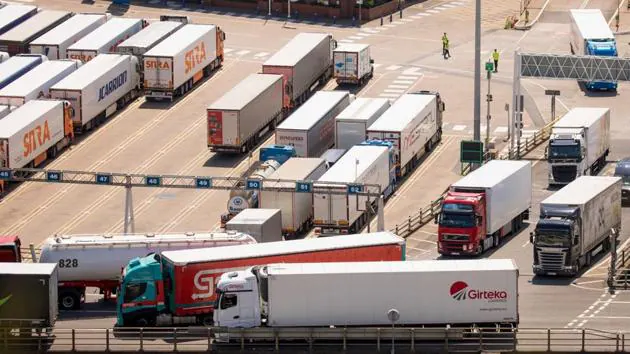
China Plus One and global supply chains

A slowdown of the Chinese economy, and the shift, particularly by MNCs, from China to other more competitive locations has opened up business opportunities for latecomers to supply chains in the developing world. Evidence suggests that Southeast Asia and some South Asian countries like India, Sri Lanka, Bangladesh, could be beneficiaries of the supply chain shift, particularly in labour-intensive segments.
New Spotlight Magazine Courtesy: New Spotlight Magazine
19 June 2025

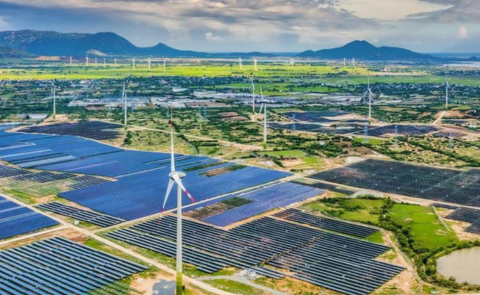
A case for South Asia energy connectivity

Building a robust engagement with India on energy can help offset some of the economic and political crises that most of India’s neighbours are facing. Smaller South Asian neighbours will benefit from cheaper electricity and oil, paving the way for greater regional economic cooperation.

Getty (1) Courtesy: Gateway House
15 May 2025

The New Geopolitics and South Asia’s Trade Architecture – What Next?

Geopolitics is increasingly intertwined with the economic destiny of South Asia. Even before the U.S. tariffs were rolled out, growing polycrises had hit the global economy, which has been struggling since the pandemic. South Asia seems a relatively bright spark of regional trade and growth. This paper analyses South Asia’s trade architecture in the backdrop of a sluggish world economy in the 2020s, and makes recommendations for closer regional economic integration.

Website articles  (12) Courtesy: Gateway House
15 May 2025

U.S., global emperor of sanctions

Over two centuries, the U.S. has amassed vast economic powers across the globe during and after the two World Wars , and sanctions slowly became an effective tool it used to achieve its foreign policy goals, becoming the global emperor of sanctions.

Gold- investopedia Courtesy: Investopedia
27 February 2025

The Dhaka gold squeeze

The Bank of England was in the news because of the ‘gold squeeze’- traders moving gold from London to New York to profit from the price arbitrage. An informal version of this is taking place between Bangladesh and India.

20FEb Breifing- event Courtesy: Gateway House
20 February 2025

A new gateway in the Northeast

Japan's growing influence in India’s Northeast and Bay of Bengal region is proving to be a gamechanger, with the potential to transform its economic and geopolitical landscape. With cultural ties and strategic investments, states like Assam and Meghalaya hope to enhance development while fostering a mutually beneficial relationship with Japan. Additionally, the latter could help ensure wider regional stability given the tensions with Bangladesh and Myanmar.

Screenshot 2024-09-19 132235 Courtesy:
19 September 2024

BRI sputters in South Asia

A decade after its launch, China’s Belt and Road Initiative has slowed down in South Asia, the result of poorly conceived projects, and irresponsible behavior from borrower and lender alike.

Protesters climb a public monument as they celebrate after getting the news of Prime Minister Sheikh Hasina's resignation, in Dhaka, Bangladesh on Aug. 5, 2024. (AP) Courtesy:
12 August 2024

Bangladesh: Frying Pan to Fire

Bangladesh’s economy has been in distress for some time and is not doing as well as assumed. This could have been one of the factors that drove the protests and the subsequent coup.

SA trade Courtesy: Hindustan Times
15 February 2024

South Asia’s trade architecture matters

South Asia requires resilient and cost-effective regional supply chains. This can be achieved through Indian investment, fostering local linkages while reducing dependency on Chinese financing of regional partners. A new approach enhances India's regional influence, creating a win-win scenario for the entire South Asian neighbourhood in a changing global landscape.

pakistan economy Courtesy: Reuters
24 May 2023

South Asian Currencies in Crisis

India’s South Asian neighbours have all seen sharp currency devaluations since early 2022. These are a result of maintaining artificially strong exchange rates, made possible by remittances from migrant workers. However, by postponing the inevitable devaluations, these states have made their economic crises much worse.