

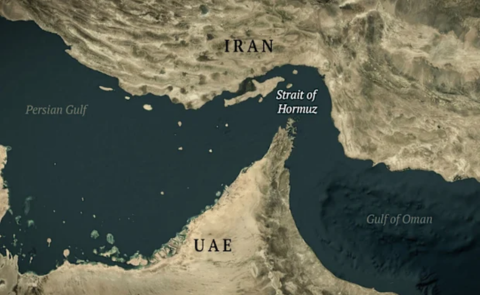
The world oil supply has fallen by 8%-10% because of the latest conflict in the Persian Gulf,[i] and India has started buying oil from other sources to make up the shortfall. This has included larger purchases of crude from Russia,[ii] Venezuela,[iii] from which U.S. sanctions have temporarily been lifted, and other sources outside the Persian Gulf. India has substantial refining capacity and is able to quickly process the crude to produce fuels such as diesel, petrol, aviation, and LPG (household cooking gas). This has kept the economy afloat, and India will not run short on fuel.
Several countries do not have sufficient domestic refining capacity and import finished petroleum products. They are at greater risk of running short. This is the state of India’s neighbours – Pakistan, Sri Lanka, Bangladesh, and Nepal – which are all importers of petroleum products and are facing acute shortages. Pakistan and Sri Lanka have already introduced a 4-day work week to save fuel, while Sri Lanka has additionally introduced rationing for petrol and diesel. Leaders of developed nations such as the U.K.[iv] and Australia[v] have also warned of fuel shortages, as they don’t have sufficient refining capacity locally.
India is the world’s third-largest importer of fuel—4 million barrels/day, which costs the exchequer over $100 billion annually. The financial constraints will increase as oil prices have run within the range of $65-$70 per barrel for the past year, giving India the ability to run its many social sector programmes. Now, however, oil prices are up by over 50% to $105–$110 per barrel. For India, the spike means an extra outflow of $5 billion/month. If the crisis and the accompanying high prices persist, India’s GDP growth is projected to slow down from 7.6% last year to 6.5% in 2026-27.[vi]
India relies on imports to meet about 90% of its petroleum needs, and this is unlikely to change. Domestically there have been no major oil discoveries in the past two decades. In 2025, Petroleum Minister Hardeep Puri spoke of there being Guyana-sized reserves in the Andaman Sea.[vii] There was no follow-up to the statement, and in the absence of evidence, this remains speculation at best. In March 2026, India’s upstream major, the Oil and Natural Gas Commission (ONGC), announced a tender, potentially worth $18-$20 billion, to hire ships internationally to explore for oil and gas in the Andaman deepwater basin. There is no guarantee ONGC will find commercial-sized hydrocarbon reserves that will make a dent in India’s massive oil imports. If a discovery is made (speculative), it will take up to a decade to reach the market. India’s dependence on imported oil, therefore, continues unchanged for the foreseeable future.
India must take seriously a plan for future shocks. Energy markets are prone to fluctuations and are impacted by geopolitical events. For instance, prices of natural gas have seen three major spikes since 2010. First, after the 2011 Tohoku earthquake and tsunami, after which Japan went off nuclear power and shifted to gas. Second, after the 2022 Ukraine crisis, when Europe stopped buying Russian gas and shifted to LNG. The third instance is now, after Qatar stopped LNG production due to attacks on its energy installations. The oil market too shows such fluctuations – the routine play of an ecosystem. There will be other such events in the future.
The pain point for India is price, and it needs to be addressed financially. Historically, India has invested in oil fields in Russia, Vietnam, Myanmar, Mozambique and elsewhere. However, these acquisitions have been relatively small – approximately 15 million tonnes/year – about 6%-7% of India’s total oil consumption. Managing oil fields in another country is a complex undertaking, for which India has limited bandwidth. Even those acquisitions of new acreage slowed down sharply over the past decade, possibly due to the shift in government’s emphasis towards the green transition. The current crisis shows that green transitions have restricted potential and that oil is and will be the driver for the Indian economy.
India needs a fresh approach to cover the oil price risk – and the best way is to make equity investments in proven oil and gas fields in stable-resource economies overseas. The dividends and higher return from these investments during price spikes will partly offset the burden of costlier imports.
Some of these are in new energy sources, like shale oil, which has been the biggest shift in the petroleum sector over the past 25 years and has transformed the U.S. from a declining oil producer to the world’s largest. The U.S. now accounts for nearly 20% of the global oil production – almost as much oil as Russia and Saudi Arabia combined. India can benefit by investing in American oil companies purely as a financial investor, not the operator.
It’s not difficult. The U.S. has the world’s largest and most liquid financial markets, with hundreds of oil companies ranging from the very small to global super-majors such as Exxon and Chevron. For the companies themselves, a long-term investor like India, also energy-dependent, provides stability. Like the U.S., Canada and Australia have become important exporters of oil and natural gas, respectively. These are stable democracies with transparent regulatory environments – and are immune to the geopolitical upheaval common in the natural resource sector.
All three countries – the U.S., Canada, and Australia – have, since the early 2000s – put in place tighter rules for natural resource acquisitions by foreign governments. An Indian state-owned enterprise investing in resources is likely to trigger similar scrutiny. A sovereign wealth fund (SWF), which is a passive financial investor, will be a better vehicle for such investments. The SWFs of the UAE, Qatar and Kuwait have significant investments in all three countries, including sectors such as hydrocarbons and critical minerals. India, as a part of Pax Silica, the American initiative to create secure supply chains for critical minerals, should get similar treatment as the Gulf states.
For India to benefit, its attitude to such means of energy provision needs to change. Energy security comes not just from physically owning an oil field but also from a better-supplied oil market and having the funds to pay for the oil. India doesn’t have much choice: its economy will continue to run on oil for the foreseeable future, notwithstanding the rhetoric on green energy. The Modi government has been very lucky in one respect – oil prices have been moderate since 2014, creating fiscal space for the government. The events of the past few weeks show that this happy situation cannot be taken for granted – the government must act boldly to lock in these gains. Such investments will also give India an enhanced political presence in all the three countries.
[i] International Energy Agency. Oil Market Report: March 2026. https://www.iea.org/reports/oil-market-report-march-2026
[ii] Bloomberg. “India Has Bought 60 Million Barrels of Russian Oil for April.” March 25, 2026. https://www.bloomberg.com/news/articles/2026-03-25/india-has-bought-60-million-barrels-of-russian-oil-for-april
[iii] Bloomberg. “India Has Bought 60 Million Barrels of Russian Oil for April.” March 25, 2026. https://www.bloomberg.com/news/articles/2026-03-25/india-has-bought-60-million-barrels-of-russian-oil-for-april
[iv] Prime Minister’s Office, United Kingdom. “PM Remarks, 1 April 2026.” https://www.gov.uk/government/speeches/pm-remarks-1-april-2026
[v] ABC News (Australia). “Anthony Albanese National Address on Fuel Crisis and Iran.” April 1, 2026. https://www.abc.net.au/news/2026-04-01/anthony-albanese-national-address-fuel-crisis-iran/106522770
[vi] The Economic Times. “ICRA Expects India’s GDP Growth to Moderate to 6.5% in FY27 amid West Asia Conflict.” https://economictimes.indiatimes.com/news/economy/indicators/icra-expects-indias-gdp-growth-to-moderate-to-6-5-in-fy27-amid-west-asia-conflict/articleshow/129903705.cms?from=mdr
[vii] Press Information Bureau, Government of India. “Press Release.” https://www.pib.gov.in/PressReleseDetailm.aspx?PRID=2143550®=3&lang=2
Amit Bhandari is Senior Fellow for Energy, Investment and Connectivity.
This article was exclusively written for Gateway House: Indian Council on Global Relations. You can read more exclusive content here.
Support our work here.
For permission to republish, please contact outreach@gatewayhouse.in
©Copyright 2026 Gateway House: Indian Council on Global Relations. All rights reserved. Any unauthorised copying or reproduction is strictly prohibited.