Gateway House Courtesy: Gateway House
4 June 2026

A BRICS Energy Stability Framework

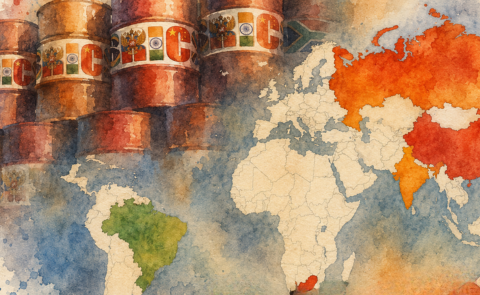
The 2026 Persian Gulf conflict has pushed energy security to the forefront of the BRICS agenda. Divergent national interests prevent the grouping from acting as a unified geopolitical bloc, the growing energy crisis highlights the need for stronger economic cooperation. Proposals such as a BRICS energy reserve, an Energy Stability Fund, and cross-border investments could enhance resilience and be essential if BRICS wants to emerge as a serious economic grouping.
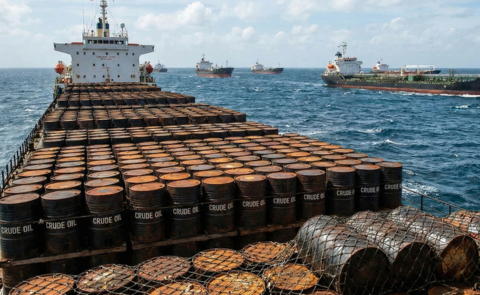
oil Courtesy: KNN
28 May 2026

India’s Opportunity in the New Oil Order

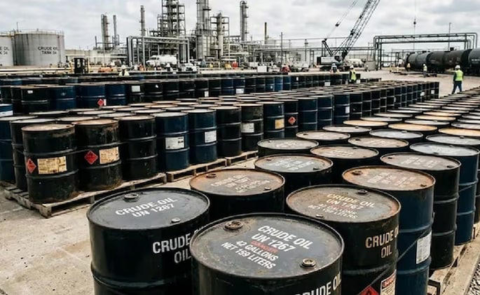
The UAE’s recent exit from OPEC, and the U.S. push to sell more oil to India are markers of a new order in the oil world with demand security at a premium. As a major oil importer, India must respond to it smartly. It must develop deeper partnerships with both the UAE and U.S., and a new financial ecosystem and benchmarks for the new order.

Website articles  (73) Courtesy: AFR
2 April 2026

India’s options after the Persian Gulf war

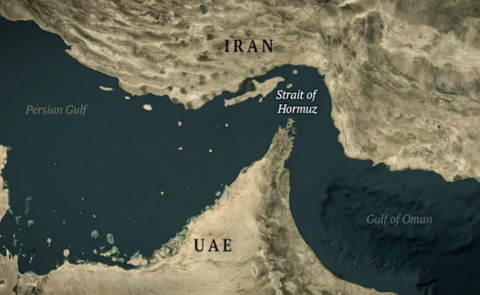
The Persian Gulf conflict has already impacted India’s oil imports and financial security. However, India has not created meaningful options to protect itself from oil shocks over the last decade – and such shocks will continue. Now is the time for India to make equity investments in oil and gas companies in stable economies like the U.S., Canada and Australia, to protect itself from future energy crises.

Website articles  (60) Courtesy: MSN
19 March 2026

Gulf War pinches South Asia

The war in the Persian Gulf has already caused significant disruption in India’s South Asian neighbours. A prolonged conflict is likely to push the region back into economic and political crises from which it had been hopeful of emerging this year.

Gateway House Courtesy: Gateway House
3 July 2025

China Plus One and global supply chains

A slowdown of the Chinese economy, and the shift, particularly by MNCs, from China to other more competitive locations has opened up business opportunities for latecomers to supply chains in the developing world. Evidence suggests that Southeast Asia and some South Asian countries like India, Sri Lanka, Bangladesh, could be beneficiaries of the supply chain shift, particularly in labour-intensive segments.

bimstec 2 Courtesy: Twitter- BIMSTEC
19 May 2022

Incorporating the Blue Economy into BIMSTEC

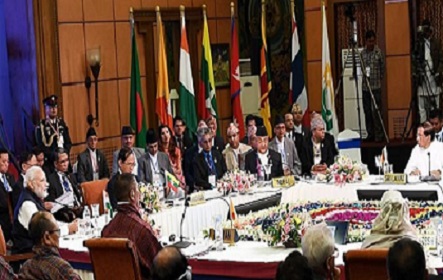
The BIMSTEC charter has laid the foundations for a prosperous, peaceful, and sustainable Bay of Bengal region, a goal that can be achieved by greater integration and deeper collaboration. While ensuring continuity with past efforts and strengthening economic cooperation is necessary, it must also realise its potential in newer areas such as the blue economy, which has three interlinked pillars— connectivity, prosperity, and regional stability.

learning from bangladesh Courtesy: Shutterstock
25 March 2021

Learning from Bangladesh

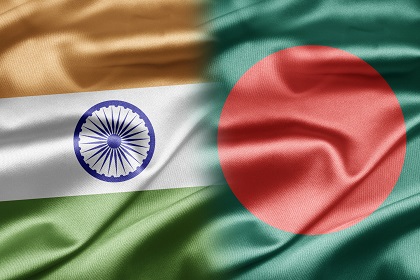
This month marks the beginning of triple celebrations in Bangladesh, including the 50th anniversary of its independence, for which Prime Minister Modi will be traveling to Dhaka as the guest of honour. There is much to celebrate: A country that began as a case study for development is now on top of the global GDP charts. The springboard was achieved through a thriving textiles industry, women's workforce participation, micro finance, liberal investment policies. There is much to learn from this neighbour.