Prior to the founding of Gateway House, Kripalani was India Bureau chief of Businessweek magazine from 1996 to 2009. During her extensive career in journalism (Businessweek, Worth and Forbes magazines, New York), she has won several awards, including the Gerald Loeb Award, the George Polk Award, Overseas Press Club and Daniel Pearl Awards.
Kripalani was the 2006-07 Edward R. Murrow Press Fellow at the Council on Foreign Relations, New York, which inspired her to found Gateway House.
Her political career spans being the deputy press secretary to Steve Forbes during his first run in 1995-96 as Republican candidate for U.S. President in New Jersey, to being press secretary for the Lok Sabha campaign for independent candidate Meera Sanyal in 2008 and 2014 in Mumbai.
Kripalani holds two bachelor’s degrees from Bombay University (Bachelor of Law, Bachelor of Arts in English and History) and a master's degree in International Affairs from Columbia University, New York.
She sits on the executive board of Gateway House and is a member of the Rotary Club of Bombay.
She tweets at @ManjeetKrip
Image credits: Sunhil Sippy
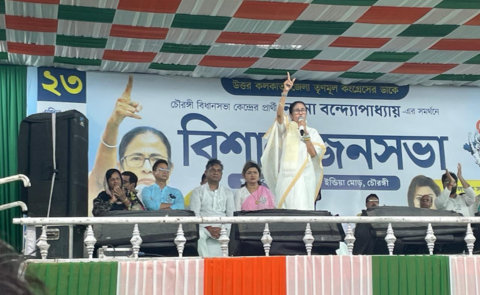
The most significant election of the five states going to the polls in India in April is that of West Bengal. The state, once India’s trading hub and entrepreneurial centre, now lags its counterparts. The big battle is between the regional Trinamool Congress and the Bharatiya Janata Party, both of which have pulled out their big guns and are wooing the state’s voters as never before.
Vijay Mohan Crishna was an early ally and supporter of Gateway House. During the 2008 Mumbai attacks, he was one of a handful of businessmen who came out and stood in front of the besieged Taj Mahal Hotel, sending a powerful message that Mumbai was not afraid. That fearlessness defined Vijay. When Gateway House was established in July 2009, he became one of its earliest members. Gateway House remembers him with gratitude and celebrates his spirit.
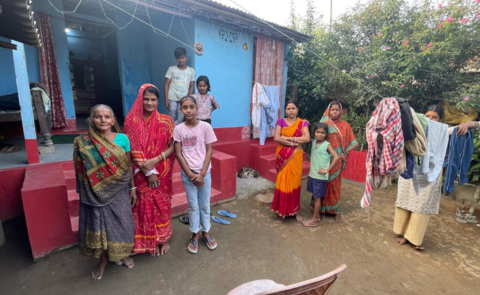
Bihar’s 127 million people went to the polls over the past week. They have seen enough basic progress to decide whether they want a leader who can, over the next five critical years, take them beyond poverty, and progress in line with the rest of India. Will this seat of ancient Indian empires and two religions, advance its trajectory upward?
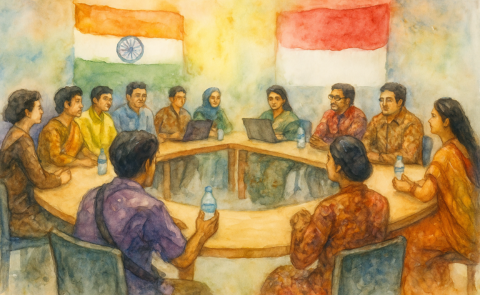
India and Indonesia are bound by history, culture, trade, and shared values. Their relationship must now add a new dimension — higher education and research. Both nations have long relied on outdated Western models. With a tech-savvy generation and receding colonial memory, the two largest democracies must build research bridges and empower students to become the leaders, innovators and humanitarians of tomorrow.
The September announcement from the White House that H-1B petitions would carry a fee of $100,000 per employee, hit India hard. India’s IT services companies are heavy users, capturing 71% of the 65,000 H1B visas issued annually. This shock move is a chance for Indian IT services companies to update their outsourcing model and invest at home, where their R&D-to-sales ratio remains abysmal.
India and Indonesia are two Asian leaders and democracies which are reconnecting after decades, even centuries – in a world rife with new volatility and uncertainty. Both countries can collaborate and learn: Indonesia is an adept trading nation and India is a powerful tech player. The two governments are on a mission to deepen and diversify their relationship, stepping out of their past, and bringing fresh thinking.
U.S. President Trump will meet Russian President Putin on August 15. A positive outcome may mean removal of punitive U.S. tariffs on India for buying Russian oil and resolving its dilemma of placating a partner country with growing commercial, geopolitical and defence ties, or pursuing strategic autonomy, keeping its old friends and take an economic hit? Is Russia the red line for India?
The July 2 meeting of the QUAD foreign ministers in Washington, D.C., restated all the commitments of the grouping, including a condemnation of the April 22 terrorist attacks on Pahalgam. Yet, none of the QUAD countries actually came to the aid of India, despite China being a present player in the fight, in full support of its partner Pakistan.
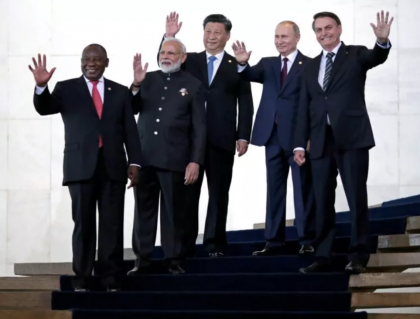
The rules-based world, perceived to be functional till last year, seems broken, giving way to an increasingly multipolar order. Manjeet Kripalani, Executive Director, Gateway House discusses in the Abhijit Chavda podcast, how emerging middle powers like India, Brazil, and Indonesia to name a few, have the heft to rewrite the rules of global trade and reform, away from U.S. and China.
The traditional power structures of ‘unipolarity’ or ‘bipolarity’ prevalent over the past 80 years are no longer appropriate to describe the current global order, with more countries increasingly supporting the evolving multipolar world. With the old ‘rules-based’ order becoming less relevant, emerging powers like India have an opportunity to draft more equitable rules to match their multipolar intentions.