The war in the Persian Gulf has already caused significant disruption in India’s South Asian neighbours. A prolonged conflict is likely to push the region back into economic and political crises from which it had been hopeful of emerging this year.
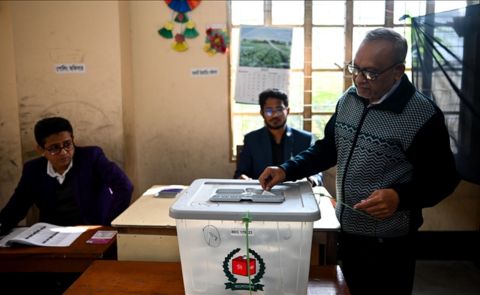
In less than a week, on 12 February, Bangladesh will witness one of its most consequential parliamentary elections. The same day, the people of Bangladesh will also vote on a referendum that seeks to overhaul the country’s governance structure. The outcome of both, whichever way they turn out, is likely to pull Bangladesh into a vortex of political turmoil.
On 12 February, Bangladesh will go to the polls to choose a new leader. India should work to maintain a robust and cordial working relationship with the new regime as it did during Sheikh Hasina’s tenure. The new government in Bangladesh should prioritise eliminating anti-India sentiments before they become entrenched, to prevent security challenges for itself and the region.
On December 18, Sharif Osman Hadi, a prominent leader of the 2024 student-led uprising, was assassinated. What began as protests against civil service quotas became a leaderless uprising. As Western powers celebrated a “democratic dawn”, Bangladesh slid into structured anarchy. Dhaka now faces two futures with terrifying clarity: one with elections skewed by military advantage and Islamist mobilisation, and the other by acknowledging that democracy cannot be airlifted.
Bangladesh’s economy, already weak at the time of the August 2024 coup, has been on a downward spiral since. Banks are insolvent and cannot lend, business confidence is low, and investors are staying out. These issues will worsen the ongoing radicalisation, extremism and violence in the country.
The events of August 5 turned Bangladesh from a development model to unstable entity. A variety of players have been stirring trouble in the country, from within and without. Great powers and neighbours, NGOs and the diaspora, Islamist groups and armed forces. All these are entangled in the U.S.-China geopolitical rivalry that Bangladesh seems to be caught in.
Bangladesh’s economy has been in distress for some time and is not doing as well as assumed. This could have been one of the factors that drove the protests and the subsequent coup.