

In the tumultuous days following the escape of former Prime Minister Sheikh Hasina to India, the atmosphere in Dhaka was charged with fervent emotions. Streets and alleyways reverberated with the powerful chants of “Dilli na Dhaka” (Delhi or Dhaka), a rallying cry that stirred the hearts of the populace and echoed a resolute call to rise against perceived Indian influence. The fervor was palpable, as people from all walks of life—ranging from innocent six-year-old schoolgirls to elderly rickshaw pullers in their nineties—gathered at protest sites, brandishing placards that boldly advocated for severing ties with New Delhi.
Their messages projected a collective demand for autonomy, emphasising the need for Bangladesh to chart its own course in pursuit of growth and development without reliance on India. Dhaka is economically dependent on India for some of its key raw materials like cotton for its garment industry, essential goods like petroleum and food, electricity, and as a crucial market and transit route. These add up to $11.5 billion of imports – second only to the $16.6 billion imported from China.[i]
The political landscape shifted dramatically as the government led by Nobel Laureate Muhammad Yunus established its footing in the aftermath of Hasina’s ousting. This marked a poignant loss for India, which had cultivated a strategically significant friendship with Bangladesh following its liberation from Pakistan. However, the events of 2024 laid bare an ideological rift, as it became evident that Dhaka was veering away from India and inching closer to its former unity with Pakistan. Tensions escalated along both sides of the porous border that once facilitated significant people-to-people exchange but now harbored an undercurrent of animosity.
India viewed the interim government in Dhaka as “illegal,” a stance it maintained discreetly in diplomatic discussions. Simultaneously, troubling statements emanating from Bangladesh began to rattle Indian officials, as they raised serious concerns about the national security of India. The precarious situation seemed to illustrate a painful regression, with Bangladesh appearing to strive towards a reminiscent reality of East Pakistan, challenging the stability of relations in the region and leaving the future uncertain.
Now it seems the tide has turned for the better.
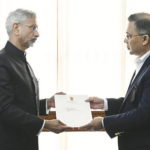
Since the return of the former Prime Minister of Bangladesh Khaled Zia’s succession Tarique Rahman from the UK, where he was in self-imposed exile for 17 years, New Delhi has made a conscious effort to reach out to him. It also dispatched External Affairs Minister S. Jaishankar to Dhaka to meet Tarique in person and hand over a letter of condolence to him written by Prime Minster Modi. But the letter also signaled India’s intention to take the relationship forward, looking beyond Hasina.
Jaishankar, who was in Dhaka only for four hours, attended the funeral prayers of Zia – the first woman Prime Minister of Bangladesh – who died on 30 December, 2025 after a prolonged illness. While Jaishankar’s trip took place under tight security protocol, the visit nevertheless has raised hopes of better bilateral ties, away from India’s almost one-track relationship with Hasina and her party – Awami League.
Rahman, who is now the chairman of Bangladesh Nationalist Party (BNP), could become the next Prime Minister, despite a complicated political landscape. The BNP is widely considered the largest active political force in Bangladesh following the ouster of Sheikh Hasina in 2024, but its official status as the “largest political party in parliament” is currently pending the results of the upcoming general election.[ii]
Unsurprisingly, the Yunus government has suspended and barred the Awami League from participating in the upcoming vote, leaving the BNP as the primary mainstream political entity. The Bangladesh Elections Commission has 51 of the 59 registered political parties participating in the election. Among these , the BNP has the highest number of candidates contesting the 300 seats, followed by the Jamaat-e-Islami party with 224 candidates. Other parties like the Islami Andolan Bangladesh, the National Citizen Party (NCP) and Jatiya Party will also be in the electoral fray.
The BNP has fielded candidates in 288 constituencies independently for the first time since 1991, severing its long-term alliance with the Jamaat-e-Islami to position itself as a centrist, secular alternative – an aspect that India has cautiously welcomed.
That is not to say that India is not looking at other alternatives to the BNP to befriend. The Ministry of External Affairs hinted at a recent media briefing that New Delhi is rebuilding bridges with the Jamaat-e-Islami, which has long been viewed as a threat to India’s security interests. India used to have a steady dialogue with Jamaat-e-Islami in the late 1990s, which eventually lost momentum as the Awami League’s grip over the country grew.
Politics in Bangladesh will continue to be complex due to the substantial and strong presence of student-led political parties that have the power to change the political calculus there. In the September 2025 in Dhaka University’s Central Students’ Union (DUCSU) elections, the Jamaat-e-Islami’s student wing Islami Chhatra Shibir (ICS), won handsomely, with 20 out of 25 positions. ICS fought under the name of Oikkoboddho Shikkarthi Jote or United Student Alliance. One of the main outcomes of the DUCSU elections was the appointment of Abu Shadik Kayem as the Vice President of DUCSU. His victory marked a significant shift in Bangladeshi campus politics, as he is the first Vice President backed by Jamaat-e-Islami to hold the post since the independence of Bangladesh in 1971.
Apart from this, at the elections in Chittagong University in October 2025, yet another ICS-backed party – Sampreetir Shikkarthi Jote – won 24 out of 26 seats, for the first time in 44 years. Similarly, in the same month, Sommilito Shikkharthi Jote, also backed by ICS, won a total of 20 out of 23 seats in the Rajshahi University elections. All these wins are indicators of key universities in Bangladesh coming into the grip of Islamist student groups.
In this backdrop, as national elections near, anti-India sentiments will likely deepen, with “Dilli na Dhaka” sloganeering getting louder.
Bangladesh has to decide that if it wants to forge better ties with India post the second “revolution;” if it does, then it must ensure that such high-pitched grudges reduce their volume slowly and gradually. Most importantly, Dhaka has to fix its law and order problem that has spiraled out of control even as incidents of minority Hindus getting killed in Bangladesh grow more frequent. .
On its part, India should desist from politicising bilateral engagements, like barring Bangladesh’s top cricketers Mustafizur Rahman from playing the IPL 2026. This was at the instance of the Board of Control for Cricket in India (BCCI), which directed the Kolkata Knight Riders (KKR) franchise to release Rahman, the only Bangladeshi player in the league, following political tensions between Delhi and Dhaka. It caused distress and anger in Bangladesh, with the government suspending the broadcast of all IPL matches in the country and the Bangladesh Cricket Board (BCB) formally requesting the International Cricket Council (ICC) to relocate Bangladesh’s matches in the 2026 T20 World Cup from India to a neutral venue (likely Sri Lanka) due to safety concerns.
Post elections – the outcome of which seems inevitable – both countries should ensure that quiet diplomacy is given a chance while steadfastly maintaining that the various development initiatives begun by New Delhi during Hasina’s time, continue smoothly under a changed regime in Dhaka, while differences are resolved in an amicable manner between both neighbours, who cannot afford an antagonistic relationship. For China and Pakistan will both be watching closely.
Nayanima Basu is Adjunct Fellow, and an author.
This article was exclusively written for Gateway House: Indian Council on Global Relations. You can read more exclusive content here.
For permission to republish, please contact outreach@gatewayhouse.in.
Support our work here.
©Copyright 2026 Gateway House: Indian Council on Global Relations. All rights reserved. Any unauthorised copying or reproduction is strictly prohibited.
References:
[i] https://tradestat.commerce.gov.in/eidb/country_wise_ttrade
[ii] BNP was created by former President Ziaur Rahman, Tarique’s father in 1978, uniting various nationalist groups and freedom fighters under the ideology of Bangladeshi nationalism.