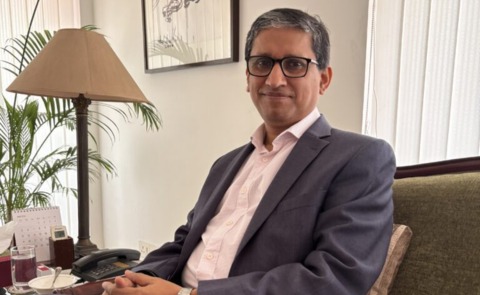
WhatsApp Image 2026-07-23 at 4.05.12 PM Courtesy: India's World
23 July 2026

“There have to be some signals, some gestures from our closest neighbour, India”

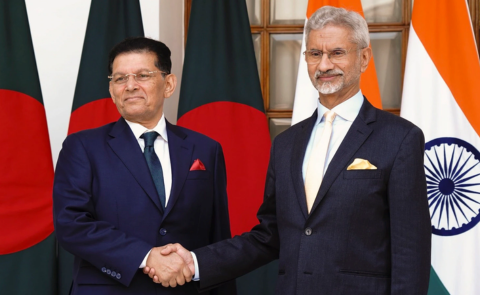
Prime Minister Tarique Rahman’s Bangladesh Nationalist Party will complete six months in office in August. His country faces multiple crises, with the Gulf War straining Bangladesh’s economy. In a sharp departure from previous practice, Rahman chose China for his first state visit even as anti-India rhetoric continued in Dhaka. It shouldn’t surprise, says Bangladesh’s departing High Commissioner to India, M. Riaz Hamidullah, speaking exclusively to Gateway House’s Nayanima Basu.
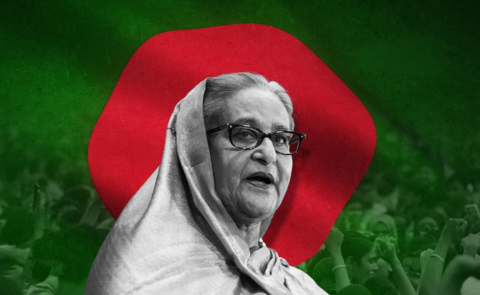
Website articles  (96) Courtesy: The Secretariat
20 May 2026

Interview with Sheikh Hasina

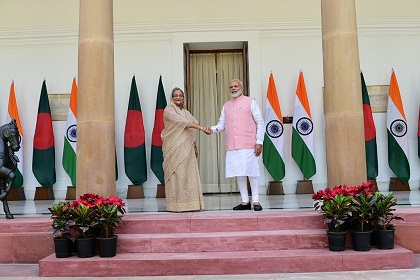
Bangladesh elected a new government in February this year after former long-time Prime Minister Sheikh Hasina was ousted from power in a violent mass protest on August 5, 2024. Her party, the Bangladesh Awami League, was banned from participating in this year’s election, which saw the return of the rival Bangladesh Nationalist Party (BNP) under Prime Minister Tarique Rahman. Hasina has been living in India since then and talks about her plans to return to Bangladesh and revive her party’s activities there. She spoke exclusively to Nayanima Basu.

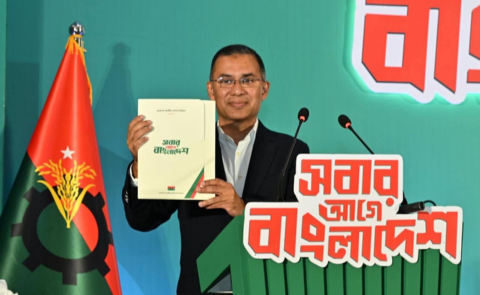
Website articles  (76) Courtesy: X/ @bdbnp78
15 April 2026

Bangladesh’s bumpy road ahead

Bangladesh’s new government has been in power for two months now, and the challenges are immense. Yet Prime Minister Tarique Rahman is trying to balance a plethora of issues: energy shortages, an under-performing economy, a major constitutional reform, addressing corruption and introducing transparency and accountability – all the while putting “Bangladesh First.”

Website articles  (75) Courtesy: PTI
10 April 2026

Delhi-Dhaka make progress

The visit of Bangladesh's foreign minister Khalilur Rahman to Delhi was an intermediate stage in the journey towards a full India-Bangladesh reset. The two countries have much to gain through deeper cooperation and more to lose if they drift. It’s time to focus on a common future by initiating bold trade and economic policies and linkages to counter vested interests that work to keep them apart.

Gateway House (2) Courtesy: Gateway House
24 December 2025

Bangladesh economy spirals downwards

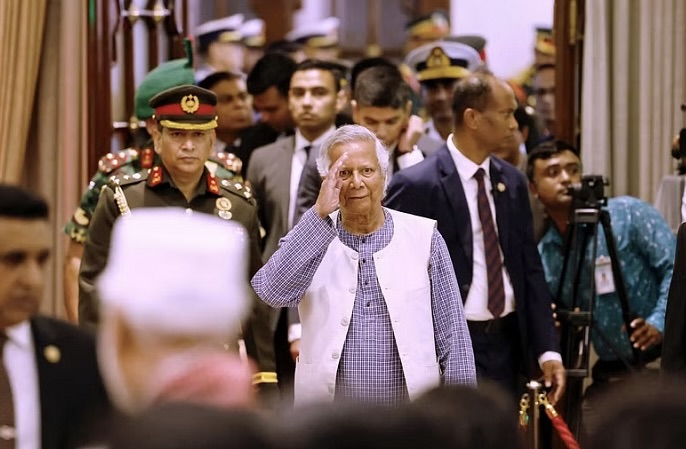
Bangladesh’s economy, already weak at the time of the August 2024 coup, has been on a downward spiral since. Banks are insolvent and cannot lend, business confidence is low, and investors are staying out. These issues will worsen the ongoing radicalisation, extremism and violence in the country. 

Bangladesh-M-Yunus-Interim-Govt Courtesy:
15 August 2024

Stirring regime change in Bangladesh

The events of August 5 turned Bangladesh from a development model to unstable entity. A variety of players have been stirring trouble in the country, from within and without. Great powers and neighbours, NGOs and the diaspora, Islamist groups and armed forces. All these are entangled in the U.S.-China geopolitical rivalry that Bangladesh seems to be caught in.

Screenshot 2024-08-08 123844 Courtesy:
8 August 2024

Subcontinental upheaval

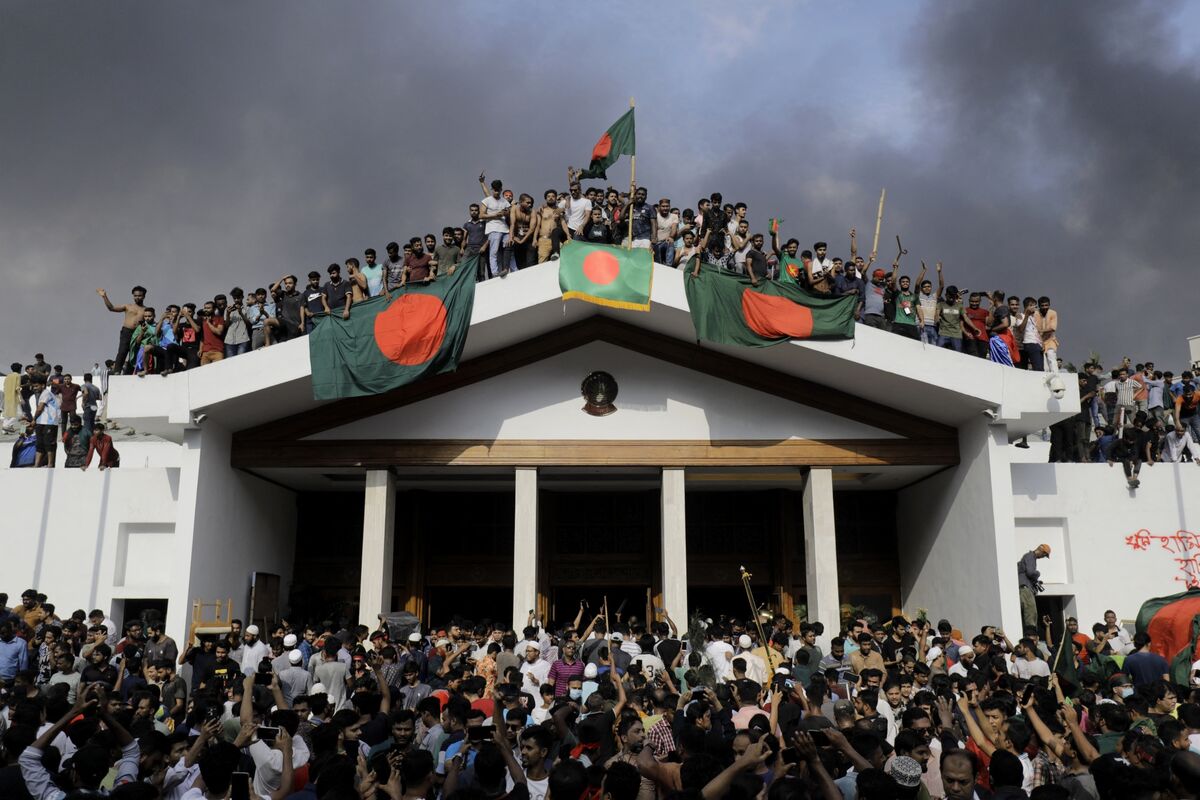
Sheikh Hasina’s recent ouster as the Prime Minister has highlighted the deep fissures in Bangladeshi society and pushed the subcontinent into political turbulence. Amb. Rajiv Bhatia, Distinguished Fellow for Foreign Policy Studies, Gateway House, speaks about the political, economic, and security implications the crisis in Bangladesh has for Indian foreign policy and geopolitics in the neighbourhood and beyond.

bdesh Courtesy:
8 August 2024

Strategic implications of Bangladesh’s regime change

Bangladesh Prime Minister Sheikh Hasina's forced resignation on August 5 came amidst prolonged and violent anti-government protests. Lt Gel S L Narasimhan, the Adjunct Distinguished Fellow for China and National Security Studies, Gateway House, analyzes the role of the army and external actors, and the strategic and security implications for India.