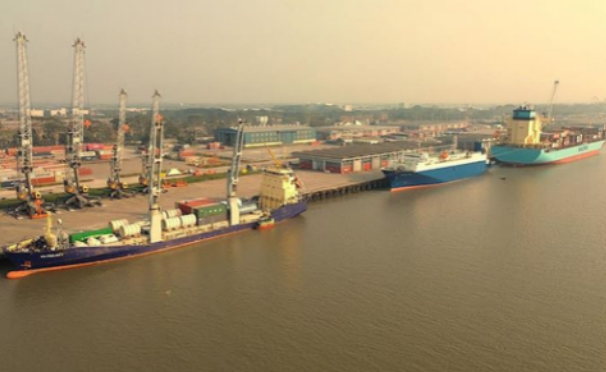
Mongla port Courtesy: BSS News
15 October 2026

The three ports of Bangladesh

Beijing has agreed to fund a port in Bangladesh, the third port funded by foreign governments. This shouldn’t be a concern for India, because unlike Pakistan and Sri Lanka, it has a diversified lender base. Japan and Russia are the large infrastructure funders, with China in the third place, while the U.S. and the EU are key export markets. India lags as an investor.
Screenshot 2026-10-01 at 12.48.23 PM Courtesy: Gateway House
1 October 2026

New life for IMEC

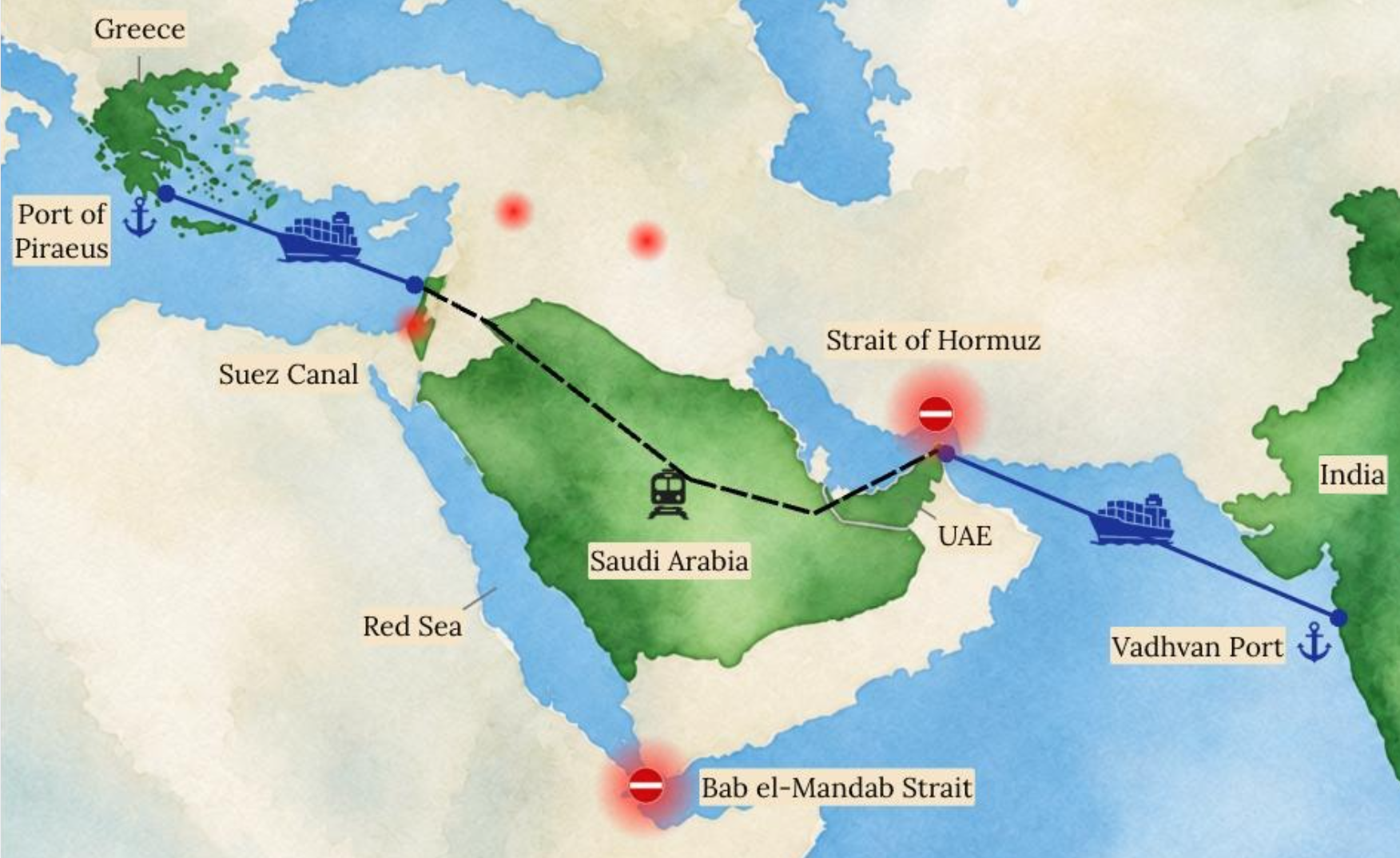
The India-Middle East-Europe Economic Corridor, currently stalled due to conflicts in the Gulf, may be an answer to the disrupted energy flows from the Persian Gulf. The proposed route, which connects the interior of Saudi Arabia to the Arabian Sea on one side and the Mediterranean Sea on the other, has immense value as a conduit for West Asian oil, as well as global data flows.

Office of the Pakistani Prime Minister_AFP Courtesy: AFP
27 August 2026

Mecca Accord and India’s energy security

The Mecca Accord between Saudi Arabia, Turkiye and Pakistan has raised some red flags in the region, and in India. One element remains unchanged: India’s value to Riyadh as an energy importer. With demand security holding more weight than supply security in an uncertain future, a major and growing oil importer like India is more important than the cash-for-security arrangement the Kingdom has signed with Pakistan.

sabrang india (1) Courtesy: Council on Foreign Relations
23 July 2026

India should re-examine its energy investment

The absence of panic in the energy markets despite the renewed U.S.-Iran fighting indicates a well-supplied oil market in the longer term. That means stability for energy short countries like India in the long term. In the short term, however, India will be impacted by other disruptions, such as the increased use of sanctions.

shutterstock_289496432_420x280 Courtesy: Shutterstock
13 January 2021

Financial Investments to Secure Energy

The ongoing turmoil in the oil markets due to the pandemic and underutilized supply, presents a long-term opportunity for India to secure its energy future. It can take small stakes in the listed oil and gas companies of stable Western democracies like the U.S., Canada and Australia, through a specially-created sovereign wealth fund. This will allow India to be better prepared for the era when prices rise again.

amit paper cover Courtesy: Gateway House
21 December 2020

India’s energy investments: A fresh approach

India’s investments in energy thus far have concentrated on buying stakes in oilfields in developing countries often at the risk of political unpredictability. With oil prices, and therefore oil company values, falling – India should revise this strategy and aim for better value and lower risk by making investments in companies in the developed world. This paper recommends investing in oil and gas assets in energy-rich developed countries like the U.S., Canada and Australia, to reduce India's vulnerability to future increases in energy prices. These should be made via a sovereign wealth fund (SWF), not the national oil companies. The SWF will be best served by acting as a financial investor, acquiring, only minority stakes, rather than aiming for management control.