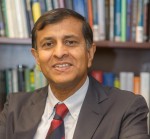
Dr. Ganeshan Wignaraja is Professorial Fellow in Economics and Trade at Gateway House and Visiting Senior Fellow at ODI Global in London. He holds visiting appointments at the National University of Singapore and RIS in New Delhi.
He is a member of the Central Bank of Sri Lanka’s Stakeholder Engagement Committee on monetary policy and financial stability matters. Previously, he served on the WTO Director-General’s Task Force on Aid for Trade during the WTO Doha Round and the Sri Lankan Prime Minister’s Task Force on the Indian Ocean.
In a career spanning over 30 years in the UK and Asia, he has held senior roles in international organizations (including the Director of Research at the Asian Development Bank Institute in Tokyo, Chief Programme Officer at the Commonwealth Secretariat in London and a Visiting Scholar at the IMF in Washington DC), government (including Executive Director of the Sri Lankan Foreign Ministry’s think tank), and the private sector (including Global Head of Trade and Competitiveness at Maxwell Stamp PLC in London). He also worked at the Institute of Economics and Statistics at Oxford University and the OECD in Paris.
Dr. Wignaraja has published extensively on macroeconomics, international trade, regional economic integration and economic development. He has successfully led teams to deliver complex projects for aid agencies and governments in over 30 countries in Asia, Africa, Europe and Latin America.
He has a DPhil in economics from Oxford University and a BSc in economics from the London School of Economics.
Expertise
Macroeconomic Outlook of the World Economy and Asia, Global Supply Chains and Free Trade Agreements, International Financial Architecture and Foreign Aid.
The India–Sri Lanka Free Trade Agreement (ISFTA), implemented in 2000, has significantly expanded India–Sri Lanka trade, investment and tourism. But it now needs to be deepened beyond goods to make the most of the modern, supply-chain-driven global economy. Any ISFTA 2.0 should update rules of origin, liberalise services, digitise customs, strengthen investment protections and deepen connectivity to help Sri Lanka integrate into India-centred supply chains.
Cyclone Ditawah has put a serious dampener on Sri Lanka’s rosy post-budget economic outlook. Sri Lanka can help itself by using available national resources, but India can help too, by partnering with multilateral development banks to manage the post-Cyclone Ditwah reconstruction implementation strategy. It can also share its experience of implementing gradual economic reforms and policy planning under Niti Ayog to support Sri Lanka’s efforts.
After a remarkable recovery from a very deep crisis in 2022, Sri Lanka’s recent budget for 2026 consolidates economic stabilisation and introduces a few markers for further growth. But more needs to be done to embed a growth strategy and transform its economy to avoid further IMF austerity programmes.
Courtesy: Gateway House
3 July 2025 July-August 2025 issue of India Foundation Journal
A slowdown of the Chinese economy, and the shift, particularly by MNCs, from China to other more competitive locations has opened up business opportunities for latecomers to supply chains in the developing world. Evidence suggests that Southeast Asia and some South Asian countries like India, Sri Lanka, Bangladesh, could be beneficiaries of the supply chain shift, particularly in labour-intensive segments.
The India-UK Free Trade Agreement comes amidst increasing economic uncertainty caused by the Trump administration’s reciprocal tariff policies. The FTA has revitalised previously lethargic discussions for India to conclude FTAs between like-minded countries. An India-EU FTA, along with the India-UK FTA, may reform global rule-making on international trade and perhaps even revive the WTO.
Geopolitics is increasingly intertwined with the economic destiny of South Asia. Even before the U.S. tariffs were rolled out, growing polycrises had hit the global economy, which has been struggling since the pandemic. South Asia seems a relatively bright spark of regional trade and growth. This paper analyses South Asia’s trade architecture in the backdrop of a sluggish world economy in the 2020s, and makes recommendations for closer regional economic integration.
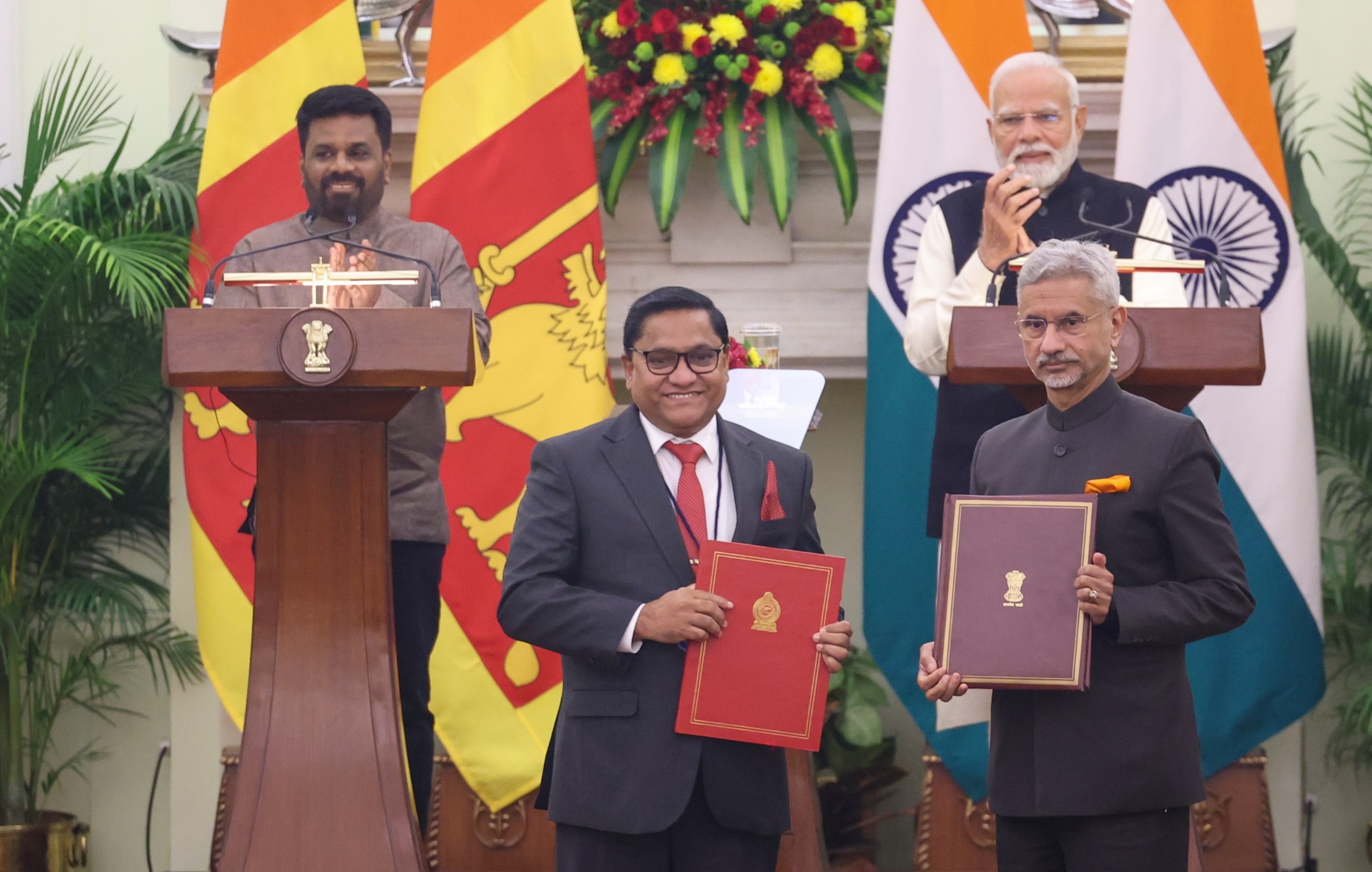
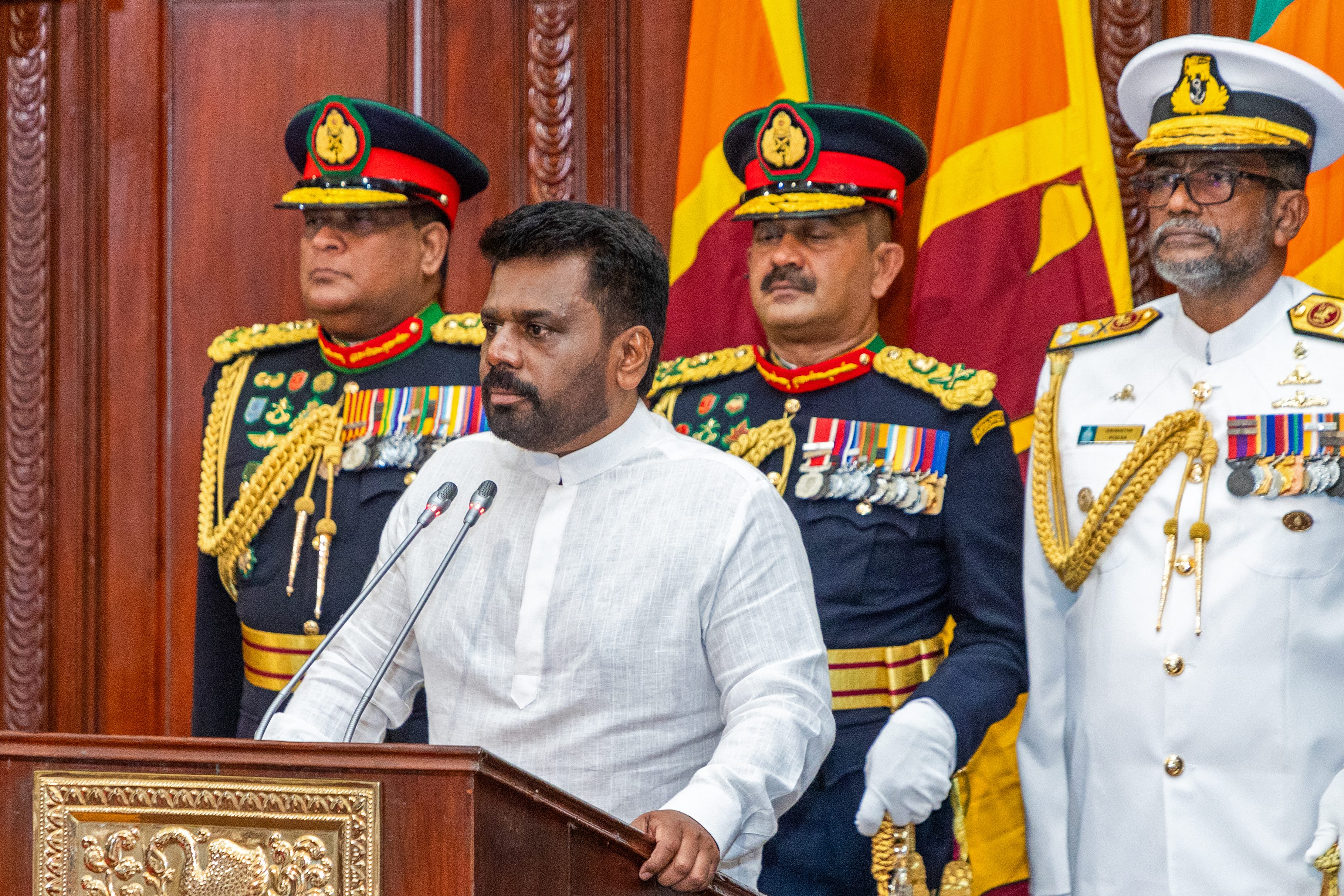
The state visit of Sri Lanka’s new President Dissanayake to India, is welcome at many levels. His party’s majority win gives Sri Lanka the strength to undertake the hard reforms necessary to put the island back onto its higher economic status. India’s assistance has helped but there is more to be done to elevate the bilateral. For India which is now in a hostile neighbourhood, Sri Lanka can be a valuable friend.
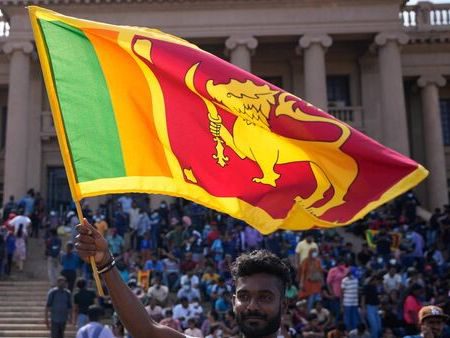
Sri Lanka's sovereign debt default in April 2022 triggered a paralyzing economic crisis. Steep inflation and widespread financial uncertainty hampered any efforts at recovery. The economy is now showing signs of stabilization. Internally focused government policies, foreign investment, aid from development partners like India and the U.S., and the IMF’s recovery program have set Sri Lanka on the path to recovery and, hopefully, eventual economic success.
The breakdown of the Doha negotiations at the World Trade Organization and ongoing wars in Ukraine and West Asia have led to rising protectionism, which disproportionately affects developing countries. This policy brief recommends how the G20, representing nearly 75% of international trade, can leverage its position to advance a non-discriminatory, sustainable, and transparent multilateral trading system for low and middle-income countries.
The new Sri Lankan government led by President Anura Kumar Dissanayake held its first meeting with the International Monetary Fund on October 3, to discuss further debt relief. Dissanayake, who overcame voter apprehension in the country’s presidential elections held two weeks ago, now has a historic opportunity to bring Sri Lanka out of the crisis and enable a compassionate and efficient transformation.