Office of the Pakistani Prime Minister_AFP Courtesy: AFP
27 August 2026

Mecca Accord and India’s energy security

The Mecca Accord between Saudi Arabia, Turkiye and Pakistan has raised some red flags in the region, and in India. One element remains unchanged: India’s value to Riyadh as an energy importer. With demand security holding more weight than supply security in an uncertain future, a major and growing oil importer like India is more important than the cash-for-security arrangement the Kingdom has signed with Pakistan.

DPI for AI in India Courtesy: Gateway House
19 August 2026

DPI for AI and AI for DPI

India’s transition from Digital Public Infrastructure to indigenous AI is not simply an effort to make more data available for AI development. It is to see how data associated with public digital systems can be brought into new technological uses without weakening the legal and institutional safeguards that govern its collection, access and use. That balance creates sustained innovation alongside privacy, participation and public accountability.
sabrang india (1) Courtesy: Council on Foreign Relations
23 July 2026

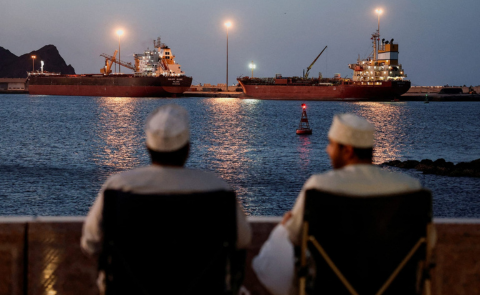
India should re-examine its energy investment

The absence of panic in the energy markets despite the renewed U.S.-Iran fighting indicates a well-supplied oil market in the longer term. That means stability for energy short countries like India in the long term. In the short term, however, India will be impacted by other disruptions, such as the increased use of sanctions.

Website articles  (3) Courtesy: Gateway House
9 July 2026

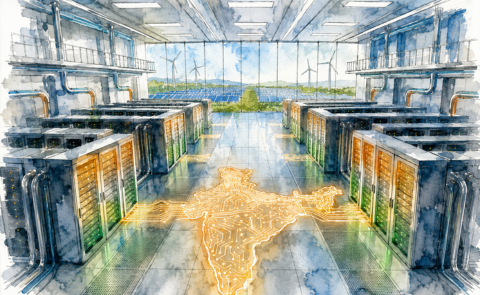
The missing pillar of India’s sovereign AI

India’s sovereign AI strategy prioritises chips, compute, data, models, and talent, but overlooks a critical pillar: energy security. As AI-driven electricity demand surges globally and the IndiaAI Mission rapidly expands computing capacity, reliable power is becoming a defining constraint on AI ambitions. Energy security must therefore be recognised as a core pillar of India’s sovereign AI strategy, not merely as supporting infrastructure.

Kenny Holston  AP (3) Courtesy: Business Post
11 June 2026

AI and its spin-off gains

The AI industry in the U.S. is on a high, with three major upcoming public offerings on the table from Anthropic, Open AI and Space X hogging the attention and news. But users are increasingly concerned about costs, and developers are rushing to raise capital. When the effervescence abates, a reduced appetite for AI stocks may eventually see investors return to emerging markets. Can India benefit?

DD India Courtesy: DD India
4 June 2026

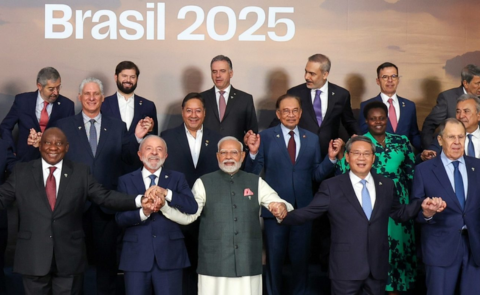
BRICS at a Pivotal Moment

BRICS is too significant to ignore but too fragmented to drive meaningful change for the developing world. The West Asia conflict, U.S. tariff threats over de-dollarisation, UNSC reform divisions, and the presence of regional rivals has exposed its internal strains. Will India’s ongoing 2026 chairship rise above the contradictions, and manage to turn BRICS from a reactive forum into a more assertive and credible global force?

Website articles  - 2026-05-28T124708.235 Courtesy: Global Times
28 May 2026

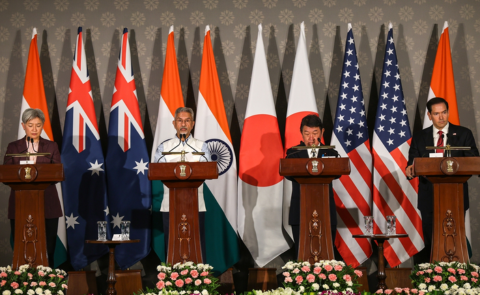
The Quad, reset

The Quad Foreign Ministers’ Meeting, held in New Delhi on May 26, highlighted both the progress and uncertainties surrounding the grouping. Significantly, it reaffirmed U.S. engagement. While the Quad has expanded its agenda and provided some concrete outcomes, the all-important Leaders’ Summit is still not visible – a worry for India’s prolonged chairship since 2024.

Website articles  (68) Courtesy: AFP
2 April 2026

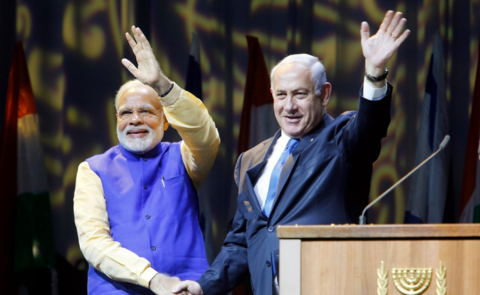
Modi’s Israel visit brings defence and tech

It is important to take an objective review of PM Modi’s visit to Jerusalem and its implications for India’s security. New Delhi will have to demonstrate its strategic autonomy by managing heterogeneous and often contrapuntal relationships and strike a balance in its ties with the U.S. and Israel on the one hand and Iran and the Arab world on the other hand.

Website articles Courtesy: Warung Pintar
6 November 2025

Jakarta’s bet on India’s digital playbook

The currents shaping the relationship between the Indo-Pacific’s two largest democracies are not trade winds but terabits flowing through fiber-optic cables and the instant signals of digital payments. Jakarta and New Delhi are forging a landmark digital alliance—one that goes beyond technology. At the heart of this digital handshake lies the plan to link Indonesia’s BI-Fast with India’s Unified Payments Interface.

GH (1) Courtesy: Gateway House
24 September 2025

India’s new laws hold platforms accountable

The colonial penal code never imagined a world where software, not a human, amplifies hatred. Section 197 of the Bharatiya Nyaya Sanhita now penalises ‘acts prejudicial to national integration’ carried out through electronic communication.