20260415_1714_Minimalist Iran Conflict Illustration_remix_01kp8f9nksftqrj3zntfnpktpe Courtesy: Gateway House
15 April 2026

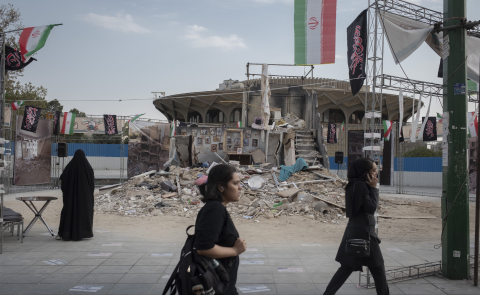
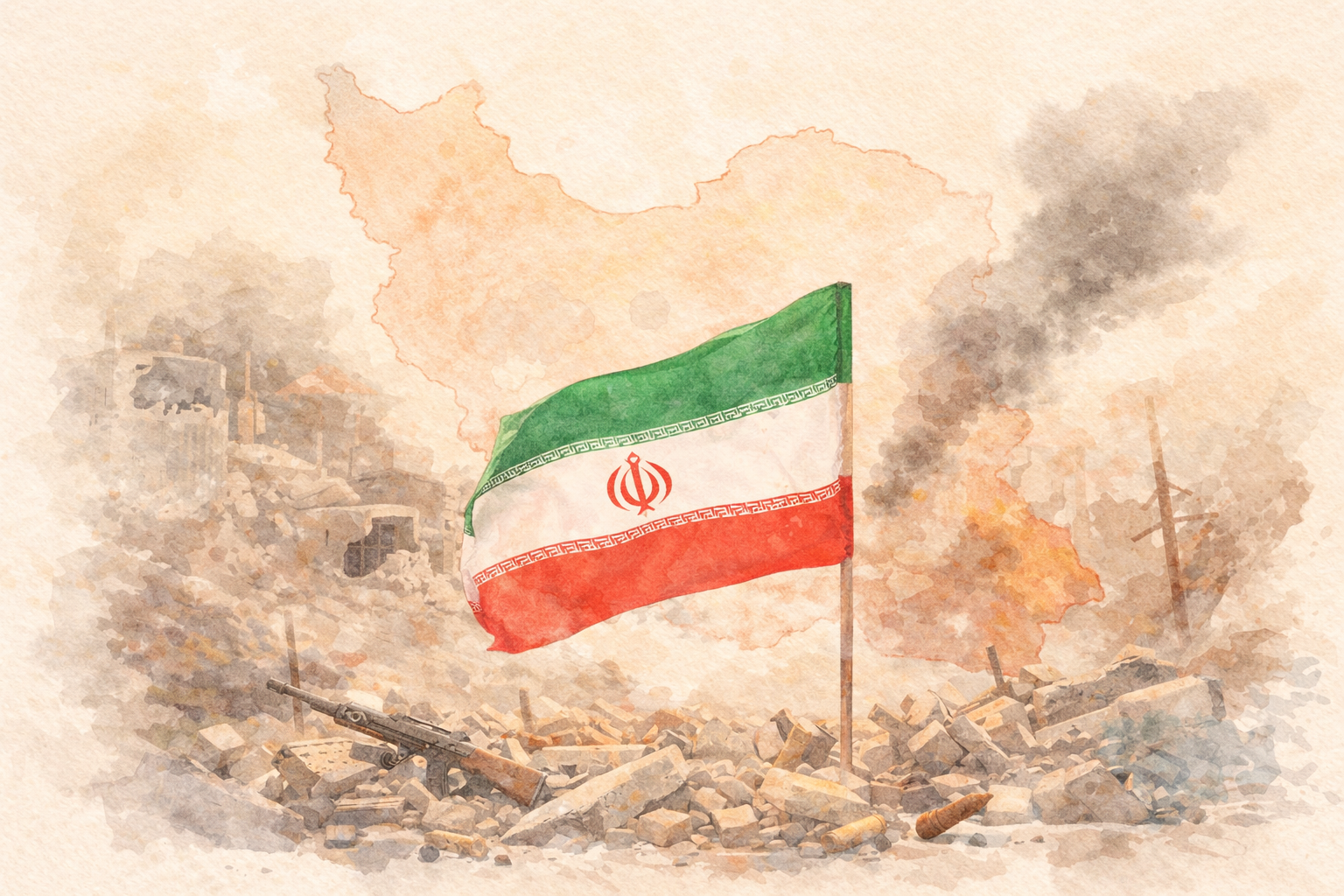
How did Iran fight this war?

The West Asian conflict is raising questions about Iran’s performance. Tehran appeared well-prepared, having expanded its low-cost drone and missile capabilities. It also widened the conflict by targeting U.S. bases in the Gulf. The key lesson is that eliminating leadership does not guarantee regime change. The conflict underscores that modern warfare depends not just on battlefield gains, but also on economic resilience, trade leverage, and technological strength.
Website articles  (68) Courtesy: AFP
2 April 2026

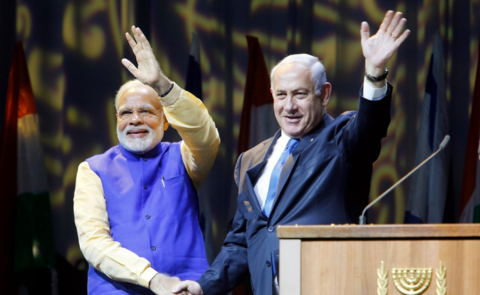
Modi’s Israel visit brings defence and tech

It is important to take an objective review of PM Modi’s visit to Jerusalem and its implications for India’s security. New Delhi will have to demonstrate its strategic autonomy by managing heterogeneous and often contrapuntal relationships and strike a balance in its ties with the U.S. and Israel on the one hand and Iran and the Arab world on the other hand.

Website articles  (52) Courtesy: AFP
9 March 2026

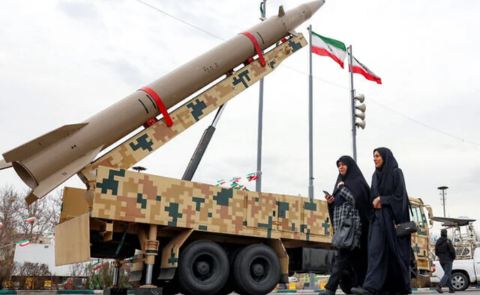
Iran regime change unlikely

The U.S.–Israel war against Iran will alter the geopolitical landscape of West Asia and adversely impact the global economy, including India. Vali Nasr, Majid Khadduri Professor of International Affairs and Middle East Studies at Johns Hopkins University School of Advanced International Studies, analyses the conflict and its implications in an exclusive conversation with Nayanima Basu.

Website articles  (11) Courtesy: Shutterstock
5 March 2026

West Asia conflict: who benefits?

The U.S. and Israel launched precise airstrikes on Iran, targeting nuclear facilities and senior leadership. Their aim is to weaken Iran’s nuclear programme and potentially induce regime change, while Tehran’s priority remains regime survival. The conflict’s duration will depend on whether it remains limited to missile exchanges or escalates into asymmetric warfare.

IMEC map with source Courtesy: Gateway House
11 June 2025

IMEC: more than just a corridor

The proposed IMEC corridor connecting India to Europe through the Gulf can be transformative, helping to reduce risks to the global movement of goods and data. It’s early days yet, and there are gaps to be filled in terms of missing infrastructure and overcoming a diplomatic rift.

trump mideast Courtesy:
5 December 2024

A new U.S.-Middle East diplomatic landscape

Donald Trump has re-entered Washington with the backing of a solid political base, a redefined Republican Party, and a more seasoned presence on the international stage, including in the Middle East. Since his last imprint on that region in 2016, 2024 presents significant shifts: alliances redefined, regional power dynamics realigned, trade networks transformed, and urgent security challenges restructured. These changes demand strategic recalibration from all stakeholders.

MauricioPiece2 Courtesy: India Today
29 February 2024

Middle East demands new frontiers of diplomacy

Just as September 11, 2001 unfolded a new chapter of the world order, as December 17, 2010 awakened the "Arab Spring," so October 7, 2023, has become a date that has unforgettably changed the Middle East's foreign policy and geopolitical dynamics. The existential paradigm of Israel and Palestine has adopted a war axis without turning back but has necessitated reevaluating diplomacy and recalibrating priorities.

Screenshot 2023-11-29 at 6.07.50 PM Courtesy: The Indian Express
29 November 2023

Hamas’ ideology minus trust

Hamas faces an existential crisis in Gaza now that the Israeli army has captured its military headquarters and operating tunnels in northern Gaza. So far Israel has successfully ignored international pressure to limit its ground operation. In between are the Gazans, caught within an ideology they don’t trust.

Bill_Clinton,_Yitzhak_Rabin,_Yasser_Arafat_at_the_White_House_1993-09-13 Courtesy: The Atlantic
9 November 2023

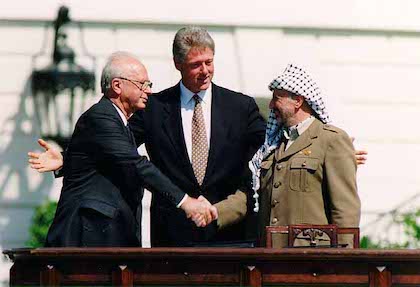
Hamas’s Jihad vs. Arafat’s struggle

By blending Islam, Marxism-Leninism, Arab nationalism, and Third World radicalism during the 1960s, Yasser Arafat succeeded beyond expectations, in impactfully putting the Palestinian question forward for international attention. The spoiler was Hamas, with its jihadi calls for the cause of Palestine and rejection of peace initiatives.

Screenshot 2023-10-26 at 2.00.04 PM Courtesy: Nikkei Asia
26 October 2023

The narrative is the war

The Israel-Hamas War has shown the devastating impact of disinformation as a strategy of unconventional warfare. This narrative-led approach begins before hostilities start and seeks to set the agenda for leaders, their militaries and geopolitics. Democratic societies like India must prepare for similarly coordinated strategies and build societal resilience to manipulation.