


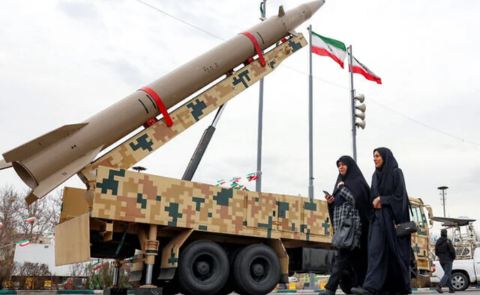
The U.S.-Israel war against Iran will alter the geopolitical landscape of the West Asian region, and adversely impact the global economy, including India. Iran is fighting for its survival, for the long war. The U.S. is not prepared for a long war, its costs or consequences, Vali Nasr, Majid Khadduri Professor of International Affairs and Middle East Studies at the Johns Hopkins University School of Advanced International Studies (SAIS), and Non-Resident Senior Advisor in the Middle East Program at CSIS, tells Nayanima Basu in an exclusive conversation.
Nayanima Basu (NB): What is your analysis of the war between the U.S., Israel and Iran?
Vali Nasr (VN): The issues between Iran and the U.S. have been long running. But the decision to go to war in this manner was taken unilaterally by the U.S.. In a way, it’s an unprovoked war and an unprovoked killing, of Iran’s supreme leader. This idea of decapitation, assassination of the leader of another country, whatever and however the U.S. and Israel justify it by demonising the leadership, nevertheless is a very bad precedent internationally. Because international law survives on the basis of applying it to everybody and every case. There are no exceptions to it. This war is a continuation of the war that Israel started in June of 2025, and then the U.S. joined in, after a weak ceasefire. This time, the U.S. joined the war right from the beginning and it has many implications. So ultimately, it is the U.S. now formally signing up to what are Israel’s plans for Iran and the Middle East. Israel sees an opportunity to destroy all of its rivals, starting with Hamas, then Hezbollah, Syria, now Iran. The U.S. has joined in this process.
NB: You mean the U.S. is now also working towards the ‘Greater Israel’ plan, along with Benjamin Netanyahu?
VN: I don’t know if the U.S. believes in the larger issue, but the ‘Greater Israel’ plan can be interpreted in two ways. One is geographic, which is a lot of Arab countries, much bigger Israeli revision of borders in the Middle East. The other is in terms of Israel’s understanding that it should have freedom of action to assert its security interest – in the way it interprets it in the much larger Middle East. Like if it decides that the presence of some people in Qatar is a problem then it will attack Qatar. Israel sees the future of the Middle East essentially defined by the security parameter of Israel, in terms of Israeli military might, not in terms of a set of political agreements that would define what is the future of the region. I think definitely the U.S and not just President Trump, but even President Biden, actually supported Israel defining its security parameter, how it wants to achieve it, and ultimately, what should be the shape of the future in the Middle East, in the way that Israel sees.
NB: But how is bombing a country and assassinating its leader justified?
VN: Decapitation of the leadership of a country, particularly a country the size of Iran is generally a problematic value proposition. Because then other countries could take it upon themselves to do the same thing. It changes the way countries will behave, protect themselves, and operate if this becomes the norm. It’s a hugely problematic issue. It will define Iran’s reaction to the war and when the war ends, it will be hugely decisive in that.
NB: The U.S. and Israel have clear plans to escalate the war; will Iran be able to sustain?
VN: Iran is prepared for it. Iran is also prepared for a long fight. Obviously, Iran is fighting against much more powerful militaries in terms of capability. The Israeli gameplan – from the pattern of the bombing that we’re seeing and from the support for Kurdish insurgency – is to essentially to break down the Iranian state altogether. But for America, I’m not sure if that’s a wise thing, because whatever happens, the implications of what happens to Iran afterwards will become a problem for the U.S. It will become a problem for U.S. allies – Turkey, Iraq, the Gulf countries – and that ultimately will become a problem for the U.S.
NB: Isn’t Iran isolating itself by bombing the Gulf countries in its neighbourhood?
VN: They were not going to get support from the Gulf anyways. And they were not going to get support from other countries of the Global South or China and Russia. They get verbal support and sometimes there is some material support, but Iran knew that in this fight they would be alone. There is no China or Russia or anybody else coming in to actually fight alongside Iran. I think these are sort of assumptions that were never there in Tehran.
NB: Tehran has partially shut down the Strait of Hormuz. Will that not isolate Iran further?
VN: Iran is fighting for its survival. It’s not concerned with short-term things, which country gets upset or irate. They’re saying, ‘we’re dying here.’ Somebody whose back is to the wall and is fighting for survival cannot think about diplomatic niceties.
NB: Is China not supporting Iran?
VN: They would, but nobody would provide the kind of support to Iran that America provides Israel. The Chinese are not going to war for anybody else nor the Russians for that matter. So, Iran is on its own in this war. But Iran’s attack on the Gulf countries, I don’t think is really an attack on the Gulf countries. It’s an attack on American bases and American radar systems that happened to be in the Gulf countries. And secondly, Iran is seeing that one of its only options, in order to create deterrence against America, from escalating further, is to attack the role that the Gulf plays in the global economy. So it’s a very complicated situation. The U.S. assumption has been that it can go to war with Iran, destroy the country, and kill its leadership. But that somehow it can also protect the Gulf and the importance that it has to global economy. Iran’s strategy is exactly to say, no, you can’t do that. If you go to war with us, you have to be prepared to pay economic costs. And so that means threatening the Gulf.
NB: Is America really winning? The regime-change operation has not really been successful.
VN: Each side may say things in the fog of war that are designed to make them look stronger than they are. No, America has not achieved regime change (in Iran). It hasn’t achieved its goals in Iran yet. There are tactical goals it has achieved, which is, bomb here, bomb there, kill this person, kill that person. But if the strategic goal was for Iran to come out, surrender, capitulate to America’s dictat, that hasn’t happened. And it’s very clear that for America to achieve that goal of capitulation of Iran, it has to do a lot more than it has already. It means a long war. I don’t think the U.S. is prepared for a long war, the costs of the long war and the consequences of the long war.
NB: How do you see the appointment of Mojtaba Khamenei as the new Leader of Iran?
VN: The choice of a supreme leader reflects what the leadership thinks Iran needs now. The intensity of the war has only entrenched their own determination to fight, and he represents that determination.
NB: How do you see India’s position in the Iran War?
VN: Every country has to look after its own national interests in this situation, the U.S. has followed the policy of , first of all, looking at Iran as a bigger threat to the U.S. than China or Russia – which was the view of all American administrations going back to Obama. This is not a correct way of looking at it because the U.S. all along has been willing to give things to China or Russia in order to isolate Iran. It’s always been an American policy.
The second thing is that the U.S. has had no concern for how its allies or other countries of the Global South – be it Turkey, UAE, India, Indonesia – might see things. And it’s not willing to consult and see what makes sense. So, India’s equities in Iran – like Chabahar – strategic role in Iran, was always important in limiting China’s role in the Middle East. But the U.S. policy has set that completely aside. I’m not expecting that the U.S. either solicitate ideas from other countries or takes their concerns or their interests on board. The policies that the U.S has followed about Iran is basically to make Iran closer to Russia and China.
And it’s not just America, it’s also Europe. Europe’s policies have also made the Iran, Russia relationship much tighter. Nobody has ever tried to follow a policy that would separate Iran from Russia or China.
NB: Today India seems to be leaning more on the U.S.-Israel side. How will Iran view this in time to come?
VN: The relationship that used to exist between India and Iran is no longer there. The set of events that have happened in the region has made Iran much closer to China and to Russia. Friendships are always around declarations and policies etc but you also have to be anchored in real economic sets of relationship. And now, majority of Iran’s economic relationships are first with China, then with Russia. It has relations with the UAE as well, but those are much more transactional trade and finance relationships. But its largest strategic and economic relationships are now with China.
This has happened as a consequence of two things that have happened during the Obama, Trump, Biden administrations – all three – which is Europe and India have cut their economic ties with Iran and the consequence of loss of Europe as a market but also as a source of capital goods for Iran, the loss of India as a balance to China in Iran’s decision-making has only led to Iran becoming essentially and overwhelmingly dependent on the Chinese economy – both as a market for its oil and also as a source for raw materials, capital goods and technology. In the case of Europe, Iran has also become more pro-Russia. Yes, Europe can punish Iran for being so close to Russia in the Ukraine War. That also as a consequence because Iran has no equities with Europe, no economic equities.
NB: How do you see the endgame and what’s next for Iran?
VN: It all depends on how this war ends. One doesn’t know how it ends. America can be successful in breaking the regime in Iran but not without American boots being on the ground in Iran, only that can bring an actual regime change. To install Reza Pahlavi in Iran would also require American troops being inside. If it’s Afghanistan in 2001, or Iran 1941, then, yes the U.S. can appoint (a leader of their choosing). But all the U.S. can achieve from its current war with Europe and Israel, is to weaken the Islamic Republic and break the institutional structure of the state in Iran, destroying all sorts of infrastructure, like what’s happening in Gaza, for instance.
That does not produce an alternative. There’s no alternative on the ground even in Gaza. There’s no alternative to Hamas. Yes, but if the Israelis occupy Gaza, they can decide who will rule Gaza. But until and unless there is that kind of presence in Iran and if the U.S. is really willing to put 500,000 troops to go inside Iran, it’s not going to be able to appoint whoever it wants.
NB: Will the U.S. put boots on the ground in Iran?
VN: Trump was opposed to the cost of such a war, which will be huge. So the winner will be China, as it was after 9/11. Already, the war with Iran signals that despite everything the U.S. is saying, it is pivoting back to the Middle East [not Asia]. When it started an unnecessary war that is consuming a huge amount of its weaponry is costing a lot, and if it cannot wrap up this war quickly, it will get deeper and deeper in there, so it’s back to the George Bush era, where the pressure will be off to China and Russia in many ways. Yes, China will also lose in terms of oil from Iran and disruption in energy supplies from Saudi Arabia and that’s why Beijing is today concerned. But in the larger scheme of things China could be the winner.
Vali Nasr is Majid Khadduri Professor of International Affairs and Middle East Studies at the Johns Hopkins University School of Advanced International Studies (SAIS), and Non-Resident Senior Advisor in the Middle East Program at CSIS.
Nayanima Basu is the Adjunct Fellow at Gateway House and an author.
This interview was exclusively recorded for Gateway House: Indian Council on Global Relations. You can read more exclusive content here.
For permission to republish, please contact outreach@gatewayhouse.in.
Support our work here.
© Copyright 2026 Gateway House: Indian Council on Global Relations. All rights reserved. Any unauthorised copying or reproduction is strictly prohibited.