


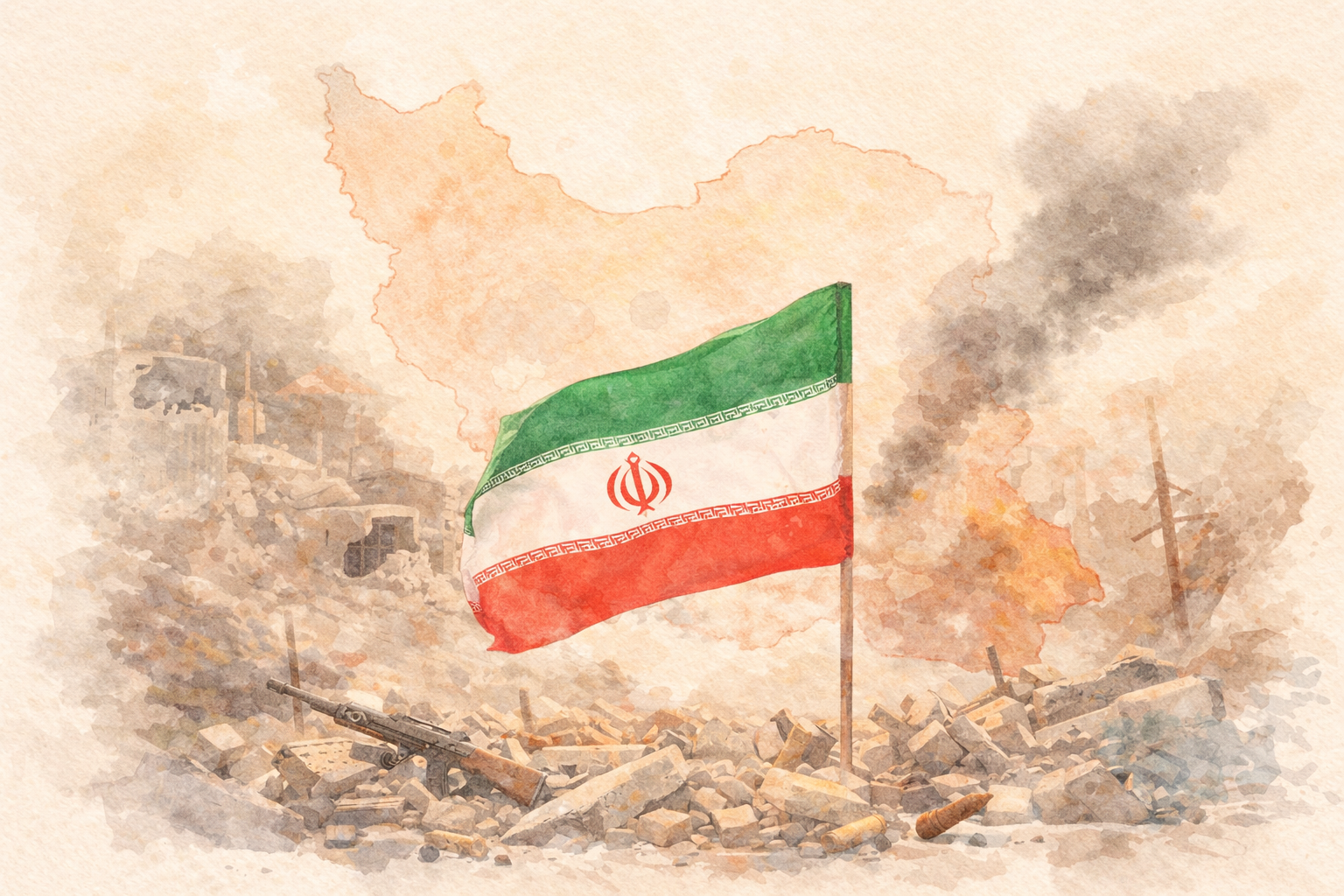
On 11 April 2026, the entire world tuned in to find out the outcome of the talks between the U.S. and Iran. Then came the statement from U.S. Vice President JD Vance conveying that the talks had failed. What the future holds for the ongoing conflict is now uncertain.
How did Iran perform in this war? Iran was expecting this war. The U.S. moved its aircraft carrier, the USS Abraham Lincoln, from the West Pacific to the Gulf, a process that took almost three weeks. It also repositioned its air assets to its West Asian bases. All of this gave Iran sufficient warning and preparation time.
Iran began building its reserves of drones and missiles following Operation Midnight Hammer. The Shahed-136 drones, which Iran used extensively, are relatively cheap—costing between $7,000 and $10,000—and can be produced in the hundreds each month. Initially, Iran deployed these low-cost drones and older missiles to draw out the air defence systems of Israel and the U.S., which are significantly more expensive and harder to replace. This strategy weakened the air defences of both Israel and U.S. bases.
Subsequently, Iran was able to penetrate these defences. This is how Dimona, which houses Israel’s nuclear programme, was targeted. Iran also expanded the conflict to other Gulf countries by attacking U.S. bases there, which came as a surprise to Washington.
An even greater surprise to both the U.S. and the wider world was Iran’s move to close the Strait of Hormuz (SoH). Technically, it was not fully closed. Iran allowed Chinese tankers to pass through first, followed by vessels flagged by India, Pakistan, and Turkey. Japan was later added to the list. Nevertheless, this selective restriction triggered a global energy crisis. (See Chart 1 below for the flow of oil through the SoH.)

The biggest surprise, however, was Iran firing two missiles with a range of nearly 4,000 km towards Diego Garcia. Although both were neutralised, the move shocked the Americans, who had believed Iran’s missile range to be capped at around 2,000 km.
Despite losing a significant portion of its navy and air force, and having much of its air defence system neutralised, Iran demonstrated a remarkable ability to absorb damage. Its pre-planned structure for operating in the event of a decapitation of leadership was activated. This system is known as “Mosaic Defence”.
To understand Mosaic Defence, it is necessary to examine the organisation of Iran’s armed forces. (See Chart 2)

Following the Islamic Revolution, Iran established the Islamic Revolutionary Guard Corps (IRGC) alongside its regular army. It serves at the pleasure of the Supreme Leader, and its role is to protect the regime’s ideological integrity. The IRGC mirrors the structure of conventional armed forces, encompassing all arms and services. It is specifically trained to execute Mosaic Defence.
In the event that Iran’s leadership is eliminated, the IRGC is designed to function as 31 independent units, operating autonomously without waiting for centralised orders. One unit is assigned to Tehran, while the remaining 30 correspond to the country’s provinces. These units are also expected to defend their respective areas through layered defensive strategies in case of a ground offensive by an enemy.
On February 28, 2026, when Iran’s leadership was wiped out, Mosaic Defence was activated. Notably, the Basij, a paramilitary organisation, maintained internal security throughout the conflict.
What are the lessons from this conflict?
First, technology can at best act as an enabler; it cannot win wars on its own. If it could, the U.S. would have won every conflict it has fought—which is clearly not the case.
Second, resilience matters. Both the Russia-Ukraine war and the Gulf conflict demonstrate that a determined and resilient country can hold off major powers, but at the cost of casualties and infrastructure damage.
Third, lower-end technology, when used innovatively, can counter high-end systems. Iran’s effective use of Shahed-136 drones and older missiles significantly enhanced its staying power against the U.S.
Fourth, eliminating a country’s leadership does not guarantee regime change or victory. Iran had been preparing for this moment for over 45 years, and it had watched the U.S. tactics of regime change over the decades, and recently with Venezuela’s Maduro. Its plan to quickly put in place an alternate leadership has been successful. For the aggressor, at best, such actions may offer psychological satisfaction
Fifth, while populations may be dissatisfied with their governments, external aggression can lead to internal unity. In Iran’s case, the wider public, which had come out in large numbers – 5 million – in January 2026 to protest the dire economic conditions of the country, was met with a violent crackdown and deaths and has stayed indoors through this crisis. Intimidation by Basij also ensured this. The regime’s supporters, however, have been on the street, with their sentiment aligned against Israel and the U.S.
Sixth, the use of AI-enabled precision targeting has prevented significantly higher casualties on both sides. Iran, the U.S. and Israel have used AI to ensure precision targeting. There are reports that China and Russia assisted Iran by providing accurate target information and data. It has been widely reported that China has integrated Iran into its Beidou 3 satellite system, which provides positioning, navigation and timing that has increased the accuracy of targeting the enemy manifold.
Lastly, supply chains for critical resources are becoming increasingly fragile. First the Russia-Ukraine conflict and now the Persian Gulf War have disrupted energy supply chains, with global repercussions. Consequently, even countries not directly involved in conflicts are experiencing a significant impact.
What is the way forward?
This war will leave lasting scars—not only on the participants but also on countries far removed from its epicentre. Although the talks in Islamabad have failed and the U.S. has announced a blockade of the Strait of Hormuz, Washington will continue to explore exit options, as its goal of neutralising Iran’s nuclear capability has not yet been achieved.
The U.S.’ global standing may diminish somewhat. Its inability to swiftly conclude the conflict against a weaker adversary, coupled with limited allied support, will contribute to this perception. The conflict may negatively impact the Republican Party in the U.S. mid-term elections scheduled for November 2026.
One of the most significant implications will be for the transatlantic relationship. The lack of support from NATO allies has been a point of concern for Washington. President Trump’s recent references to Cuba suggest that, following a resolution in the Gulf, the U.S. may shift its focus there before the mid-term elections in November and look for support from NATO.
Iran, on its part, though weakened, is unlikely to abandon its nuclear programme. It has drawn lessons from Ukraine—particularly the consequences of relinquishing nuclear capabilities. Iran will continue its sub-conventional support to non-state actors, potentially leading to increased acts of terrorism.
The U.S. is believed to have entered the conflict under pressure from Israel. If the outcome proves unfavourable for Washington, it could strain U.S.-Israel relations. However, as international relations rarely involve permanent alliances or rivalries, ties are likely to recover over time. Meanwhile, Prime Minister Netanyahu may face domestic political challenges due to growing dissatisfaction within Israel.
Divisions between Iran and the Gulf countries may deepen, further isolating Iran. Weaker states will study the experiences of Ukraine and Iran to develop strategies for dealing with stronger powers.
Countries worldwide will prioritise seeking and building alternate, resilient supply chains, particularly for food, fuel, and fertilisers. With Iran’s capture and commercialisation of the Strait of Hormuz, other countries abutting key global waterways and straits will look at the example set by Iran – the Taiwan, Malacca, Gibraltar, and Bering straits, for example. A new model will have to be developed to work around potential choke points.
Finally, the nature of warfare will continue to evolve. Outcomes will no longer be determined solely on the battlefield; economic strength, trade leverage, and technological capabilities will increasingly shape results.
All along, China has remained a silent supporter of Iran. It is closely observing this conflict, as it has with other wars, and will likely incorporate the lessons into its own military doctrine. Mizarvision, a Chinese company that has its government’s backing, has tagged each and every asset of the U.S. and Israel, making a detailed study of operational capabilities and patterns. China will expand its strategic oil reserves from the current 130 days to 180 days.
India, in contrast, has stayed away from the fray, emerging largely unscathed due to its policy of strategic autonomy and multi-alignment. It has focused mostly on ensuring its domestic fuel needs are met, and practiced back-door diplomacy focused on securing its energy supply and the welfare of its diaspora in the Gulf. The country’s immediate goal must be to continue to diversify its sources of oil and gas. In the intermediate term, India would benefit from studying this conflict in detail and integrating the lessons into its own warfighting strategies.
Lt Gen S L Narasimhan is the Adjunct Distinguished Fellow for China and National Security Studies at Gateway House.
This article was exclusively written for Gateway House: Indian Council on Global Relations. You can read more exclusive content here.
For permission to republish, please contact outreach@gatewayhouse.in.
Support our work here.
© Copyright 2026 Gateway House: Indian Council on Global Relations. All rights reserved. Any unauthorised copying or reproduction is strictly prohibited.