sabrang india (1) Courtesy: Council on Foreign Relations
23 July 2026

India should re-examine its energy investment

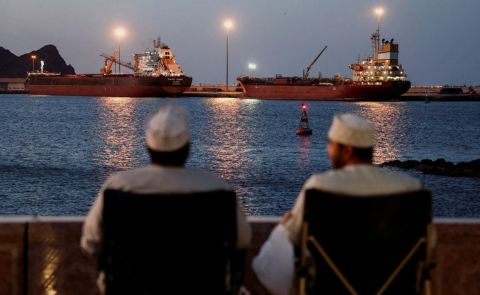
The absence of panic in the energy markets despite the renewed U.S.-Iran fighting indicates a well-supplied oil market in the longer term. That means stability for energy short countries like India in the long term. In the short term, however, India will be impacted by other disruptions, such as the increased use of sanctions.
Website articles  (3) Courtesy: Gateway House
9 July 2026

The missing pillar of India’s sovereign AI

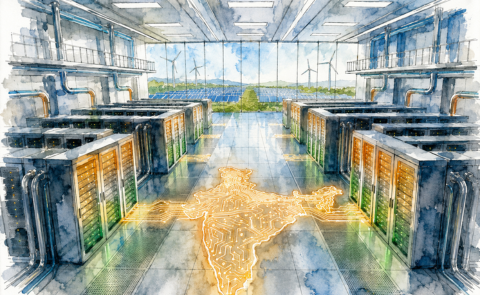
India’s sovereign AI strategy prioritises chips, compute, data, models, and talent, but overlooks a critical pillar: energy security. As AI-driven electricity demand surges globally and the IndiaAI Mission rapidly expands computing capacity, reliable power is becoming a defining constraint on AI ambitions. Energy security must therefore be recognised as a core pillar of India’s sovereign AI strategy, not merely as supporting infrastructure.

Kenny Holston  AP (3) Courtesy: Business Post
11 June 2026

AI and its spin-off gains

The AI industry in the U.S. is on a high, with three major upcoming public offerings on the table from Anthropic, Open AI and Space X hogging the attention and news. But users are increasingly concerned about costs, and developers are rushing to raise capital. When the effervescence abates, a reduced appetite for AI stocks may eventually see investors return to emerging markets. Can India benefit?

Website articles  (68) Courtesy: AFP
2 April 2026

Modi’s Israel visit brings defence and tech

It is important to take an objective review of PM Modi’s visit to Jerusalem and its implications for India’s security. New Delhi will have to demonstrate its strategic autonomy by managing heterogeneous and often contrapuntal relationships and strike a balance in its ties with the U.S. and Israel on the one hand and Iran and the Arab world on the other hand.

Website articles Courtesy: Warung Pintar
6 November 2025

Jakarta’s bet on India’s digital playbook

The currents shaping the relationship between the Indo-Pacific’s two largest democracies are not trade winds but terabits flowing through fiber-optic cables and the instant signals of digital payments. Jakarta and New Delhi are forging a landmark digital alliance—one that goes beyond technology. At the heart of this digital handshake lies the plan to link Indonesia’s BI-Fast with India’s Unified Payments Interface.

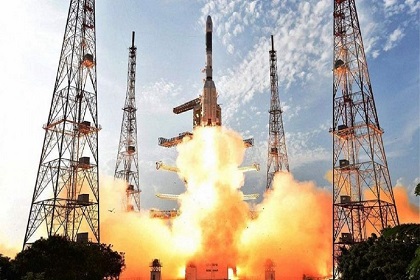
ISRO satellite Courtesy: ISRO
26 May 2022

India’s EO satellites in the Indo-Pacific

The Quad has agreed to launch a satellite-based maritime security initiative to curb illegal fishing by China. India is a global leader in satellite launches, especially in Earth Observation (EO) satellites. The Indo-Pacific nations are looking at the Indian model because it is applicable, economical, and sustainable.

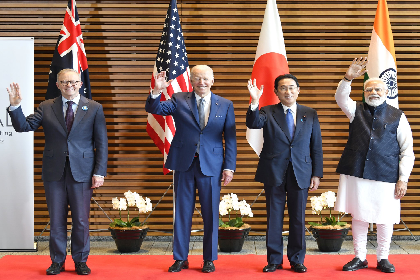
1D8120D2-1A4E-4358-BD1F-E8EFB4D9F40C Courtesy: Twitter- Narendra Modi
23 May 2022

The credibility challenge for Quad

A serious stocktaking is expected at the Quad Leaders' Summit in Tokyo, to measure the progress of its wide-ranging list and proposals. In addition to vaccine partnerships, climate change, and connectivity, the Quad must now craft a common strategy for and expedite cooperation in, the economy, higher education, industry, and technology. It will also project unity in the Indo-Pacific region.

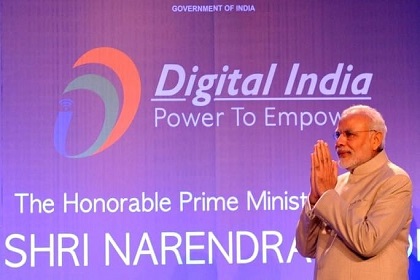
Narendra-Modi-Silicon-Valley-684x420 Courtesy: Twitter: Digital India Archives
19 May 2022

Digital public goods for the Indo-Pacific

With mass digitisation, India has proved that technology is not just for the educated, privileged, and wealthy. The country's open and secure digital public platforms can be significant for the Indo-Pacific, the world's most data-rich region. The Indian model is applicable because it is open-source, interoperable, auditable, and enshrines individual rights, ownership, and empowerment.

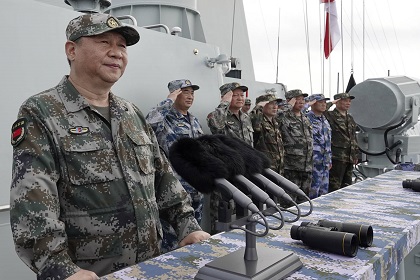
FILE - In this April 12, 2018, file photo released by Xinhua News Agency, Chinese President Xi Jinping, left, speaks after he reviewed the Chinese People's Liberation Army (PLA) Navy fleet in the South China Sea. From Asia to Africa, London to Berlin, Chinese envoys have set off diplomatic firestorms with a combative defense whenever their country is accused of not acting quickly enough to stem the spread of the coronavirus pandemic. (Li Gang/Xinhua via AP, File) Courtesy: The Japan Times
31 March 2022

China’s military modernisation

China's 2022 defence budget reflects the seriousness of the Communist Party aims to fully modernise the People’s Liberation Army by 2027. Given the on-going border competition, it is crucial for India too, to optimise budgetary resources, intensify restructuring and enhance indigenous defence production, thereby improve power projection capability.