Website articles  (3) Courtesy: Gateway House
9 July 2026

The missing pillar of India’s sovereign AI

India’s sovereign AI strategy prioritises chips, compute, data, models, and talent, but overlooks a critical pillar: energy security. As AI-driven electricity demand surges globally and the IndiaAI Mission rapidly expands computing capacity, reliable power is becoming a defining constraint on AI ambitions. Energy security must therefore be recognised as a core pillar of India’s sovereign AI strategy, not merely as supporting infrastructure.

Website articles  (68) Courtesy: AFP
2 April 2026

Modi’s Israel visit brings defence and tech

It is important to take an objective review of PM Modi’s visit to Jerusalem and its implications for India’s security. New Delhi will have to demonstrate its strategic autonomy by managing heterogeneous and often contrapuntal relationships and strike a balance in its ties with the U.S. and Israel on the one hand and Iran and the Arab world on the other hand.

ISRO satellite Courtesy: ISRO
26 May 2022

India’s EO satellites in the Indo-Pacific

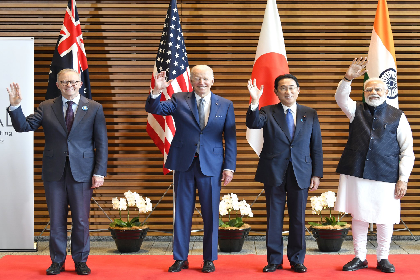
The Quad has agreed to launch a satellite-based maritime security initiative to curb illegal fishing by China. India is a global leader in satellite launches, especially in Earth Observation (EO) satellites. The Indo-Pacific nations are looking at the Indian model because it is applicable, economical, and sustainable.

1D8120D2-1A4E-4358-BD1F-E8EFB4D9F40C Courtesy: Twitter- Narendra Modi
23 May 2022

The credibility challenge for Quad

A serious stocktaking is expected at the Quad Leaders' Summit in Tokyo, to measure the progress of its wide-ranging list and proposals. In addition to vaccine partnerships, climate change, and connectivity, the Quad must now craft a common strategy for and expedite cooperation in, the economy, higher education, industry, and technology. It will also project unity in the Indo-Pacific region.

Narendra-Modi-Silicon-Valley-684x420 Courtesy: Twitter: Digital India Archives
19 May 2022

Digital public goods for the Indo-Pacific

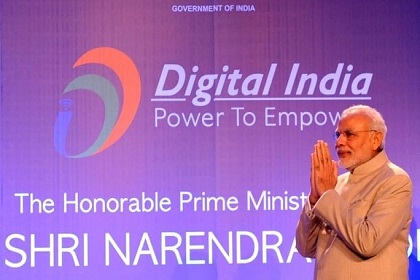
With mass digitisation, India has proved that technology is not just for the educated, privileged, and wealthy. The country's open and secure digital public platforms can be significant for the Indo-Pacific, the world's most data-rich region. The Indian model is applicable because it is open-source, interoperable, auditable, and enshrines individual rights, ownership, and empowerment.

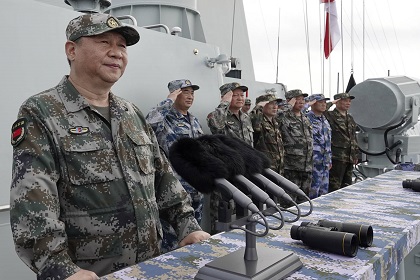
FILE - In this April 12, 2018, file photo released by Xinhua News Agency, Chinese President Xi Jinping, left, speaks after he reviewed the Chinese People's Liberation Army (PLA) Navy fleet in the South China Sea. From Asia to Africa, London to Berlin, Chinese envoys have set off diplomatic firestorms with a combative defense whenever their country is accused of not acting quickly enough to stem the spread of the coronavirus pandemic. (Li Gang/Xinhua via AP, File) Courtesy: The Japan Times
31 March 2022

China’s military modernisation

China's 2022 defence budget reflects the seriousness of the Communist Party aims to fully modernise the People’s Liberation Army by 2027. Given the on-going border competition, it is crucial for India too, to optimise budgetary resources, intensify restructuring and enhance indigenous defence production, thereby improve power projection capability.

India in the Indo-Pacific cover Courtesy: Gateway House
1 February 2022

India in the Indo-Pacific: Pursuing Prosperity and Security

The Indo-Pacific has become an important part of global geopolitics in the recent past, with several great powers implementing concerted Indo-Pacific policies to create economic, social and security linkages with the region. India can use its development experience and futuristic technology to secure stability and prosperity. This compendium of essays explores the comprehensive role that India can play in the Indo-Pacific, from energy and environment, to trade, security, technology and a vibrant diaspora.

sameer cover Courtesy: Routledge India
5 January 2022

Securing India in the Cyber Era

As conflicts move online, countries are manipulating cyber space to exploit their adversaries' dependence on information, communication and digital technologies. The dark web and digital black markets pose a growing challenge to India's national security and digital economy. India's response to the threat is three-pronged use of policy measures, law enforcement, and international collaborations. The excerpt from this book explores the ways in which India can combat cyber crime and manage the global cooperation required to curb illicit online activities.

Geopolitical contestations in cyberspace
27 December 2021

Geopolitical contestations in cyberspace

On 20 December 2021, the Gateway House-FLAME Policy Lab organised a webcast on geopolitical contestations in cyberspace. Gateway House’s Sameer Patil moderated the discussion with former deputy National Security Advisor Latha Reddy, National Law University’s Gunjan Chawla and cybersecurity expert Atul Khatavkar.