Japan Ministry of Defense Courtesy: Japan Ministry of Defense
13 August 2026

Japan’s 2026 Defence White Paper

Japan’s recently-released defence white paper marks a significant turn in intent and policy. The country’s long focus on economic security is now blended with its defence capacity, bringing together foreign policy, intelligence, and economic, technological and industrial capacities into a “comprehensive architecture for national defence.” This is a new conception of national security in Japan.

Canadian Prime Minister, Mark Carney, with Indian Prime Minister, Narendra Modi Courtesy: PTI
6 August 2026

India-Canada on a positive reset

There is a positive reset in India-Canada relations, and this is being strengthened through cooperation in security, trade and education ties. Both countries believe in the strategic value of the Indo-Pacific, and both have been at the receiving end of rough geopolitical treatment by the U.S. They see their salvation in putting the past behind them and deepening bilateral relations.

Website articles  - 2026-07-14T142501.398 Courtesy: X/@narendramodi
14 July 2026

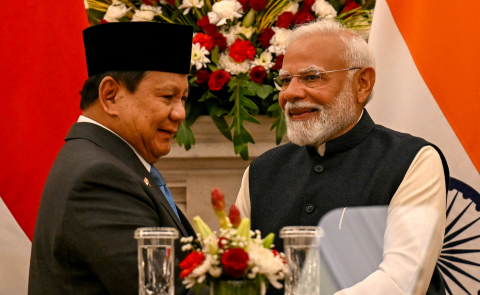
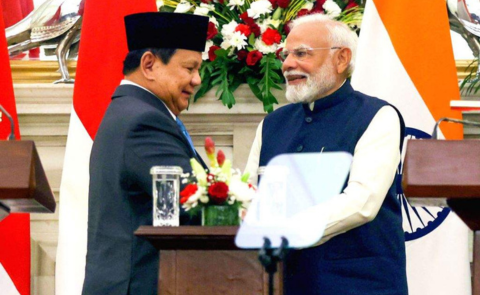
Modi-Prabowo sextet of good intentions

The Modi-Prabowo summit is a shared commitment to enhance strategic cooperation between two major Asian powers. This is necessitated by the dominance of China and the weakening U.S. pledges to regional security. Bilaterally, there has been political progress but limited economic engagement. The key now is to step up the trade and investment pillar, with energetic follow-up action for a strong trajectory.

South China Morning Post Courtesy: South China Morning Post
2 July 2026

The Asian significance of Modi in Indonesia

Prime Minister Modi’s Indo-Pacific tour begins in Indonesia in early July. The two countries are expected to achieve a more aligned worldview, especially with the wars in Ukraine and the Gulf. The emerging entente cordiale between the U.S. and China will have a significant impact on the region, where India and Indonesia are leading players with the Indo-Pacific as their shared home.

G7 Courtesy: Prime Minister's Office of Japan
25 June 2026

G7 Evian summit matters

The 52nd G7 Summit, held in Evian-les-Bains from June 15-17, reflected both the challenges and continued relevance of the grouping. While the G7’s share of global GDP has declined, it remains influential. India’s participation as an invited guest drew attention as a major representative of the Global South. As BRICS chair this year, India has an opportunity to explain the motivations of both the G7 and BRICS to each other's members.

Website articles  (1) Courtesy: Gateway House
18 June 2026

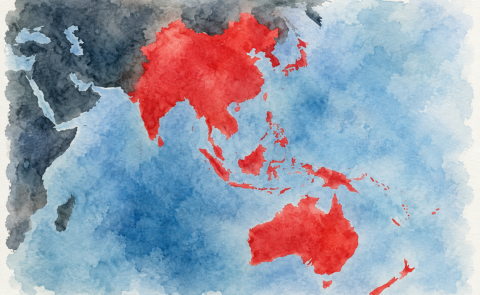
The relevance of the Indo-Pacific

After eight years of its nomenclature, on 16th June the U.S. Pacific Command dropped the 'Indo' from its military command title. It reflects clearly that the U.S. does not consider the Indo-Pacific region to be the most consequential theatre of geopolitics today. Yet its significance as the platform on which great-power contestation in political, military, technological, and economic domains will play out cannot be overstated.

Reuters Courtesy: Reuters
27 November 2025

Japan and China row over Taiwan

China’s attempt to discipline Japan over Japanese Prime Minister Takaichi’s statement on a Chinese attack on Taiwan threatening Japan’s security, may instead strengthen the very alliances Beijing hoped to fracture. By using symbolic economic instruments, invoking the UNSC, and amplifying nationalist messaging while avoiding mass public mobilisation, China signals displeasure without risking internal instability. Yet these same measures push Japan ever deeper into U.S.-aligned networks.

Kyodo News (1) Courtesy: Kyodo News
20 November 2025

Sanae Takaichi’s strong start

The rise of Sanae Takaichi, Japan’s first female prime minister with firm conservative credentials, carries both symbolic weight and political controversy. Her early decisions suggest clarity of intention but also highlight the structural weaknesses and diplomatic sensitivities that will shape her tenure. To keep her ratings high, she has to stabilise her minority government at home, and manage the China, U.S. and ASEAN relationships with tact.

Website articles  (2) Courtesy: Atlantic Council
6 November 2025

Trump’s Asia tour redefines China approach

U.S. President Donald Trump embarked on a five-day trip to Asia, arriving in Kuala Lumpur on October 26. Covering Malaysia, Japan, and South Korea, the visit marked a shift in focus from the Ukraine and Gaza conflicts to Southeast and East Asia, as his administration is set to finalise its China policy and Indo-Pacific strategy. The trip yielded important results, though their impact will take time to assess.

Koerber Stiftung (5) Courtesy: AFP
23 October 2025

India and Indonesia guide Southern Consensus

India and Indonesia sit at the heart of the Indo-Pacific, and participate  in multiple global and regional frameworks that ensure developing countries remain part of governance debates. The two countries can use these platforms to craft a southern consensus, a framework for cooperation that prioritises resilience, equality and cooperation over competition and coercion. This can reduce vulnerabilities among developing countries and strengthen them against future disruptions.