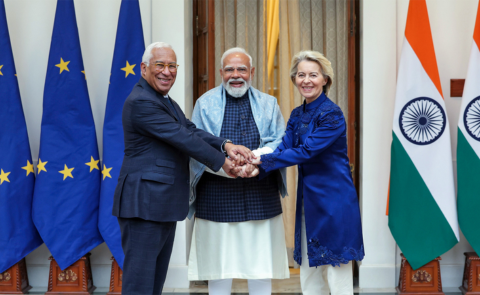
By signing the EU-India Free Trade Agreement on January 27, the ties that bind India and the European collective have been re-energised. They are now set to reach new heights, while overcoming past hesitations and divergences.
India and the U.S. share a comprehensive global strategic partnership across trade, technology, defence, and education, yet high school exchanges remain overlooked. The ecosystem depends on two U.S. government-backed programmes, which have recently faced budget cuts of 90% and have both been paused, putting their future at risk. Nina Robinson, CFR International Affairs Fellow, explains why these exchanges matter and how their loss would limit opportunities for young students.
India is strategically expanding its influence across the Indo-Pacific region, positioning itself as a key player in regional affairs. Three elements anchor the effort: development aid, trade and the diaspora. The country now has 20 Free Trade Agreement partners in the Indo-Pacific. The 21.8 million-strong Indian diaspora across the region is a significant source of soft power for India.
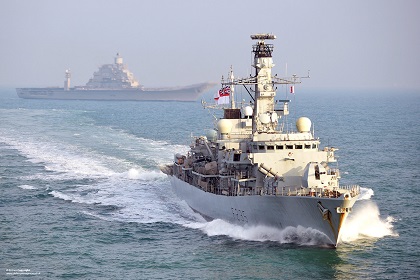
The UK has been admitted to the Comprehensive and Progressive Agreement for Trans-Pacific Partnership or CPTPP, a significant step forward for its efforts in achieving its Brexit goals. The benefits will be more strategic than economic, as it gives the UK a place in the new ‘Atlantic-Pacific’ region.
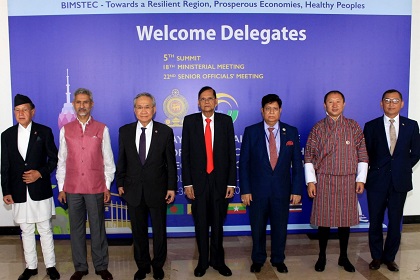
BIMSTEC is of special importance to India as it is a crucial link between the Neighbourhood First and Act East policies. This almost 25 year old multilateral can contribute to the Indo-Pacific region by addressing challenges in strategic areas of regional connectivity, security cooperation, free trade, and geoeconomic ties with external partners.