The Gateway House Podcast is a special audio product created by Gateway House to provide indepth discussion and analysis on important foreign policy events in an accessible, and digestible format. The podcast frequently features experts from Gateway House as well as several external experts from across the world.
You can follow the podcast on iTunes and Soundcloud.
Current Host: Virpratap Vikram Singh, Website Content Manager, Gateway House
Past Hosts: Shubhashish, Ashna Contractor, Dev Lewis
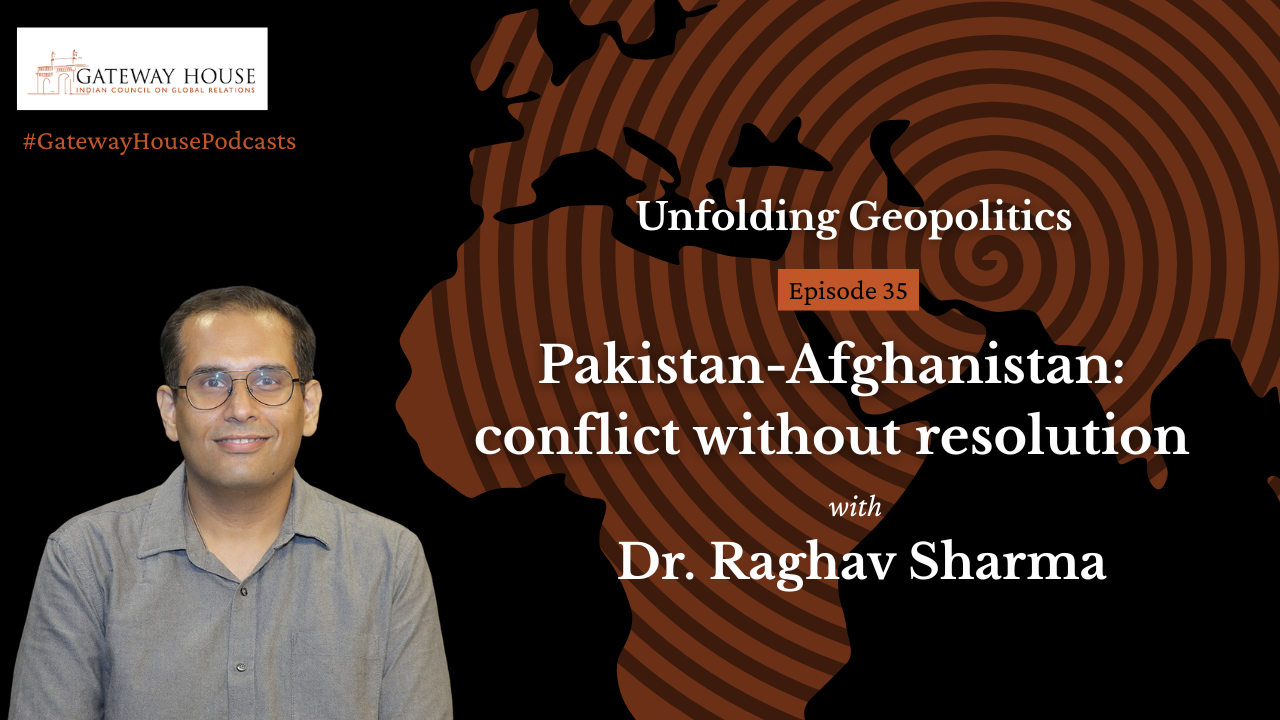
Pakistan and Afghanistan have long shared one of the world's most volatile borders. Pakistan's 2025 airstrikes inside Afghanistan marked a dramatic rupture in a relationship Islamabad had once carefully cultivated. Regional expert Raghav Sharma examines the evolving military balance, China’s mediation efforts, the role of the Gulf states, and how the Iran conflict is reshaping Pakistan’s economy and internal fault lines. The result is a region facing multiple crises, where traditional strategic assumptions no longer offer clear answers.
Nepal’s ruling party leader, Rabi Lamichhane, visited India from June 1-5, 2026, highlighting Nepal’s evolving political priorities under the leadership of new Prime Minister Balendra Shah. A conversation with Nayanima Basu examines how India is faring under its Neighbourhood First and Act East policies and how New Delhi should navigate an increasingly volatile and sensitive region.
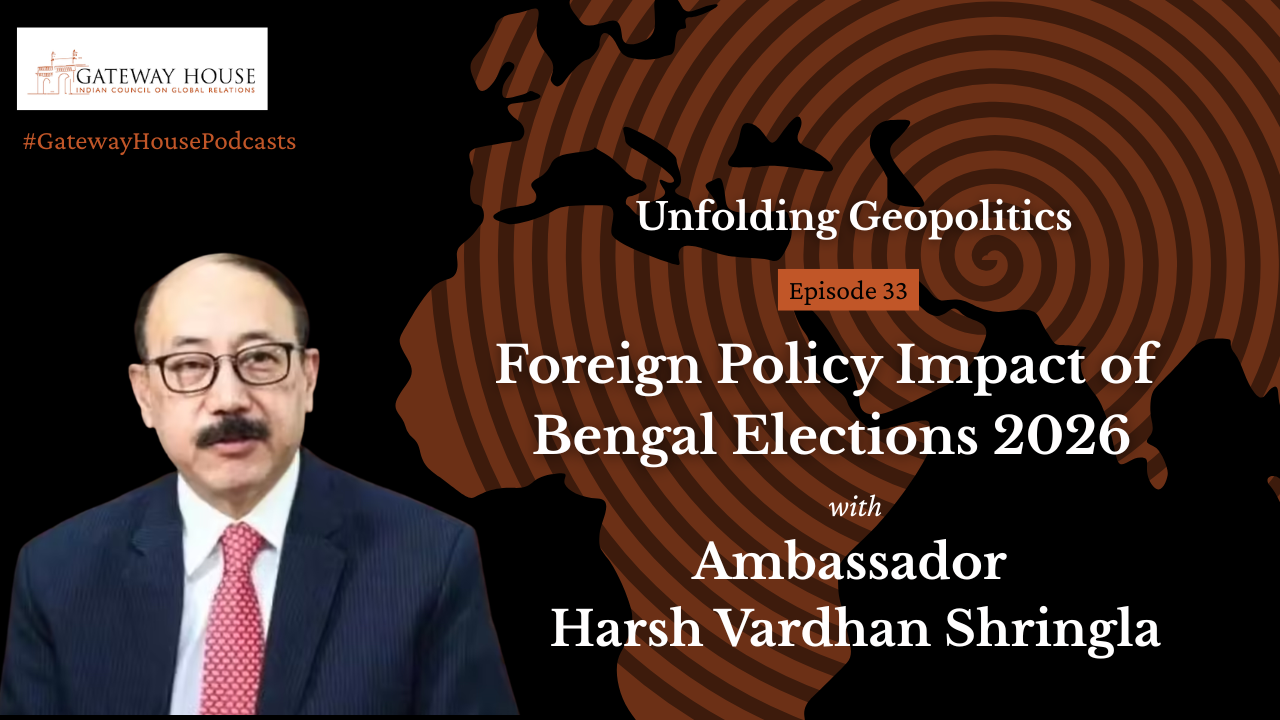
The state elections in the eastern states of Bengal and Assam have given a massive mandate to the ruling Bharatiya Janata Party. The opportunity for transformation and progress is enormous, especially as both these states are the crucial connectors to India’s Act East Policy. Harsh Shringla, Member of Parliament and former Foreign Secretary of India, says India’s foreign policy will see multiple benefits from these states.
history, the Palestine issue, the creation of Israel, and strained U.S.-Iran ties. India’s former ambassador to India, Saurabh Kumar, witnessed the hope of the Joint Comprehensive Plan of Action and its collapse. Unfulfilled hopes have led to reignited tensions. The U.S.-Israeli objectives of regime change are still unmet, and Iran’s survival marks a strategic outcome, despite its domestic economic and military strain. Ambassador Kumar discusses Iran and the ongoing crisis in West Asia.
The Scottish imprint on India, starting in the British era, is visible even today. Roger Jeffery and Friederike Voigt explore historical ties between Scotland and India, drawing on their recent visit to Mumbai, its Scottish heritage, and their new book, Perceptions of Empire: Edinburgh’s Engagement with India. They dwell on how shared histories in education, trade, missionary activities, and institution building can inform a deeper engagement between Indians and Scots.
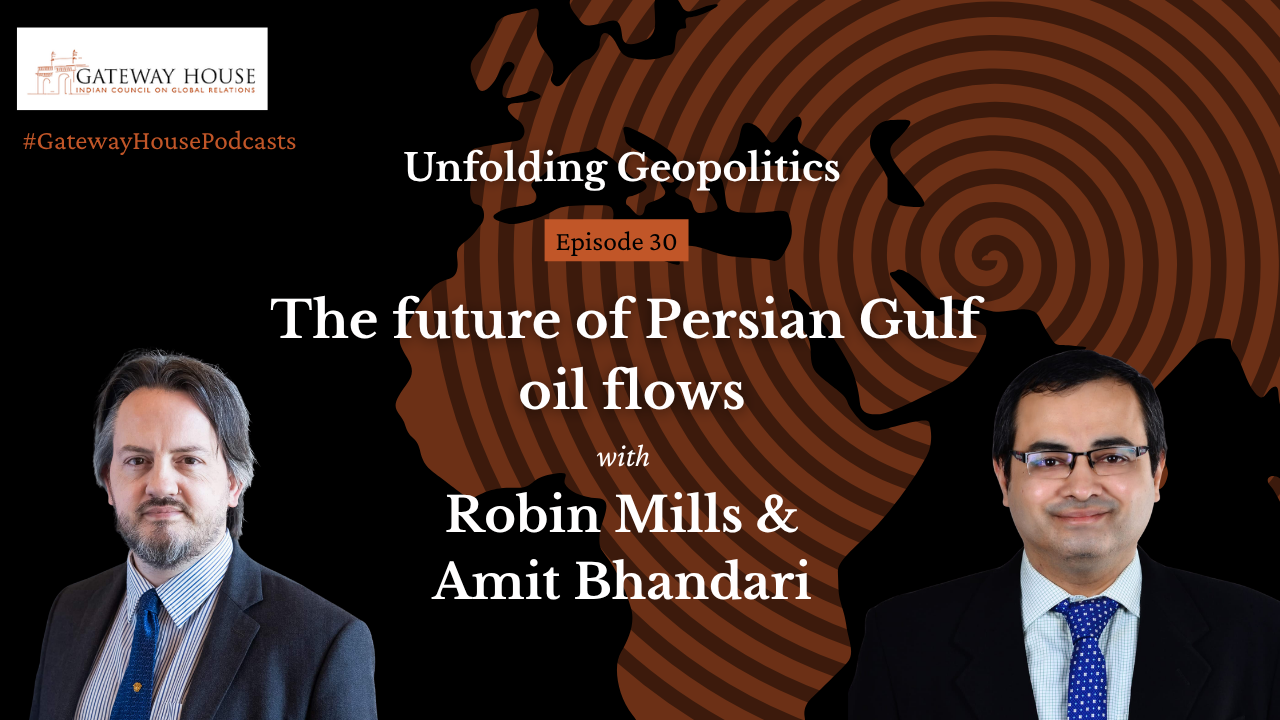
Following the U.S.–Iran ceasefire and partial reopening of the Strait of Hormuz, energy flows may resume, but uncertainty persists. Robin Mills, CEO of Qamar Energy, and Amit Bhandari, Senior Fellow on Energy, Investments and Connectivity, Gateway House, note that Iran will retain leverage and will continue influencing prices and supply chains. Natural gas shortages will further disrupt fertiliser production and fuel inflation world-wide.
The assumption that the Iranian public will rise up against its religious and political leadership, seizing the opportunity provided by Israel and U.S. strikes against Iran, may not prove true. Iran’s civilisational structure is resilient, and its educated population may not like being dictated to by the West. Raja Karthikeya, a former international civil servant based in Tehran, examines the escalating U.S.-Israel conflict with Iran, its regional and domestic implications and the tenacity of Iran’s political system amid external pressure.
Tarique Rehman has been elected as the new Prime Minister of Bangladesh following the recent elections. Nayanima Basu, Adjunct Fellow at Gateway House, visited Bangladesh and shares her on-ground impressions of the country and its people, the continued influence of student movements, concerns over minority rights, and the resurgence of Jamaat-e-Islami. The future of India-Bangladesh ties must be closely watched as a new chapter begins, underscoring the need for a recalibrated, trust-based bilateral approach.
In February 2026, India and the U.S. announced an Interim Trade Agreement framework, advancing toward a full bilateral trade pact and deeper economic integration. Beyond government ties, the relationship is increasingly shaped by supply chains and diaspora influence. Now over five million strong, the Indian diaspora plays a pivotal role across technology, finance, and innovation, creating new pathways for cooperation in a rapidly transforming global order.
India and Oman signed the Comprehensive Economic Partnership Agreement (CEPA) on December 18, 2025. The agreement reflects India’s approach to engaging with trusted partners while rediscovering its historic trading ties. Ambassador Anil Wadhwa explains what CEPA means for India: it is less about becoming a global gateway and more about anchoring a strategic economic partnership in a geopolitically sensitive region.