Office of the Pakistani Prime Minister_AFP Courtesy: AFP
27 August 2026

Mecca Accord and India’s energy security

The Mecca Accord between Saudi Arabia, Turkiye and Pakistan has raised some red flags in the region, and in India. One element remains unchanged: India’s value to Riyadh as an energy importer. With demand security holding more weight than supply security in an uncertain future, a major and growing oil importer like India is more important than the cash-for-security arrangement the Kingdom has signed with Pakistan.
Website articles  (3) Courtesy: Gateway House
9 July 2026

The missing pillar of India’s sovereign AI

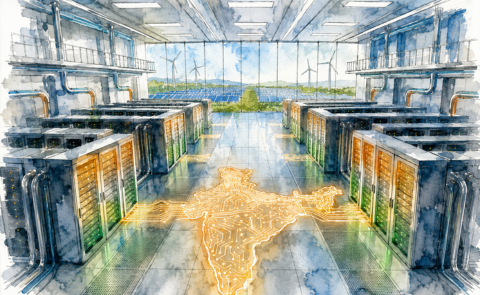
India’s sovereign AI strategy prioritises chips, compute, data, models, and talent, but overlooks a critical pillar: energy security. As AI-driven electricity demand surges globally and the IndiaAI Mission rapidly expands computing capacity, reliable power is becoming a defining constraint on AI ambitions. Energy security must therefore be recognised as a core pillar of India’s sovereign AI strategy, not merely as supporting infrastructure.

Website articles  (68) Courtesy: AFP
2 April 2026

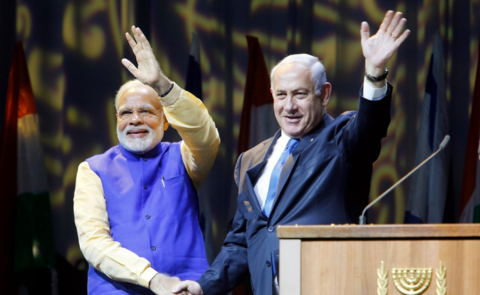
Modi’s Israel visit brings defence and tech

It is important to take an objective review of PM Modi’s visit to Jerusalem and its implications for India’s security. New Delhi will have to demonstrate its strategic autonomy by managing heterogeneous and often contrapuntal relationships and strike a balance in its ties with the U.S. and Israel on the one hand and Iran and the Arab world on the other hand.

Screenshot 2023-10-26 at 2.00.04 PM Courtesy: Nikkei Asia
26 October 2023

The narrative is the war

The Israel-Hamas War has shown the devastating impact of disinformation as a strategy of unconventional warfare. This narrative-led approach begins before hostilities start and seeks to set the agenda for leaders, their militaries and geopolitics. Democratic societies like India must prepare for similarly coordinated strategies and build societal resilience to manipulation.

ISRO satellite Courtesy: ISRO
26 May 2022

India’s EO satellites in the Indo-Pacific

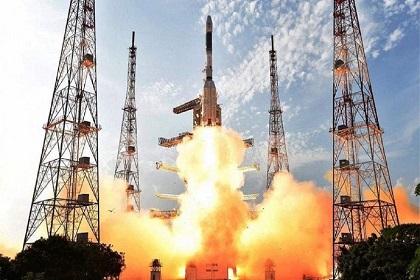
The Quad has agreed to launch a satellite-based maritime security initiative to curb illegal fishing by China. India is a global leader in satellite launches, especially in Earth Observation (EO) satellites. The Indo-Pacific nations are looking at the Indian model because it is applicable, economical, and sustainable.

sanctions and counter-sanctions Courtesy: Shutterstock
15 July 2021

Sanctions and counter-sanctions

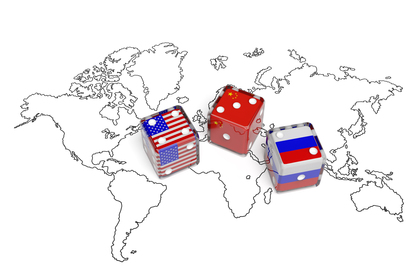
For years, Western countries have used sanctions as a means of economic warfare against their adversaries. Now, China and Russia are utilising the same tactic against the West. The United Nations Security Council is paralysed by differences between the five permanent members, leaving the tools of unilateral sanctions and counter-sanctions to proliferate at the cost of UN-approved multilateral sanctions.

cyber attacks on critical infrastructure: is india ready? Courtesy: Twitter | @ColPipe
27 May 2021

Cyber attacks on critical infrastructure: Is India ready?

The ransomware attack on Colonial Pipeline in the U.S. has underlined the importance of cyber security in critical infrastructure. India has not escaped the brunt of a recent global surge in cyber attacks. Though New Delhi has taken steps to protect critical infrastructure, problems in information sharing of threat vulnerabilities impede an effective response.

india-u.s.-israel emtech partnership Courtesy: Shutterstock
29 April 2021

India-U.S.-Israel EmTech partnership

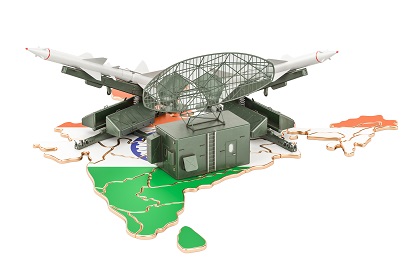
As new technological advances take place every day, India must keep up. While the U.S. is still a front-runner in defence technologies, China and Russia are catching up quickly. In order to counter this, India can insert itself into the pre-existing bilateral co-operation between the U.S. and Israel. Sameer Patil, Fellow, International Security Studies Programme tells us how.

3W7A1043 Courtesy: Gateway House
14 February 2017

India-Israel: potential for collaboration on defence and cybersecurity

In his interview, Rear Admiral (Retd.) Ophir Shoham discusses Israel’s liberal cybersecurity policies and the high levels of export in the cybersecurity sector. According to him, transfer of technology is imperative for Digital India, as for a country to become digital, Infrastructure is most important which is protected by cybersecurity. In the defence space, he mentions the close relationship India and Israel share despite it being a sensitive area. He prescribes a collaboration between the two countries to build weapon systems that they can use to customize defense equipment for the Indian defense system and the Israeli defense system.