Reuters Courtesy: Reuters
27 November 2025

Japan and China row over Taiwan

China’s attempt to discipline Japan over Japanese Prime Minister Takaichi’s statement on a Chinese attack on Taiwan threatening Japan’s security, may instead strengthen the very alliances Beijing hoped to fracture. By using symbolic economic instruments, invoking the UNSC, and amplifying nationalist messaging while avoiding mass public mobilisation, China signals displeasure without risking internal instability. Yet these same measures push Japan ever deeper into U.S.-aligned networks.

revised design Courtesy: Gateway House
27 November 2025

Rise of the Davos Competitor

U.S. health secretary Robert Kennedy Jr. called the World Economic Forum a “billionaires’ boys club” imposing totalitarian controls. Indeed, since 1971, the elite platform shaped geopolitics. But its Western-centricism kept out the concerns of the rest. This gave rise to alternative forums, which look beyond financial agendas to the perspectives shaping the Global South. Here are 45 of biggest, half of which began just two decades ago.

Kyodo News (1) Courtesy: Kyodo News
20 November 2025

Sanae Takaichi’s strong start

The rise of Sanae Takaichi, Japan’s first female prime minister with firm conservative credentials, carries both symbolic weight and political controversy. Her early decisions suggest clarity of intention but also highlight the structural weaknesses and diplomatic sensitivities that will shape her tenure. To keep her ratings high, she has to stabilise her minority government at home, and manage the China, U.S. and ASEAN relationships with tact.

Gateway House Courtesy: Telegrafi
6 November 2025

U.S. Sanctions on Russian oil giants

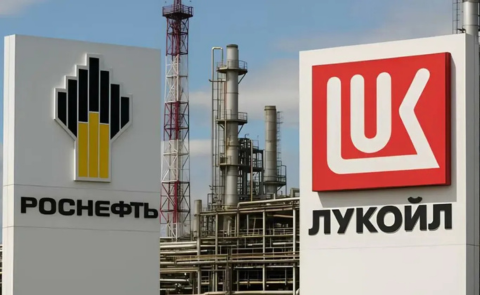
On October 22, 2025, U.S. President Donald Trump imposed sanctions on Russia’s oil giants, Rosneft and Lukoil. The move has clear geopolitical motives—to remove a major supplier from an oversupplied oil market. Indian oil companies, key buyers of Russian crude, now face pressure to cut imports, undermining India’s energy diversification and shaking global oil markets, including the U.S. economy.

Website articles  (2) Courtesy: Atlantic Council
6 November 2025

Trump’s Asia tour redefines China approach

U.S. President Donald Trump embarked on a five-day trip to Asia, arriving in Kuala Lumpur on October 26. Covering Malaysia, Japan, and South Korea, the visit marked a shift in focus from the Ukraine and Gaza conflicts to Southeast and East Asia, as his administration is set to finalise its China policy and Indo-Pacific strategy. The trip yielded important results, though their impact will take time to assess.

AFP (1) Courtesy: ANI
16 October 2025

Uncertainty around the Quad

The Quad summit is expected to be hosted by India in the second half of 2025, possibly in November. However, the grouping faces turbulence that transcends the current flow of India-U.S. relations. The relevance of Australia and Japan, too, needs to be factored in. Beijing considers the Quad as “the Asian NATO” that aims to contain China. Since the commencement of Trump 2.0, the grouping has been struggling to redefine its role and mandate.

Screenshot 2025-10-13 103335 Courtesy: Körber-Stiftung
13 October 2025

Bandung at 70: Multilateralism in a New Era of Multi-Alignment

The world is facing multiple crises which are shaking the foundations of multilateralism. The West’s structures are faltering, and the need for effective and equitable cooperation is greater than ever. Seventy years after the 1955 Bandung Conference, its principles of sovereignty, territorial integrity, cooperation and solidarity remain vital. This report revisits Bandung’s relevance for today’s reform efforts, urging renewed Global South–Europe collaboration for a sustainable global future.

VOA Courtesy: VOA
2 October 2025

Time to re-burnish Global South credentials

The year 2025 is often compared to the Bandung moment of 1955, and for good reason. With the U.S. reordering traditional relationships, the opportunity for greater emphasis on the Global South is now. It is therefore time for India, Africa and ASEAN among others to re-burnish their Global South credentials and use that identity as a platform to engage each other more deeply.

Most popular Indian actors worldwide Courtesy: Gateway House
1 October 2025

Indian Cinema as Economic Catalyst

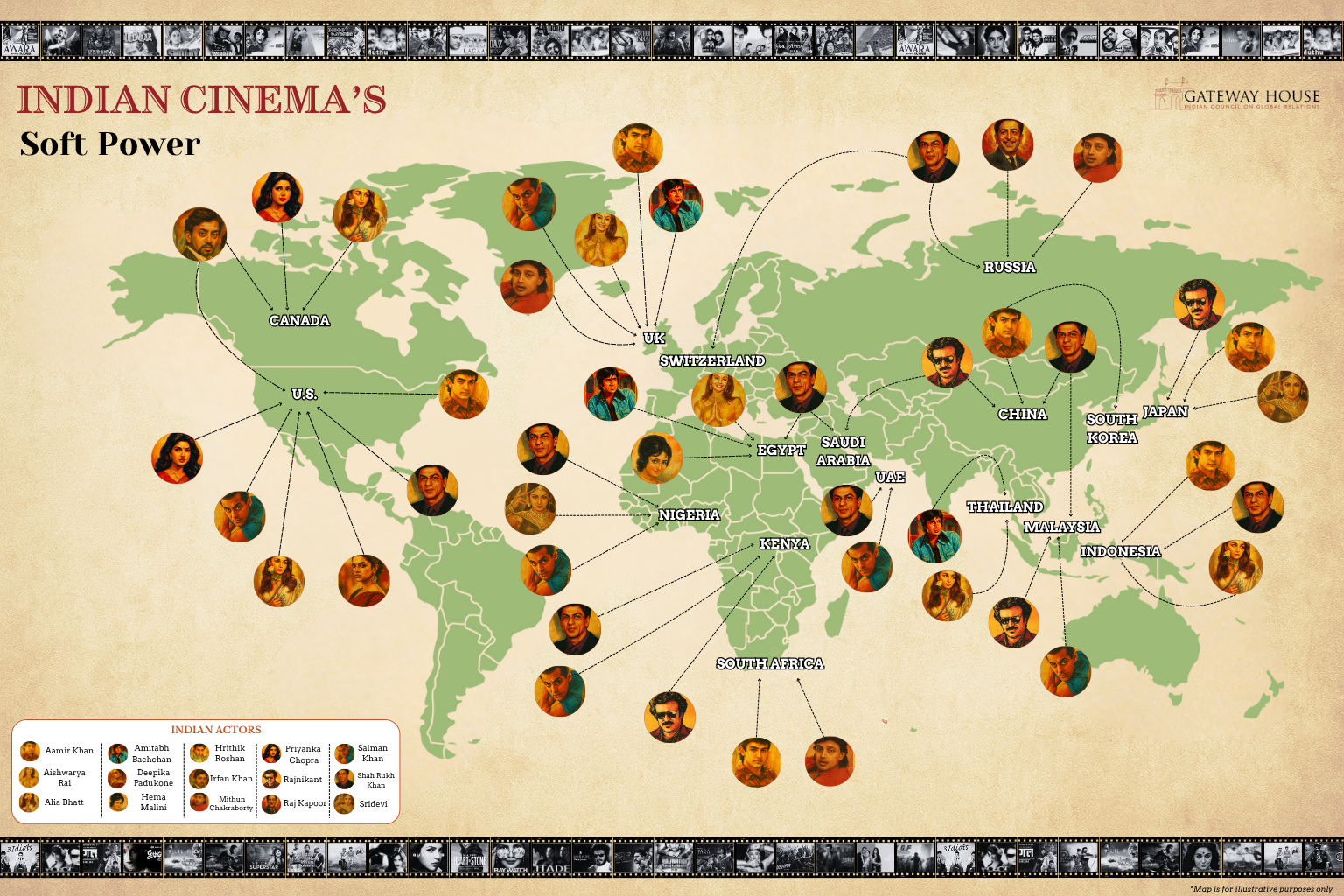
As India seeks leadership in a multipolar world, cultural credibility is as vital as economic clout. Cinema gives India an edge with vivid storytelling, music, and empowering narratives, fostering understanding in a polarised world. Its popularity correlates with trade, as seen in the U.S., Russia, and Middle East. The more popular the cinema, the bigger the boost to trade.

U.S. Tariffs on Brics+ countries Courtesy: Gateway House
25 September 2025

U.S. Reciprocal Tariffs on BRICS+ countries

Under U.S. President Donald Trump’s reciprocal trade policy, the original five BRICS member countries account for the highest U.S. tariffs globally. India and Brazil are facing the highest tariffs of 50%, while China follows with a tariff of 34%, down from 145% earlier in the year. This infographic details the U.S. reciprocal tariff rates for each BRICS+ member and the sectors that are impacted.