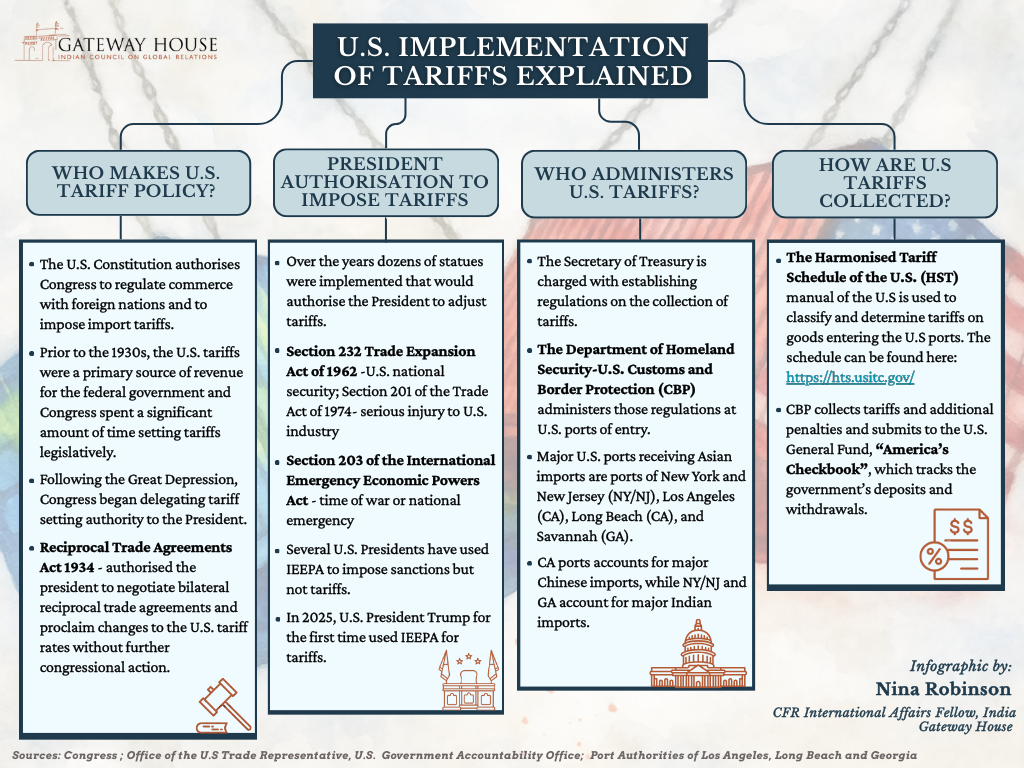
U.S. Implementation of tariffs Explained1 Courtesy: Gateway House
13 August 2025

The path of U.S. tariff policies

Who makes, imposes, administers and collects U.S. tariffs? The U.S. Congress, but for the last several decades, it has been at the discretion of the U.S. President, who has been given tariff-setting authority. Under the International Emergency Economic Powers Act, 1977, U.S. President Donald Trump has imposed reciprocal and universal tariffs on over 60 countries.

EuropeProtests-01[85] copy Courtesy: Gateway House
17 November 2022

Protests across Europe

Discontent over high energy prices, spiralling living costs, and anti war sentiments have gripped Europe, resulting in protests and civil unrest across the continent. With no immediate solution in sight, public resentment is likely to intensify through the coming winter months

Chinese Port invesments Courtesy: The Maritime Executive
19 August 2021

China’s ports in the Indian Ocean

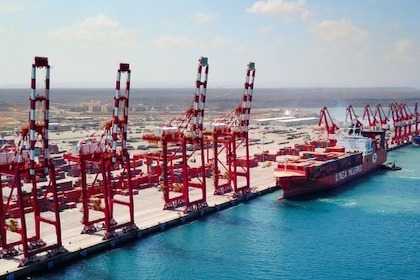
China is rapidly expanding its influence in the Indian Ocean Region, as its massive investment in ports starts to materialise. From smaller investments of $78 million in Djibouti to large ones like $1.6 billion in Gwadar, these are funded largely by Chinese state-owned enterprises. This infographic shows the 17 ports being built by China, which are now important strategic, economic and political outposts for the country.

Source: Shutterstock Courtesy: Shutterstock
10 June 2021

U.S. Defense Budget: Mixed signals for the Indo-Pacific

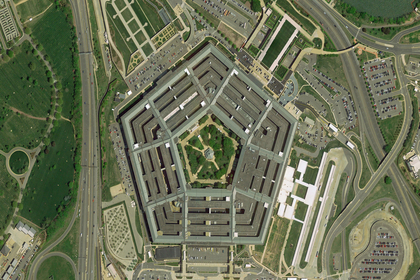
On 28 May 2021, the Biden administration submitted a much-delayed Defense Budget to Congress, asking for $715 billion for 2022, a 1.6% increase over the previous year’s $703.7 billion. This marginal increase highlights the U.S.’s shrinking capacities compared with China, which spends less than a third of the U.S. on defence. This Budget is focussed on challenges in the U.S.’s geographic vicinity, not the administration’s resolve to counter the threat of China from a position of strength.

shutterstock_1545552875 Courtesy: Shutterstock
7 November 2019

Diminishing returns of Pakistan’s protests

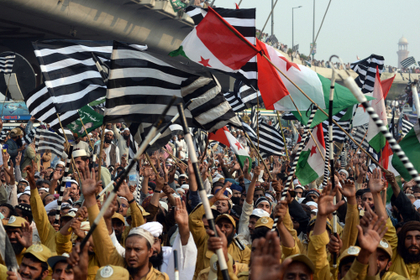
The protests sweeping the world have reached Pakistan. The issues are similar, such as corruption and rising living costs, but there are significant differences between the Pakistani and global protests.

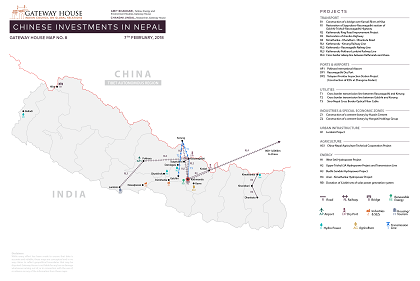
Gateway House's research map on Chinese investments in Nepal. Researched by Amit Bhandari and Chandni Jindal. Courtesy: Gateway House
7 February 2018

Nepal: Exploiting The Elite

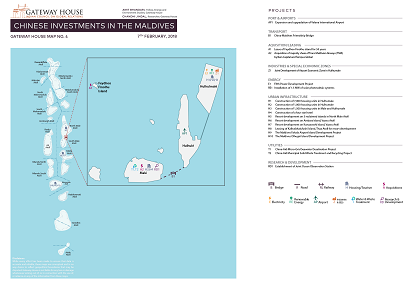
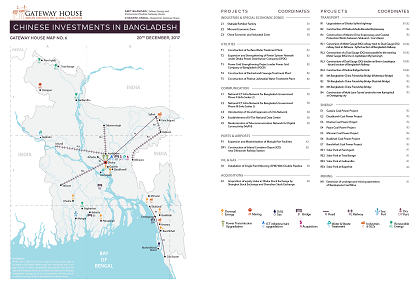
Nepal has historically enjoyed close economic ties with India. An open border and the large number of Nepalis in the Indian army testify to the two countries’ economic and social proximity. But as with other countries in India’s neighbourhood, Chinese investment is leading Nepal to tilt towards China.

China-SriLanka-Title Card Courtesy: Gateway House
1 December 2016

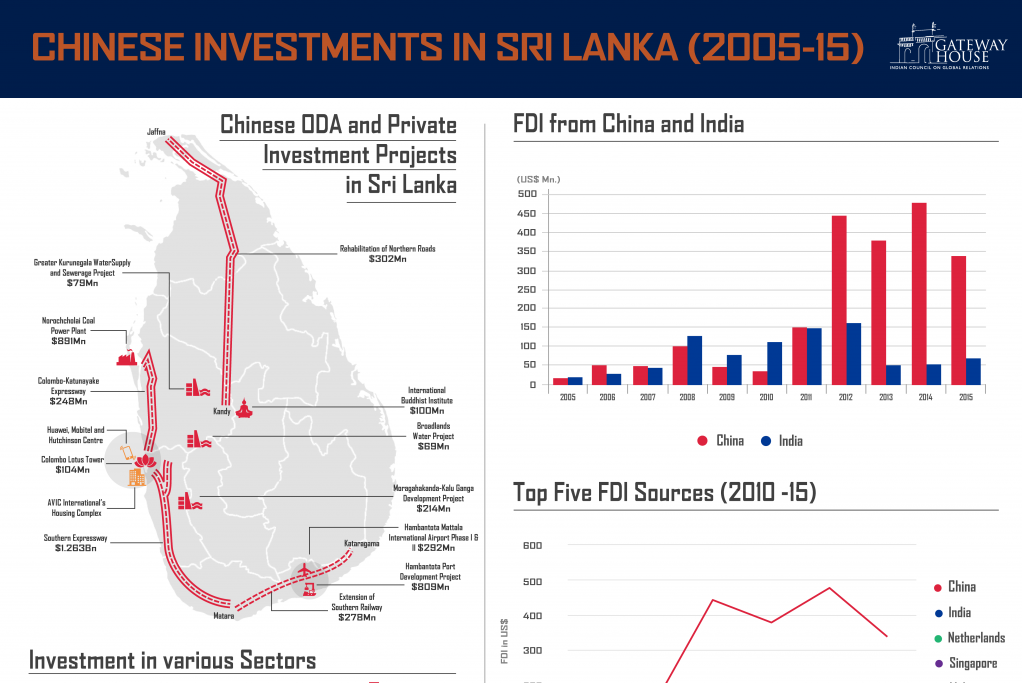
Chinese investments in Sri Lanka

China is the largest investor in Sri Lanka today, with funding and investment of nearly $15 billion. Gateway House tracks the Chinese money trail to Sri Lanka-- where it lands, where it stays--and assesses its depth. This is the second in the Gateway House Series on Chinese investments in South Asia.