G20.Org Courtesy: G20.org
28 August 2025

Appraising Brazil’s G20 Presidency

The G20’s current cycle is unique, with four Global South nations presiding consecutively: Indonesia, India, Brazil, and now South Africa. Brazil’s 2023-24 presidency exhibited both achievements and struggles, prioritising social inclusion, hunger, energy transition, and governance reform. The handover to South Africa marks a significant milestone in G20 history. Will the momentum be followed by the U.S., the next G20 president but also a G20 sceptic?

PM 5 nation visit Courtesy: X / PMOIndia
14 July 2025

PM Modi’s five-nation tour

PM Modi's five-nation tour highlights that despite geopolitical conflicts, New Delhi remains confident in its ability to balance relationships with the North and South.

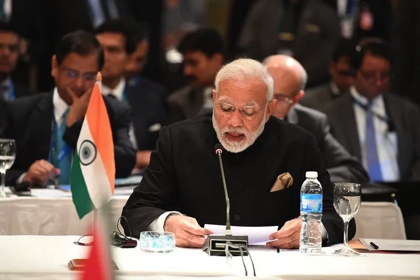
Modi In G20 Courtesy: Narendra Modi/Facebook
25 August 2022

Geopolitics, G20 and India’s Choices

India will be president of the G20 in 2023. The world’s most influential economic governance body is facing an existential crisis, where the major powers have fallen out. With geopolitical currents redefining geo-economics, India needs to be ready to emerge as the chief global diplomat.

Argentina Courtesy: Pixabay
10 August 2017

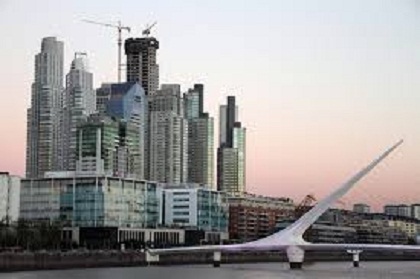
Argentina: in the ascendant

Once a laggard, Argentina is now a rising star in South America. Its economy is recovering, GDP growth is stable and financial reforms have taken hold. In 2018, it will host the presidency of the G20, its first step onto the global stage after over a decade in isolation. With Argentina’s G20 agenda fully aligned with India’s priorities, how can India gain?

Bolsa Familia Courtesy: globalsherpa.org
2 January 2015

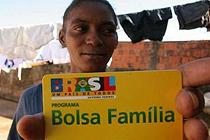
Decoding conditional cash transfers

The Indian government has undertaken a massive financial inclusion scheme to bring bank accounts to the poor. But poverty alleviation needs to be addressed at multiple levels for which the Latin American example of using targeted and customised conditional cash transfer programmes can help India

VenProtests-2014 Courtesy: durdaneta/Wikimedia
8 August 2014

Latin America slowdown

Latin America’s economic growth has slowed down in 2014. But the region’s fundamentals are relatively strong, and have the resilience to absorb external shocks and increase growth in the coming years. However, Argentina and Venezuela face continuing uncertainty and deterioration.

leftlatam Courtesy: Wikimedia Commons
8 April 2014

The Left surge in Latin America

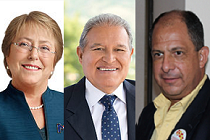
Latin America continues to turn to the Left. Michelle Bachelet became president of Chile in March and has promised fiscal reform; Salvador Sanchez Ceren took over as president of El Salvador in June and will tackle inequality; and in Costa Rica too, the centre-left Luis Guillermo Solis assumed power

Arg_Pesos_2014 Courtesy: alex proimos/Wikimedia Commons
13 March 2014

Going downhill: Argentine economy

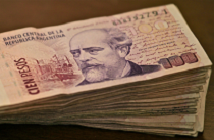
With a devaluing peso, a low trade surplus, high inflation, and falling foreign exchange reserves, the economic situation in Argentina is bleak. But the government can overcome the crisis by changing policies, lessening controls, exploring the country’s shale gas reserves, and working on settling its debt

brazilprotests Courtesy: monotrilho|/Flickr
14 January 2014

Latin America: A review of 2013

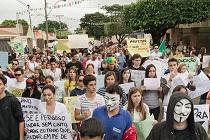
With elections scheduled in seven Latin American countries, 2014 will be a year of significant political developments in the region. As we enter 2014, Gateway House examines the important events that defined Latin American politics and economy in 2013