Website articles  (62) Courtesy: Gateway House
26 March 2026

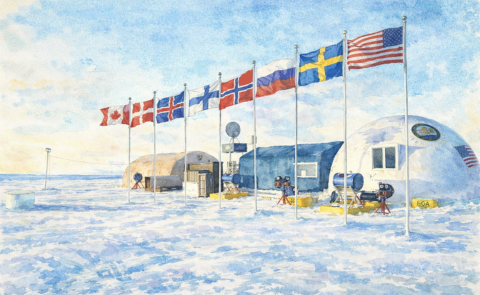
Arctic politics: between competition and cooperation

The Arctic region is at the crossroads of the dramatic environmental shifts and heightened conflict that are shaping global politics today. In the region, major geopolitical events and enduring rivalries necessitate a logic of competition, yet coordination on transboundary issues remains important. This echoes the challenges facing oceans, ecosystems and planetary problems in global governance more broadly, in which political efforts yield frustratingly incremental, yet indispensable, results.

Website articles  (56) Courtesy: Gateway House
19 March 2026

BRICS CBDCs can lead to financial multipolarity

India’s proposal to link the digital currencies of the BRICS nations could alter how emerging economies settle trade deals. It is necessary to examine the reasoning behind such a move, its effort to reducing dollar dependence, and the benefits that accrue to India.

Website articles  (44) Courtesy: Indian Navy
26 February 2026

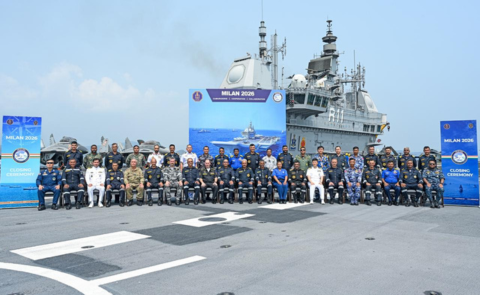
Indian Navy advances ambitions, enhances diplomacy

Over the last two decades, the Indian Navy has taken a quantum leap in modernising its fleet with stealth frigates, warships, submarines, and fighter planes. Its goal is to be the net security provider and first responder securing Sea Lines of Communication in the region. But it is still lagging behind its Indo-pacific naval partners and most important, its regional rival, China.

2 (12) Courtesy: Ingram Pinn
19 February 2026

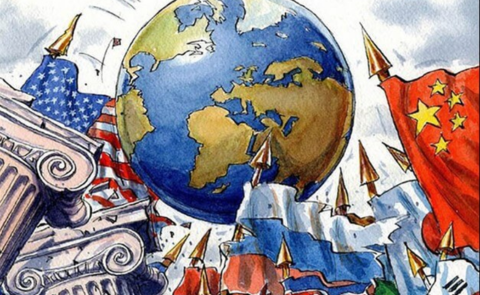
Managing multipolarity in a multilateral world

Multipolarity indicates who holds power, while multilateralism is about how states choose to cooperate. In today’s world, power is diffusing and interdependence is deepening simultaneously. A multipolar world creates fluid alignments and strategic competition, but multilateralism manages interdependence through rules and institutions. The world is becoming both, simultaneously, requiring states to manage competition, preserve cooperation, and stabilise an increasingly complex global landscape. That is easier said.

Website articles  (35) Courtesy: Getty Images
22 January 2026

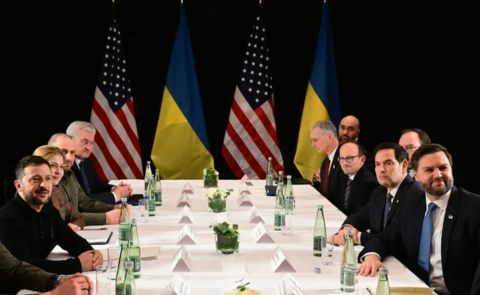
Can NATO survive without Article 5?

The U.S. demand for Greenland for security purposes, has alarmed Europe enough for talk of Article 5 of NATO’s collective defence agreement to be put on the discussion table. But can NATO survive without Article 5? And can Article 5 survive without the U.S. defence cover for Europe?

US Embassy and Consulates in Italy Courtesy: US Embassy & Consulates in Italy
18 December 2025

U.S.’ National Security Strategy 2025

It is customary for every U.S. president to release a National Security Strategy (NSS) early in their tenure. President Trump published the NSS for his second term in November 2025. It’s a contrast from his 2017 NSS, which addressed broad threats. The 2025 version is narrower, emphasising trade over security, with the Western Hemisphere being the primary area of focus. Is the U.S.’s global role shrinking?

Website articles  (7) Courtesy: Gateway House
13 November 2025

India China relations in the near future

India-China relations move in waves of hostility and stability. The bilateral may be re-entering a period of stability, last seen in 2018. If the caveats of security, mutual sensitivity and a level playing field are respected, then much can be achieved by reviving the initiatives begun after PM Modi’s visit to China in 2015 and two informal summits in Wuhan in 2018, and Mahabalipuram in 2019.

Website articles  (6) Courtesy: Global Times
6 November 2025

China’s Military Modernisation: Implications for India

Chinese President Xi Jinping set two centennial goals and a 2027 target for the People’s Liberation Army’s (PLA) modernisation. This is in line since its founding in 1927, when the PLA has undergone continuous technological, doctrinal, and manpower transformation. Guided by Xi’s goals, it is adapting to evolving warfare trends drawn from experience and observation. For India, the implications arise not only from the PLA’s modernisation but also from emerging military and geopolitical dynamics.

Gateway House Courtesy: Telegrafi
6 November 2025

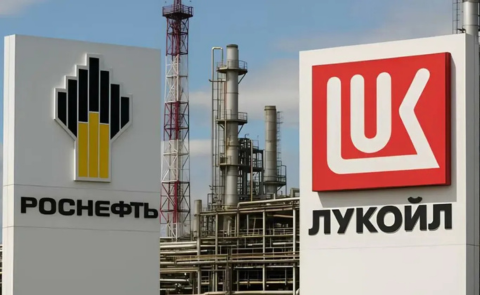
U.S. Sanctions on Russian oil giants

On October 22, 2025, U.S. President Donald Trump imposed sanctions on Russia’s oil giants, Rosneft and Lukoil. The move has clear geopolitical motives—to remove a major supplier from an oversupplied oil market. Indian oil companies, key buyers of Russian crude, now face pressure to cut imports, undermining India’s energy diversification and shaking global oil markets, including the U.S. economy.

AFP (1) Courtesy: ANI
16 October 2025

Uncertainty around the Quad

The Quad summit is expected to be hosted by India in the second half of 2025, possibly in November. However, the grouping faces turbulence that transcends the current flow of India-U.S. relations. The relevance of Australia and Japan, too, needs to be factored in. Beijing considers the Quad as “the Asian NATO” that aims to contain China. Since the commencement of Trump 2.0, the grouping has been struggling to redefine its role and mandate.