parliament Courtesy: Shwkyn231/Flickr
31 December 2012

India’s foreign policy: A year in review

The year 2012 has been a busy one for foreign policy: from escalating disputes in the South China Sea to alternate financial instruments from the emerging world. India’s foreign policy too has its shown strengths and weaknesses. We present our top foreign policy Hotspots, Sweet spots and Blind spots for 2012.

Courtesy: Secretary of Defense
28 November 2012

What China learned from Russia

The Chinese have learned from Russia’s past mistakes at reforming state-owned enterprises (SOE), and some well-connected politicians have reaped the economic benefits that followed. Will the new administration in Beijing reform China’s SOEs or maintain the large role of government in industry?

xerxes china Courtesy: Ministry of Defence, India
12 July 2012

The spectre of China

Though India may seem to be mirroring or competing with China’s military build-up, it doesn't seem to be doing so in consonance with a long-term plan. New Delhi would be better served by avoiding an arms race; staying away from the U.S.-China rivalry and fostering stronger relations with its immediate neighbours.

616px-Swedish_flag_with_blue_sky_behind_ausschnitt Courtesy: Wikimedia Commons/Tage Olsin, Hofres
15 May 2012

Why is Sweden number one?

Few people know that Sweden was severely affected by the 2008 global economic crisis. However, the Swedish government adopted prudent fiscal and monetary policies to overcome the situation. The author discusses the factors that helped Sweden to acquit itself so creditably in the most challenging of circumstances.

anoop singh interview Courtesy: Gateway House
11 May 2012

IMF interview: How the European crisis will affect India

As India’s growth slows, it becomes increasingly important to enact reforms so it can return to its intended growth rate of 9%. Gateway House’s Hari Seshasayee interviews Anoop Singh, Director of Asia and Pacific at the IMF, to discuss the impact of the Euro zone crisis on India and the way forward for Asia.

9,11 photo Courtesy:
7 September 2011

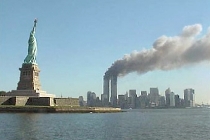
America: Ten years after 9/11

A decade after 9/11, the U.S. has prevented further terrorist attacks - a major achievement. But with a $1.3 trillion budget deficit, a debt downgrade, and 24 million Americans searching for jobs, the U.S. needs to attend to matters at home rather than intervening in the world's affairs.

Andy Armstrong Flickr Courtesy: AndyArmstrong/Flickr
12 August 2011

Why Britain is not a ‘broken’ society

Explanations for the riots in England must go deeper than the easy targets of race, consumerist greed, and the socio-economic environment. It is necessary to understand the way socially-wired youth approached the riots as an opportunity for consequence-free action.

Lear 21 Wikipedia Courtesy: Lear21,ThomasWolf/Wikipedia
22 April 2011

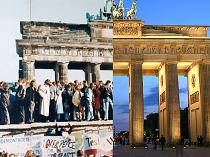
Germany: Charting its own course

Germany’s abstention on the UN Resolution on Libya heralds the mellowing of a nation blamed for last century’s most catastrophic wars. This time, Berlin may determine the history of Europe by choosing to pursue its national interests peacefully rather than subjugating an entire populace.

UN Photo Marco Castro_210x140 Courtesy: UNPhoto/MarcoCastro
14 April 2011

South Africa’s human rights dilemma

As the newest entrant of the BRICS group, South Africa's unpredictability in upholding the human rights dimension of its foreign policy agenda, by its stance to impose a ‘no fly zone’ over Libya, has brought about an incoherency between the BRIC countries and South Africa.