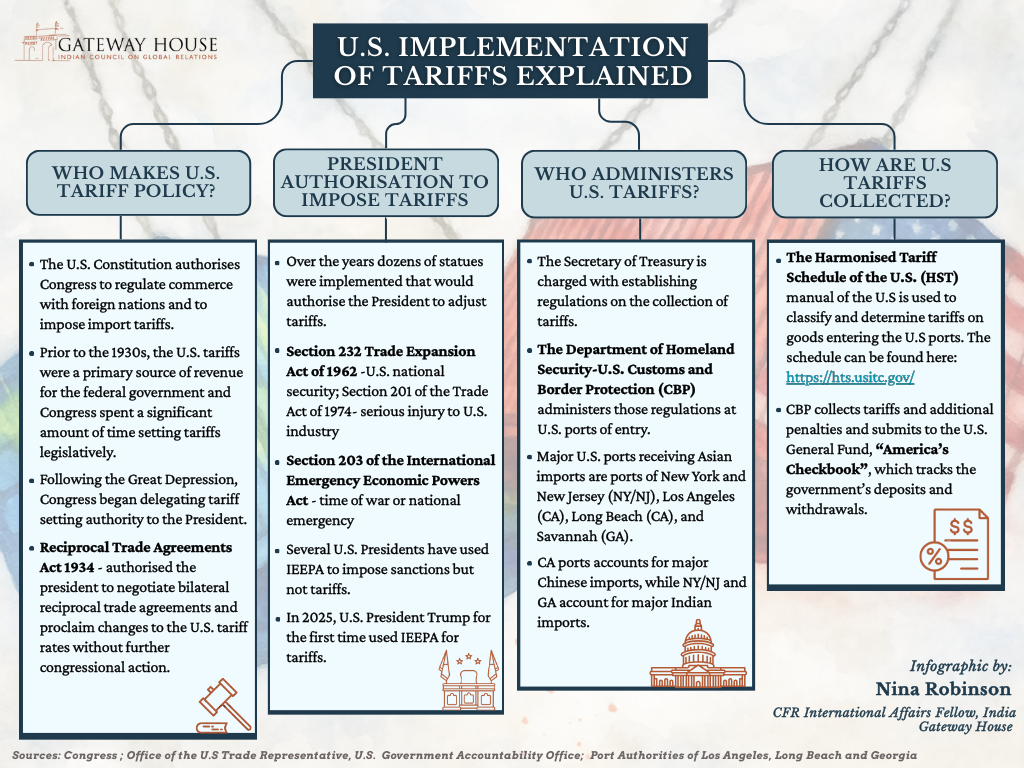
U.S. Implementation of tariffs Explained1 Courtesy: Gateway House
13 August 2025

The path of U.S. tariff policies

Who makes, imposes, administers and collects U.S. tariffs? The U.S. Congress, but for the last several decades, it has been at the discretion of the U.S. President, who has been given tariff-setting authority. Under the International Emergency Economic Powers Act, 1977, U.S. President Donald Trump has imposed reciprocal and universal tariffs on over 60 countries.

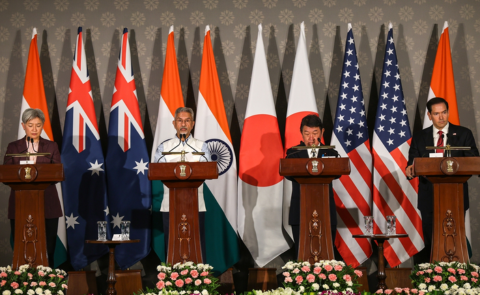
trump - japan Courtesy: Kent Nishimura/Reuters
24 July 2025

The Trump effect in Japan

The political setback by the ruling coalition in Japan in the July 20 Upper House elections reflects growing frustration with the mainstream political parties. Young people frustrated with high costs have resulted in a fragmentation of Japan’s political landscape, and the rise of the right. The “Trump effect” has found fertile ground in Japan’s political soil.

240730-trump-harris-al-0828-b83c20 Courtesy:
5 September 2024

Ideological differences dominate America’s election

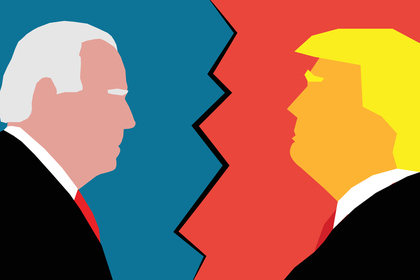
The U.S. presidential election campaign has produced two stunning developments: the attempted assassination of Trump and the withdrawal of Biden, under severe pressure from leaders of the Democratic Party. Putting optics aside, observers should focus on the ideological differences between the two candidates Kamala Harris and Donald Trump, which will be on display on Sept. 10 when they debate the issues.

shutterstock_1664710666 Courtesy: Shutterstock
29 October 2020

The Final Trump-Biden showdown

As part of our weekly series of podcasts in the run-up to the U.S. elections, in this episode on the last 2020 presidential debate, Ambassador Neelam Deo, Director and Co-founder of Gateway House, on U.S’ national security, opposite views of Trump and Biden on the Paris accord and climate change and if South Block needs to pay attention to President Trump’s statement on our air quality.

skynews-kamala-harris-mike-pence_5120284 Courtesy: Sky News
8 October 2020

The Harris-Pence face off

Ambassador Neelam Deo, Director and co-founder of Gateway House in the weekly series of podcasts on the U.S Elections analyses the foreign policy agenda of the Democratic government, why COVID-19 will impact voters choice and if Kamala Harris’ connection to India will influence the Indian-American votes

WhatsApp Image 2020-10-01 at 1.19.17 PM Courtesy: Shutterstock
1 October 2020

The first Trump-Biden contest

As part of our weekly series of podcasts in the run-up to the U.S. elections, in this episode on the first 2020 presidential debate, Ambassador Neelam Deo, Director and Co-founder of Gateway House, on President Trump’s federal tax, how the ongoing pandemic will have an impact on voter’s choice and the potential of such political debates in India

2017-11 7389 Courtesy: Independent
1 January 2018

Trump’s NSS and Great Power competition

The camaraderie that Trump and Xi projected in November 2017 generated unease. At year end, Trump’s National Security Strategy did away with the multipolar niceties, but the challenges remain: for the U.S., it’s promoting rule of law while opting out of multilateral bodies. For China, it’s taking stock of how its image corresponds to reality

e92550d47b6d4ed5ad131f474187f8a7_18 Courtesy: Al Jazeera
6 March 2017

The Trump challenge: unpredictability as norm

Forecasting uncertainty is a full-fledged task for security and foreign policy analysts, but when countries resort to being unpredictable then it is likely to backfire. Uncertainty about his next course of action seems to be Trump’s defining characteristic. How India will manage this to better relations will be critical