Frank C. Schell III had an extensive career in international banking and finance, with postings in Nairobi, London, and Sao Paulo; he was also responsible for several countries in the Middle East. Mr Schell started his career in 1972 at Continental Bank and was later assistant treasurer of Ford Aerospace & Communications Corporation. Mr Schell joined The First National Bank of Chicago in 1981, where he held domestic and international positions for over 20 years. He retired as senior vice president of Bank One, a successor firm, and was named president and CEO of Chicago Commons, where he had served on the board of directors. He then joined The Private Bank as managing director from 2005 to 2006 and was an independent senior consultant for Charles River Associates from 2009 to 2011 in its corporate strategy practice. He was engaged by Argonne National Laboratory as a management consultant from 2015 to 2016 for a project in the energy sector and, subsequently, by a private equity firm conceived at Argonne, Volta Energy Technologies, LLC.Mr Schell has long-standing ties to India, where he was posted with the U.S. Peace Corps from 1969 to 1972. He was a lecturer on South Asian affairs at the Harris School of Public Policy, University of Chicago, from 2009 to 2018 and was a member of the Dean’s International Council. He was a delegate to a G20 subforum sponsored by Gateway House, Think 20 Mumbai, in 2019. Mr Schell also served on the boards of the National Foreign Trade Council, Bankers’ Association for Foreign Trade, and Music of the Baroque and on the editorial board of the National Strategy Forum. Presently he serves on the Hagel Advisory Council of the University of Chicago, which supports the Chicago Project on Security and Threats of the university. Mr Schell has proficiency in German, French, Hindi-Urdu, and Portuguese.Mr Schell earned an MBA from the University of Chicago and a BA in English from Stanford University. His numerous opinion pieces on global affairs have appeared in the Far Eastern Economic Review (Wall Street Journal Digital Network), Chicago Tribune, The American Spectator, National Strategy Forum Review, The Hindustan Times, and Gateway House.
“Economic D-Day”, recently announced by the U.S. Trump administration, will put additional sanctions on any party which facilitates any activity with Iran. India, Iraq, Turkey, and the UAE could be affected. But ironically China, the biggest supporter of Iran’s regime, may be off the hook given the deep mutual over-reliance with the U.S. and the risk that further sanctions on China could put the global financial system in jeopardy.
U.S. action in Venezuela has resurrected the 200-year-old Monroe Doctrine which sought to prevent foreign interference in the Western Hemisphere. Originally intended to keep European colonial powers away, it has been reinterpreted over the years beyond that. Donald Trump has reasserted and updated it to the “Donroe Doctrine,” to revitalise U.S. regional hegemony – and through it, some reduction of Chinese and Russian influence.
America’s allies say they will recognise a Palestinian state by September unless Israel agrees to a ceasefire and a two-state solution. Apart from rewarding Hamas, creating a new state has multiple legal, cartographic, social and military implications that have not been considered. Better to provide much-needed food and medical aid for now, than posture for a solution.
This book follows the O’Dwyer vs. Nair libel case which brought the Jallianwala Bagh massacre of 1919 to public life, and spurred India’s nationalist movement. Through the case, it recounts the life of Sir Chettur Sankaran Nair who was a critic of Gandhi but also of the British government and publicly held Michael O’Dwyer, lieutenant governor of Punjab, responsible for the massacre.
U.S. President Donald Trump is back for a second term, and India and the U.S. together have much to gain from it. The bilateral has grown tremendously over the decades, with technology, scientific and trade ties deepening and expanding. Also, both countries have a common interest in addressing the ascent and bullying tactics of China.
The U.S. presidential election campaign has produced two stunning developments: the attempted assassination of Trump and the withdrawal of Biden, under severe pressure from leaders of the Democratic Party. Putting optics aside, observers should focus on the ideological differences between the two candidates Kamala Harris and Donald Trump, which will be on display on Sept. 10 when they debate the issues.
The collapse of Silicon Valley Bank has global strategic implications. Santa Clara County, the home of Silicon Valley is nearly the size of Hong Kong. A meltdown of Silicon Valley would be catastrophic for U.S. leadership in the technology sector, especially when the U.S. and China are engaged in a technology race for supremacy in commercial and military applications.
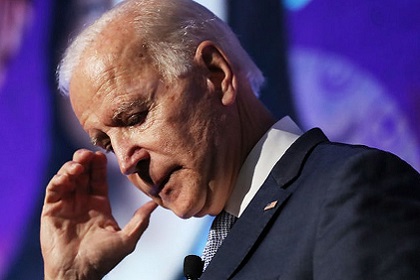
U.S. President Joe Biden was vulnerable on several issues with a low approval rating. Yet the Democrats defied expectations in the U.S. midterm elections, and there was no red wave. Why? Possibly because women, Donald Trump and political dramatisations affected the final outcome.
The old world order and the manners and values that went with it, have come to an end. Many of its aspects and aesthetics are outdated, but some remain – like the word ‘pukka’ which implies a certain sensibility, now with a new interpretation. Will its meaning hold in the new world order that has yet to emerge?
The upcoming Summit for Democracy hosted by U.S. President Biden, has high expectations from him. With trust in the U.S. having suffered badly, it remains to be seen how much confidence the democracies at the summit will have in American efforts at restoration of world leadership.