Frank Schell
BUSINESS CONSULTANT
Frank C. Schell III had an extensive career in international banking and finance, with postings in Nairobi, London, and Sao Paulo; he was also responsible for several countries in the Middle East. Mr Schell started his career in 1972 at Continental Bank and was later assistant treasurer of Ford Aerospace & Communications Corporation. Mr Schell joined The First National Bank of Chicago in 1981, where he held domestic and international positions for over 20 years. He retired as senior vice president of Bank One, a successor firm, and was named president and CEO of Chicago Commons, where he had served on the board of directors. He then joined The Private Bank as managing director from 2005 to 2006 and was an independent senior consultant for Charles River Associates from 2009 to 2011 in its corporate strategy practice. He was engaged by Argonne National Laboratory as a management consultant from 2015 to 2016 for a project in the energy sector and, subsequently, by a private equity firm conceived at Argonne, Volta Energy Technologies, LLC.
Mr Schell has long-standing ties to India, where he was posted with the U.S. Peace Corps from 1969 to 1972. He was a lecturer on South Asian affairs at the Harris School of Public Policy, University of Chicago, from 2009 to 2018 and was a member of the Dean’s International Council. He was a delegate to a G20 subforum sponsored by Gateway House, Think 20 Mumbai, in 2019. Mr Schell also served on the boards of the National Foreign Trade Council, Bankers’ Association for Foreign Trade, and Music of the Baroque and on the editorial board of the National Strategy Forum. Presently he serves on the Hagel Advisory Council of the University of Chicago, which supports the Chicago Project on Security and Threats of the university. Mr Schell has proficiency in German, French, Hindi-Urdu, and Portuguese.
Mr Schell earned an MBA from the University of Chicago and a BA in English from Stanford University. His numerous opinion pieces on global affairs have appeared in the Far Eastern Economic Review (Wall Street Journal Digital Network), Chicago Tribune, The American Spectator, National Strategy Forum Review, The Hindustan Times, and Gateway House.
Expertise
Business, India History
Last modified: May 20, 2021
Recent projects
 Courtesy: Shutterstock
Swiss bankers, long perceived as smart and the epitome of security, have lately projected themselves as venturesome players in a global theatre of high risk. It didn’t pay off, their involvement with Greensill Capital and Archegos Capital, resulted in major financial losses and a loss of cachet.
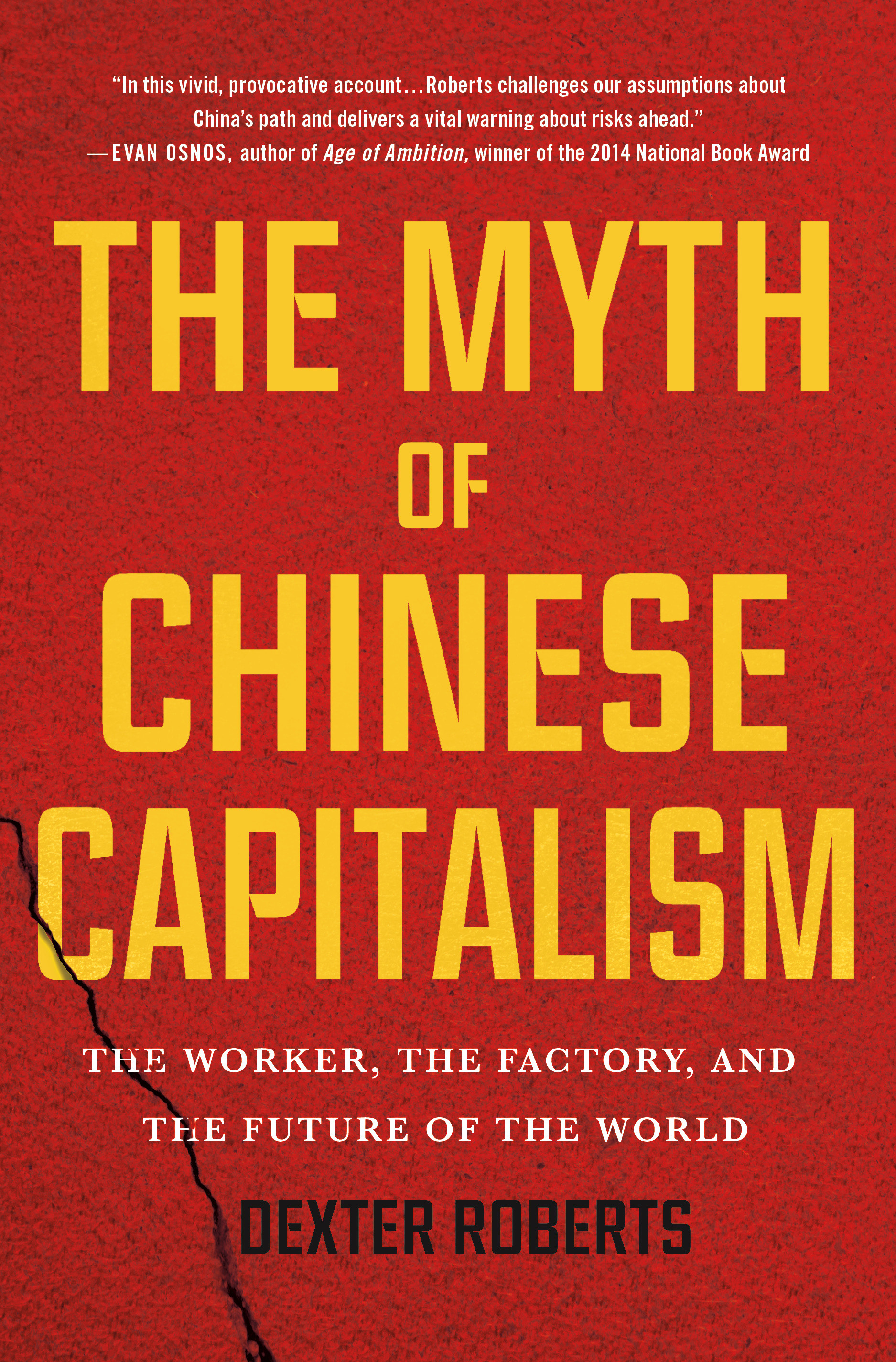 Courtesy: Macmillan/Dexter Roberts
China’s dramatic political and economic rise over the past three decades has been well recorded. Less known is the effort of China's rural labourers and migrants, which has largely enriched the coastal elites, instead of creating the egalitarian, capitalist, society China espouses. Dexter Roberts’ book takes us deep into the story of China’s rise, and exposes this reality. Roberts chronicles the lives of the many rural folk he has met during two decades of work and travels in China. It gives the book a personal and compassionate note, with the authenticity of a hands-on China expert.
 Courtesy: Shutterstock
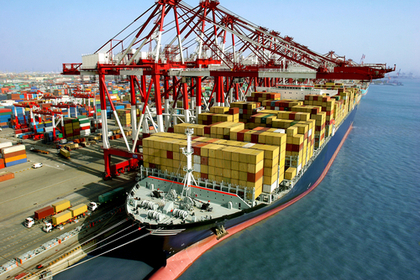
Globalisation has resulted in the interdependence of nations through the largely unimpeded transmission of investment capital and information, and integrated business operations. The leading beneficiaries have been the global 1%, and China. While it is too late and not possible to roll back an interconnected world order, globalization as we know it will recede, as will China’s standing in the world.
 Courtesy: MEA/Flickr
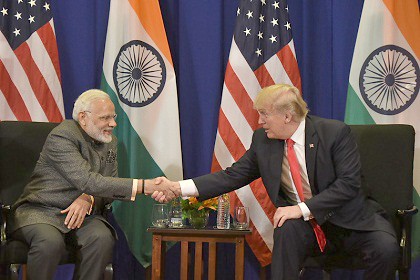
U.S. President Donald Trump’s first presidential visit to India later this month bodes well for bilateral relations. It is a continuing foreign policy success story for the two countries extending through four U.S. administrations and three Indian ones. A curtain raiser on what to expect.
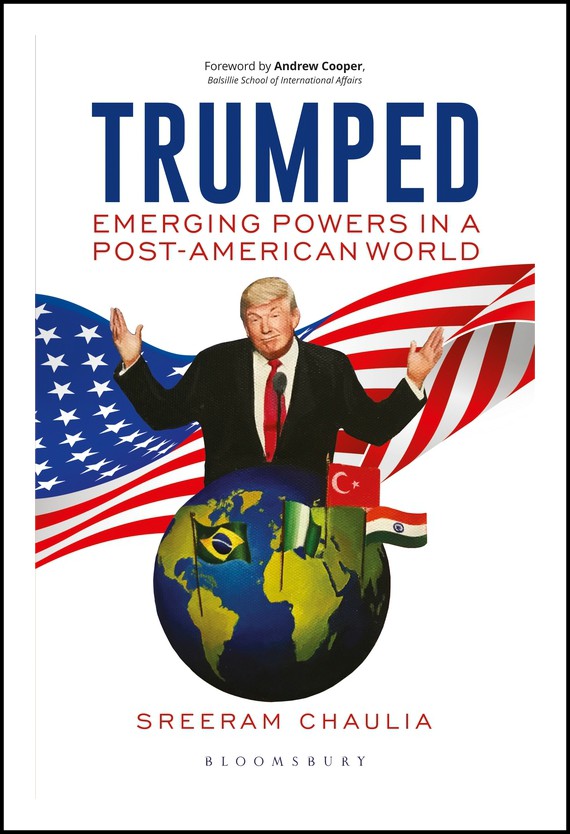 Courtesy: Bloomsbury
This book’s premise is that Donald Trump’s attempt to withdraw from various agreements, supposedly harmful to America’s interests, is an opportunity for regional players to come into their own. The author’s presentation of facts dazzles, but his recommendations are unspecific
 Courtesy: Shutterstock
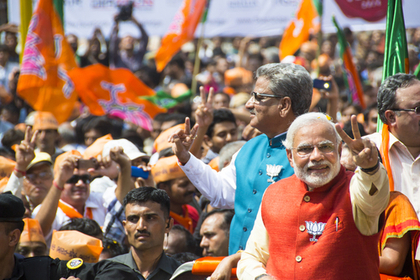
The reelected BJP government faces the dual challenges of agriculture stress and weak employment. The author believes that India's world standing in food and agriculture gives it a platform to address the issue of genetically modified seeds, and that performance risk insurance should be used to support financing for Small and Medium Enterprises
 Courtesy: cnn.com
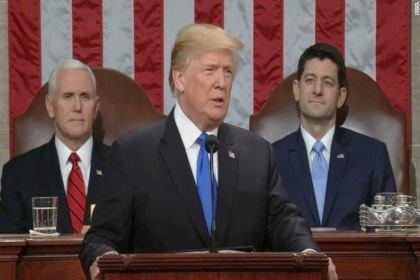
The state of the American Union is both polarised and ironic. Moderated presidential messaging is needed if there is a chance to become more united and avoid perpetual acrimony
 Courtesy: The American Bazaar
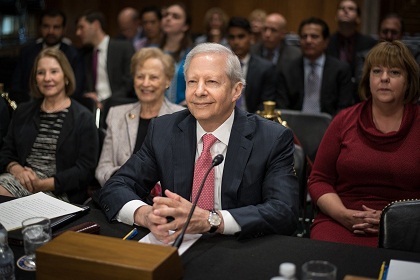
What does the appointment of Kenneth I. Juster as ambassador mean for the India-U.S. bilateral relationship? The two countries are now strategic partners on several fronts, but have some policy differences to resolve
 Courtesy: Wikipedia
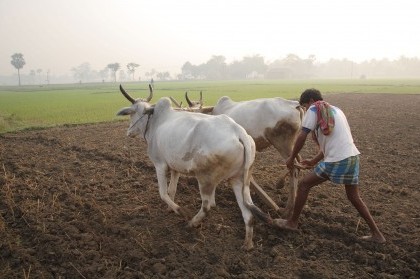
With the increase in allocation to the agriculture sector in Budget 2016, the Modi government has revealed a renewed tilt towards rural India. How this financial roadmap will lead to revitalizing agriculture and developing rural India will depend on the politics.
 Courtesy: Kholkute/Flickr
A former U.S. Peace Corps volunteer recollects the India of yesteryear and yearns for the old in the new scenario