Website articles  (79) Courtesy: @DrJaishankar/X
23 April 2026

Korea re-engages India

South Korea and India have much in common – both are Indo-Pacific players, oil importers and business-oriented economies. Yet, despite the ubiquitious and successful presence of Korean companies in India’s markets, the political relationship has been weak, and underperformed. The recent state visit by South Korean President Lee Jae-myung to India along with a slew of economic and strategic agreements signed, is an effort to recalibrate the relationship.


Website articles  (74) Courtesy: Presidential Communications Office
9 April 2026

ASEAN challenged by the Iran crisis

The West Asia conflict has disrupted global stability, impacting ASEAN economies and diplomacy. As chair, the Philippines balances its alliance with the U.S. and regional neutrality, while Indonesia and Malaysia reflect domestic support for Arab states. With energy shocks, remittance risks, and inflation rising, ASEAN’s limited influence is evident. Has ASEAN once again been drawn into a vortex of crises beyond its control?

Website articles  (48) Courtesy: Bayerischer Rundfunk
25 February 2026

Munich diary: Europe at the crossroads

During the week of the Munich Security Conference, Munich transformed into a temporary capital of global diplomacy. Gateway House participated and hosted a Side Event, “Multipolarity without Multilateralism: India, Europe and the Future of Global Order” on February 14. This diary captures observations from the conference and the city, reflecting on Europe’s evolving priorities and how the continent assesses its role in an increasingly fragmented world.

the influence of phil in the UN  (1) Courtesy: Debarpan Das
5 February 2026

Influence of philanthropies in the UN

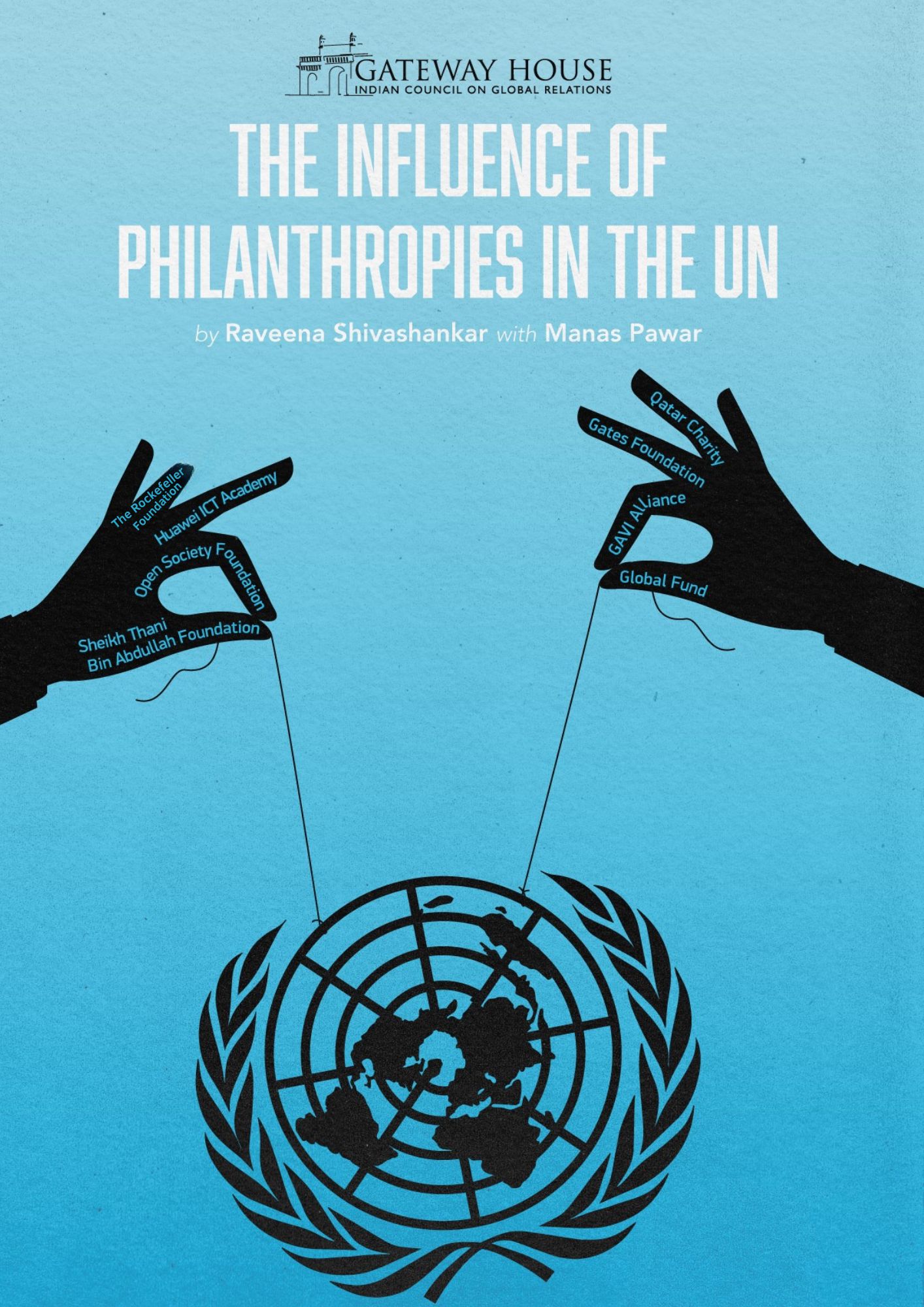
Over the last few decades, countries have stopped, delayed, or withheld their UN dues. The UN’s increasing financial needs have led to the acceptance of “voluntary” contributions. Those which come from any entities or individuals and are now its largest income stream. The biggest of these donors are the global philanthropies, which often have differing agendas from the UN’s responsibilities. This report studies these contributions and examines the linkages between donor priorities and UN mandates.

2 (6) Courtesy: Gateway House
5 February 2026

Influence of philanthropies in the UN

On January 7, 2026, the U.S. government announced its withdrawal from 31 UN organisations. This is a shock to the UN system. Several other countries have halted or only partially paid their dues over the years, creating a major funding gap. To cover for it, the UN has turned to “voluntary contributions” which come from philanthropic and private actors. Their misaligned mandates are distorting UN priorities.

Screenshot 2025-10-13 103335 Courtesy: Körber-Stiftung
13 October 2025

Bandung at 70: Multilateralism in a New Era of Multi-Alignment

The world is facing multiple crises which are shaking the foundations of multilateralism. The West’s structures are faltering, and the need for effective and equitable cooperation is greater than ever. Seventy years after the 1955 Bandung Conference, its principles of sovereignty, territorial integrity, cooperation and solidarity remain vital. This report revisits Bandung’s relevance for today’s reform efforts, urging renewed Global South–Europe collaboration for a sustainable global future.

Website articles  (22) Courtesy: Getty Images
3 July 2025

Diversifying supply chains for critical minerals

The Quad Foreign Ministers’ Meeting in Washington on 1 July, 2025, underscored the importance of diversified and reliable global supply chains, especially for critical minerals. A Gateway House report shows how to strengthen supply chains for rare earths by creating deep financial markets similar to those that exist for bullion and oil.

Gateway House Courtesy: Gateway House
3 July 2025

China Plus One and global supply chains

A slowdown of the Chinese economy, and the shift, particularly by MNCs, from China to other more competitive locations has opened up business opportunities for latecomers to supply chains in the developing world. Evidence suggests that Southeast Asia and some South Asian countries like India, Sri Lanka, Bangladesh, could be beneficiaries of the supply chain shift, particularly in labour-intensive segments.

Getty (1) Courtesy: Gateway House
15 May 2025

The New Geopolitics and South Asia’s Trade Architecture – What Next?

Geopolitics is increasingly intertwined with the economic destiny of South Asia. Even before the U.S. tariffs were rolled out, growing polycrises had hit the global economy, which has been struggling since the pandemic. South Asia seems a relatively bright spark of regional trade and growth. This paper analyses South Asia’s trade architecture in the backdrop of a sluggish world economy in the 2020s, and makes recommendations for closer regional economic integration.

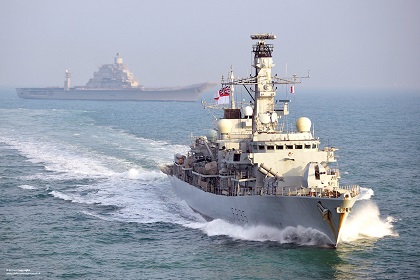
HMS Monmouth is pictured with the Indian aircraft carrier INS Vikramaditya during the vessels transit through the English Channel.

The 4,900 tonne frigate met up with the newest Indian aircraft carrier  – weighing in at a massive 45,000 tonnes and helped her safely through the busy English Channel.
 
Originally built for the Russian Navy as a modified Kiev class aircraft carrier, called Baku in 1987, India procured her in 2004 and she was accepted by the Indian Navy in a commissioning ceremony in November 2013.  

Following successful sea trials in July 2013 and aviation trials in September 2013 the carrier began her long journey to her new home of India escorted by auxiliary INS Deepak and Talwar class frigate INS Trikand.


-------------------------------------------------------
© Crown Copyright 2013
Photographer: LA(PHOT) Dean Nixon
Image 45156377.jpg from www.defenceimages.mod.uk Courtesy: South Asian Voices
6 April 2023

The U.K.’s Indo-Pacific push

The UK has been admitted to the Comprehensive and Progressive Agreement for Trans-Pacific Partnership or CPTPP, a significant step forward for its efforts in achieving its Brexit goals. The benefits will be more strategic than economic, as it gives the UK a place in the new ‘Atlantic-Pacific’ region.