Website articles  (55) Courtesy: Andreea Campeanu/Getty Images
12 March 2026

Europe’s strategic absence in West Asian conflict

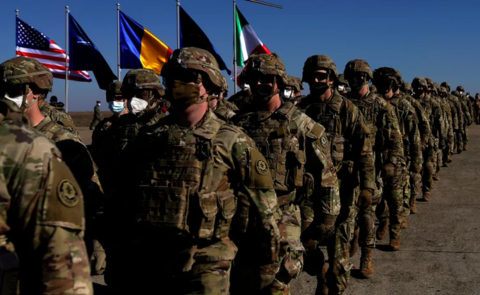
The war in West Asia is crowded with armaments and players, but there is one presence that is LOB, or Left Out of the Battle: that of Europe. The Continent is peripheral in the current crisis. Structural constraints, strategic dependence on the U.S., internal political divisions, and a shift in Europe’s geopolitical priorities since the war in Ukraine, has reduced its strategic weight.
Website articles  (48) Courtesy: Bayerischer Rundfunk
25 February 2026

Munich diary: Europe at the crossroads

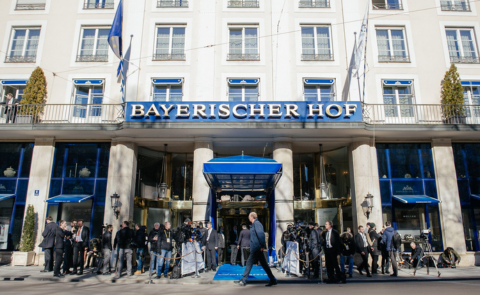
During the week of the Munich Security Conference, Munich transformed into a temporary capital of global diplomacy. Gateway House participated and hosted a Side Event, “Multipolarity without Multilateralism: India, Europe and the Future of Global Order” on February 14. This diary captures observations from the conference and the city, reflecting on Europe’s evolving priorities and how the continent assesses its role in an increasingly fragmented world.

2 (3) Courtesy: Getty Images
5 February 2026

Germany’s reform under strain

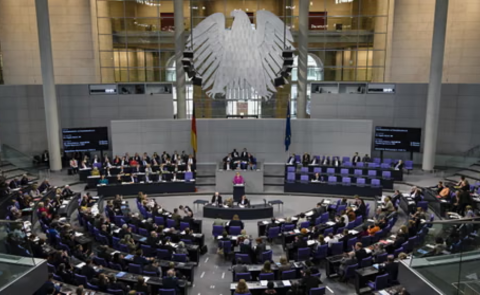
Germany’s prospects in 2026 are defined by tension rather than momentum. The country is neither in crisis nor comfortably on a path to renewal. Instead, it is engaged in a difficult process of adjustment, seeking to reconcile fiscal restraint with strategic ambition, social protection with demographic reality, and climate leadership with industrial competitiveness.

Ludovic MARIN  AFP Courtesy: Ludovic MARIN / AFP
12 June 2025

Macron’s strategic Indo-Pacific sail

Macron’s 2025 tour of Southeast Asia was intended to reinforce France’s strategic commitment to the Indo-Pacific. By engaging with three key ASEAN members - Vietnam, Indonesia, and Singapore - France wants to forge partnerships beyond its traditional transatlantic ties. Its Indo-Pacific vision is based on its territorial presence, economic interests, and diplomacy values, which it hopes will be an alternative to the binary logic of U.S.-China rivalry.

e49ca4a6affa0dbd5a25689d46f05e7b Courtesy: India Blooms
15 December 2022

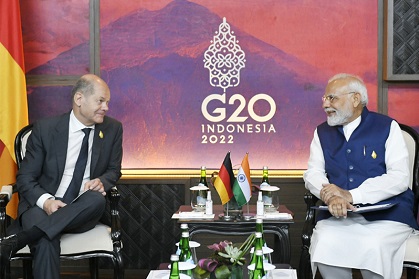
The German Global Zeitenwende and India

German Chancellor Olaf Scholz's essay on Zeitenwende emphasises a strong Germany as a guarantor of European security. It has attracted global attention - but has virtually no mention of India. In parallel, however, the visit of Foreign Minister Annalenna Baerbock reinforced Germany's interest in India, and suggested an upgrade to the bilateral. It is necessary, if India is to seek expanded economic ties with Berlin.

1000x563_346129 Courtesy: Euro News
29 September 2017

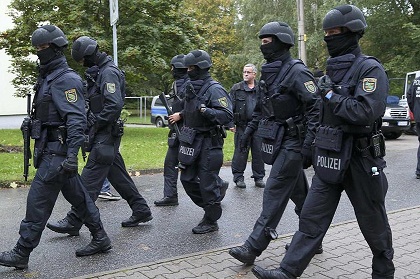
Civil security lessons from Germany

The German civil security industry is in the throes of change: it was once an avenue of employment for the less educated or the jobless. Today, companies are increasingly selling comprehensive security solutions. India will gain by being prepared for such trends and technological innovations

Merkel Modi Courtesy: MEA / Flickr
15 October 2015

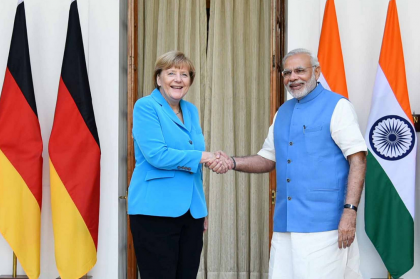
Moving ahead after Merkel’s visit

German Chancellor Merkel’s recent visit to India with a high-powered entourage showed the weight attached to this bilateral relationship. German companies want to gain more access to the Indian market and be part of Prime Minister Modi’s high-tech initiatives—and it is up to India to surmount political hurdles and tap into this potential.

Modi and Merkel WIkipediaEdit Courtesy: Wikipedia
5 October 2015

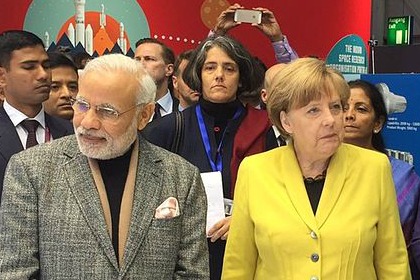
Modi-Merkel: Smart City diplomacy

It has been ten months since India and Germany signed an agreement to partner in developing three smart cities. The government now seriously needs to move beyond slogans and aspirations and start addressing the more pressing issues specific to smart city development. Then only will the Modi-Merkel diplomacy be viewed as a success at home.

india eu pmo Courtesy: Prime Minister's Office
2 May 2013

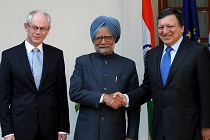
What to expect from the India-EU FTA

Negotiations for the India-EU Free Trade Agreement, which began in 2007, have yet to conclude. Deepak Rao blogs about the factors delaying the process, and the implications of the agreement on different sectors of the economy.