Koerber Stiftung (4) Courtesy: Gateway House
23 October 2025

Thai-Cambodia border resolution eludes ASEAN

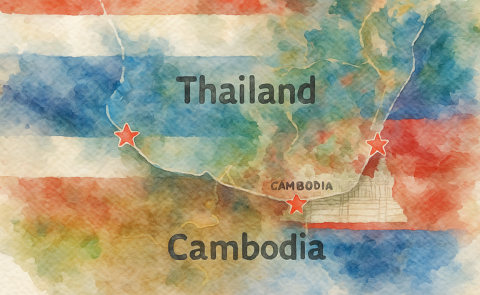
The Thai–Cambodia border dispute, which erupted anew in July, is 70 years old, and there’s no resolution in sight. Both nations have differing political ambitions: Thailand seeks to reclaim former territories while Cambodia aims to retain its sovereign rights. This contestation requires a regional political resolution, but Malaysia’s ASEAN chairmanship failed to forge consensus. Can the new chair, the Philippines, resolve it?

Bernama Courtesy: Bernama
9 July 2025

Malaysia’s ASEAN Chairmanship disappoints

The 46th ASEAN Summit led by Malaysia in the chair, concluded in May. Malaysia is one of the founding members of the ASEAN, and is fully cognisant of its prolonged challenges, but as chair it has not addressed the issues. It raises questions on whether the stated deliverable of “inclusivity and sustainability” is merely a diversion from the country’s weakening leadership in the region.

Gateway House Courtesy: Gateway House
3 July 2025

China Plus One and global supply chains

A slowdown of the Chinese economy, and the shift, particularly by MNCs, from China to other more competitive locations has opened up business opportunities for latecomers to supply chains in the developing world. Evidence suggests that Southeast Asia and some South Asian countries like India, Sri Lanka, Bangladesh, could be beneficiaries of the supply chain shift, particularly in labour-intensive segments.

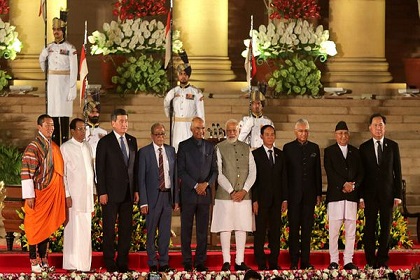
PM Modi alongside other BIMSTEC leaders at 6th BIMSTEC Summit Courtesy: ANI
10 April 2025

BIMSTEC: Vision vs Reality

The 6th BIMSTEC Summit in Bangkok on April 4, 2025 saw progress for the organisation, such as the adoption of a ‘Vision 2030’ plan outlining its goals till 2030. In other areas, the grouping continues to lag. BIMSTEC must watch for potential challenges to its future as it seeks to bridge the gaps.

BERNAMA Courtesy: BERNAMA
13 February 2025

High expectations of Malaysia as ASEAN chair

Malaysia’s chairmanship of ASEAN in 2025 is pivotal. It will have to steer ASEAN toward regional peace, stability, and prosperity while reinforcing its centrality. All this during a time of heightened geostrategic rivalry, economic deglobalisation, rising protectionism, and nationalist trends.

ASEAN Website Courtesy: Kuwait Times
25 July 2023

ASEAN on a trodden path

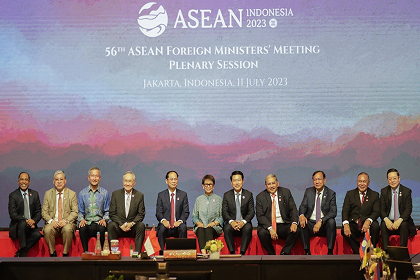
The 56th ASEAN Foreign Ministers Meeting in Jakarta reflected the grouping’s resilience amidst transformative geopolitical changes in the Indo-Pacific. Striving for unity and centrality, ASEAN tackled challenges posed by COVID-19, economic slowdown, climate change, and U.S.-China competition. However, internal differences on sensitive issues like Myanmar have tested its credibility.

GIGA_map_of_Indo-Pacific_Kontur_resize Courtesy: Science Po
28 July 2022

India’s blue economy and the Indo-Pacific’s future

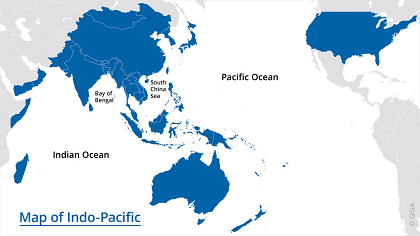
The Indo-Pacific region envisages the Indian and Pacific Oceans as a continuum and stands on two central pillars – maritime security and economic development. The public discussions, however, are focused on maritime security, strategy and geopolitics, while economic development has received less attention. This imbalance can be corrected by creating an awareness on how to harness the potential of the region's Blue Economy and its vast resources and opportunities.

IMG-1700 Courtesy: @BIMSTECInDhaka
8 June 2022

BIMSTEC@25

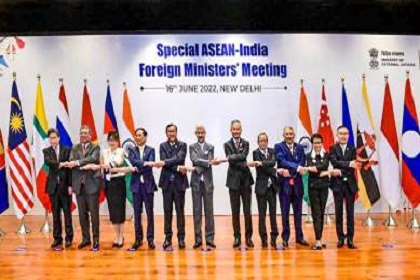
June 6, 2022, marks 25 years since India, Bangladesh, Sri Lanka, Bhutan, Nepal, Myanmar and Thailand joined hands to create BIMSTEC and infuse South Asia with economic and institutional cooperation. The strategic geography of this grouping has the potential to bring new synergy between South Asia and the recently-instituted Indo Pacific Economic Framework, ASEAN and the Quad, for a prosperous, secure Bay of Bengal Community.

ISRO satellite Courtesy: ISRO
26 May 2022

India’s EO satellites in the Indo-Pacific

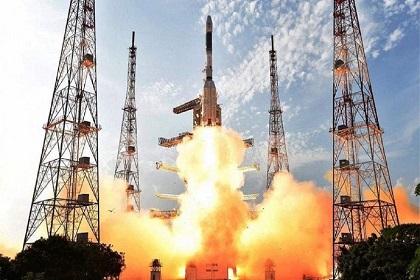
The Quad has agreed to launch a satellite-based maritime security initiative to curb illegal fishing by China. India is a global leader in satellite launches, especially in Earth Observation (EO) satellites. The Indo-Pacific nations are looking at the Indian model because it is applicable, economical, and sustainable.