Website articles  (1) Courtesy: Gateway House
18 June 2026

The relevance of the Indo-Pacific

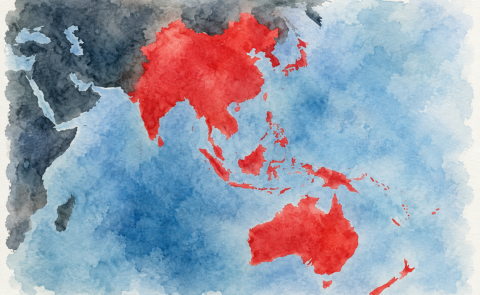
After eight years of its nomenclature, on 16th June the U.S. Pacific Command dropped the 'Indo' from its military command title. It reflects clearly that the U.S. does not consider the Indo-Pacific region to be the most consequential theatre of geopolitics today. Yet its significance as the platform on which great-power contestation in political, military, technological, and economic domains will play out cannot be overstated.

Kenny Holston  AP (2) Courtesy: x/@MEAIndia
11 June 2026

Myanmar president’s visit: realities and gaps

The recent visit of Myanmar President Min Aung Hlaing to India has re-engaged the two neighbours politically after a six-year gap. Critics and pragmatists had much to say, but the outcome spoke for itself: constructive border management, defence agreements and economic cooperation. And a reminder that India has not forgotten about Daw Aung San Suu Kyi, the democracy icon.

Gateway House Courtesy: Gateway House
4 June 2026

A BRICS Energy Stability Framework

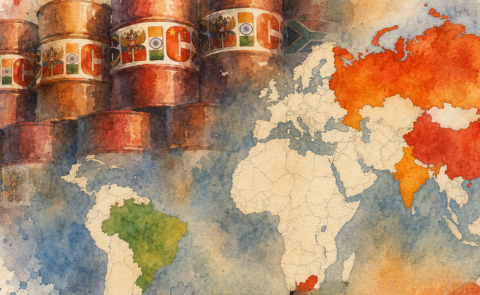
The 2026 Persian Gulf conflict has pushed energy security to the forefront of the BRICS agenda. Divergent national interests prevent the grouping from acting as a unified geopolitical bloc, the growing energy crisis highlights the need for stronger economic cooperation. Proposals such as a BRICS energy reserve, an Energy Stability Fund, and cross-border investments could enhance resilience and be essential if BRICS wants to emerge as a serious economic grouping.

oil Courtesy: KNN
28 May 2026

India’s Opportunity in the New Oil Order

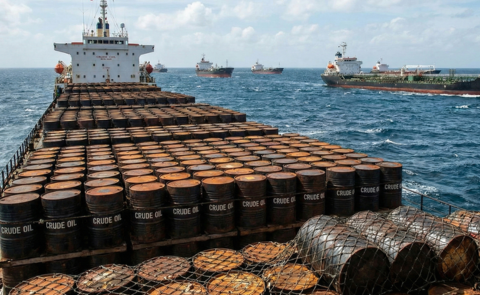
The UAE’s recent exit from OPEC, and the U.S. push to sell more oil to India are markers of a new order in the oil world with demand security at a premium. As a major oil importer, India must respond to it smartly. It must develop deeper partnerships with both the UAE and U.S., and a new financial ecosystem and benchmarks for the new order.

Website articles  (96) Courtesy: The Secretariat
20 May 2026

Interview with Sheikh Hasina

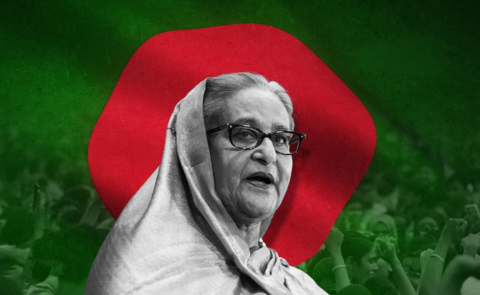
Bangladesh elected a new government in February this year after former long-time Prime Minister Sheikh Hasina was ousted from power in a violent mass protest on August 5, 2024. Her party, the Bangladesh Awami League, was banned from participating in this year’s election, which saw the return of the rival Bangladesh Nationalist Party (BNP) under Prime Minister Tarique Rahman. Hasina has been living in India since then and talks about her plans to return to Bangladesh and revive her party’s activities there. She spoke exclusively to Nayanima Basu.

Rajiv Bhatia with Aung San Suu Kyi Naypyidaw in 2013 Courtesy: Rajiv Bhatia
14 May 2026

Leaves from my Myanmar diary

Myanmar’s latest political transition offers the illusion of closure, but little clarity. After years of conflict triggered by the 2021 coup, a new administration under Min Aung Hlaing takes charge amid continuing resistance and fragmentation. Is this consolidation or another phase of instability? Reflecting on this question, Ambassador Rajiv Bhatia draws upon his three-decade-long association with Myanmar, including serving as India’s Ambassador from 2002 to 2005.

AP517-519 00_Cover.indd Courtesy: Routledge
7 May 2026

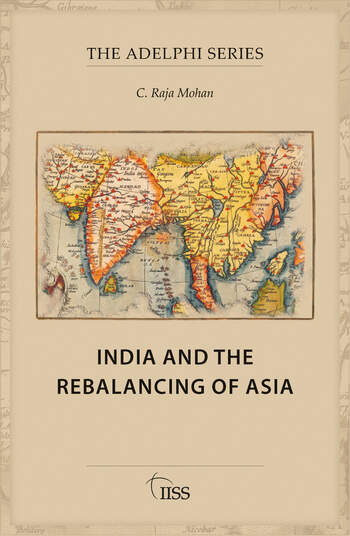
India and the Rebalancing of Asia

In this book, C. Raja Mohan analyses Asia’s shifting political, economic, military, and technological balance, with particular focus on U.S.-China and India-China relations. He argues that India’s rise from a middle power to an emerging great power will require stronger hard power, diplomatic creativity, economic vitality, and domestic consensus. Yet, amid tensions over tariffs, Russian oil, Gaza, and the U.S.-Iran conflict, India’s strategic path remains challenging.

Website articles  (85) Courtesy: FB / @The Statesman
30 April 2026

Legacy and new issues with India-Sri Lanka

India’s Vice President C. Radhakrishnan visited Sri Lanka from April 19-20, reaffirming Colombo’s importance in India’s Neighbourhood First Policy and MAHASAGAR vision. While ties remain stable, legacy issues persist: Tamil demands for devolution, illegal fishing disputes, and the stalled Economic and Technology Cooperation Agreement. The hope is for these to be resolved within Sri Lanka; till then, the unresolved challenges will continue to test the depth and durability of the bilateral.

Website articles  (88) Courtesy: Gateway House
30 April 2026

RSS’ civilisational compass and India’s foreign policy

The centenary of the Rashtriya Swayamsevak Sangh underscores its enduring influence on India’s foreign policy. Over a century, it has shaped thinking among policymakers, intellectuals, and the diaspora. Its influence rests on civilisational confidence, strategic multi-alignment, and a dharmic framing of global engagement. While not a formal institution of diplomacy, the RSS shapes the broader ecosystem within which India’s foreign policy operates.