Dilma_e_Lula_210x140 Courtesy: Government of Brazil/Wikimedia Commons
15 May 2014

Brazil: time to be a global power?

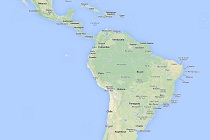
Brazil’s advantages – including resources of oil and gas, no historical baggage, an absence of terrorism and military conflicts – and regional leadership, make it a potential global power. But it also has to tackle many challenges in the medium-term, such as poverty, poor infrastructure, healthcare and education
southblock Courtesy: rajkumari1220/Flickr
18 April 2014

Circles & Corridors of Economic Diplomacy

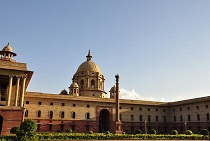
India’s political and economic future will be determined over the next few weeks. Gateway House recommends a priority diplomacy agenda for the next government – one which puts economics at the heart of our foreign policy

ind jap Courtesy: generalising/Flickr
6 November 2013

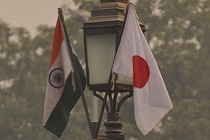
The new Indo-Pacific core

The India-Japan alliance needs to be viewed through a prism broader than that of "containing" China, and by treating the Indian and Pacific oceans as a single entity. Such an alliance has the potential to strengthen the geopolitical security of India and Japan, along with that of all their allies and associates

dilma Courtesy: Ministério da Saúde/Flickr
17 October 2013

Brazil’s new global agenda for the internet

After revelations that the U.S.’s NSA spied on her, Brazilian President Dilma Rousseff has ordered a series of measures to ensure online independence and called for an equitable global internet infrastructure. India can follow Brazil’s lead and make its communication systems less vulnerable

egypt Courtesy: oxfamnovib/Flickr
18 July 2013

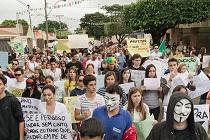
Protests in democracies – patterns and problems

Elections are meant to be a suitable recourse in democracies if citizens feel that the government does not represent them. However, the recent protests in Brazil, Turkey and India show that people feel political classes are too far removed from their every day realities to address their grievances