Renewable energy adoption will be much slower than what was being projected earlier, and China’s curbs on rare-earth magnets will slow down the adoption of electric vehicles. Oil will continue to fuel India’s economy in 2026 and beyond.
China’s attempt to discipline Japan over Japanese Prime Minister Takaichi’s statement on a Chinese attack on Taiwan threatening Japan’s security, may instead strengthen the very alliances Beijing hoped to fracture. By using symbolic economic instruments, invoking the UNSC, and amplifying nationalist messaging while avoiding mass public mobilisation, China signals displeasure without risking internal instability. Yet these same measures push Japan ever deeper into U.S.-aligned networks.
The rise of Sanae Takaichi, Japan’s first female prime minister with firm conservative credentials, carries both symbolic weight and political controversy. Her early decisions suggest clarity of intention but also highlight the structural weaknesses and diplomatic sensitivities that will shape her tenure. To keep her ratings high, she has to stabilise her minority government at home, and manage the China, U.S. and ASEAN relationships with tact.
The arc of revolutions has two acts: rupture - upending the status quo - and the craft of repair. Often, the second is as hard as the first. Today's Pax Fragilis in Gaza is narrow, given the continuing humanitarian crisis, regional reactiveness, limited scope of de-escalation channels, multiple actors' motivations for a permanent ceasefire, and the capabilities of Israel and Palestine to build a pathway with certainty.
The visit of Taliban foreign minister Mawlawi Amir Khan Muttaqi to India has resulted in the reopening of the Indian mission in Kabul, and the resumption of stalled projects, mostly in the development sector. India now needs a long-term strategy for Afghanistan – starting with an outreach to the Taliban’s Supreme Leader, the dreaded Haqqani network, even the anti-Taliban groups – to secure its position in that country.
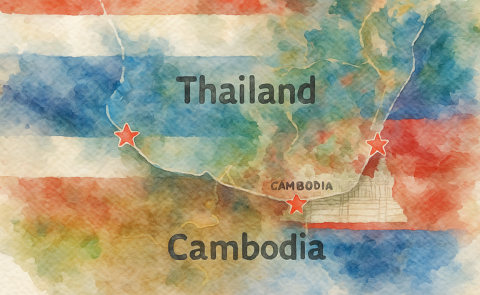
The Thai–Cambodia border dispute, which erupted anew in July, is 70 years old, and there’s no resolution in sight. Both nations have differing political ambitions: Thailand seeks to reclaim former territories while Cambodia aims to retain its sovereign rights. This contestation requires a regional political resolution, but Malaysia’s ASEAN chairmanship failed to forge consensus. Can the new chair, the Philippines, resolve it?
Afghanistan’s Foreign Minister Amir Khan Muttaqi will visit India on October 10, marking the first high-level Taliban visit since the group took over Kabul in 2021. Nayanima Basu discusses the purpose of this visit and the importance of engagement with Afghanistan. She explains the roles of China, which seeks business; Pakistan, which pursues political interests; and the U.S., which has a renewed interest in Bagram Air Base and its return to the country it abandoned.
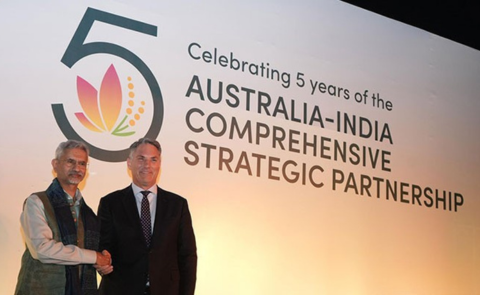
This year marks the fifth anniversary of the India-Australia Comprehensive Strategic Partnership, signed in 2020 to boost defence and security ties and enhance trade and investments. But the foundations had been laid earlier in 2009, when India and Australia elevated their relationship to a Strategic Partnership. The bilateral has evolved significantly, making Australia one of the most stable partners in a rapidly changing global order.
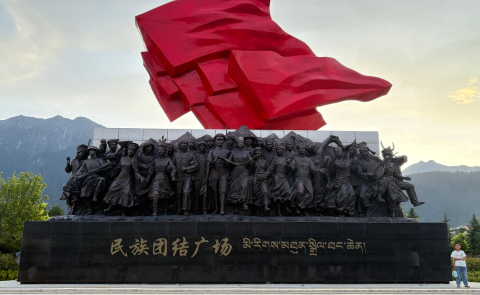
Today’s Lhasa is far from being a forbidden land where oracles are more common than human beings. It is a modern Chinese city, with swish hotels, art galleries and businesses. The transformation – and Sinicisation - of Tibet has accelerated under Chinese President Xi Jinping. The selection of the next Dalai Lama will cement the Chinese hold over that land
Chinese Foreign Minister Wang Yi's two-day visit to India achieved a significant goal: to resolve the bilateral border dispute and ensure Prime Minister Narendra Modi’s presence at the Shanghai Cooperation Organisation summit. It’s not a reaction to the U.S.-India tariff tensions, but a realistic policy compulsion felt by India.