PTI Courtesy: PTI
30 October 2025

India’s Taliban outreach

The visit of Taliban foreign minister Mawlawi Amir Khan Muttaqi to India has resulted in the reopening of the Indian mission in Kabul, and the resumption of stalled projects, mostly in the development sector. India now needs a long-term strategy for Afghanistan – starting with an outreach to the Taliban’s Supreme Leader, the dreaded Haqqani network, even the anti-Taliban groups – to secure its position in that country.
Koerber Stiftung (4) Courtesy: Gateway House
23 October 2025

Thai-Cambodia border resolution eludes ASEAN

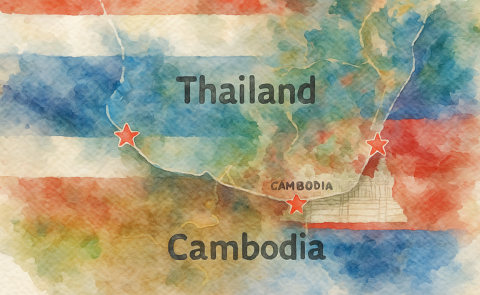
The Thai–Cambodia border dispute, which erupted anew in July, is 70 years old, and there’s no resolution in sight. Both nations have differing political ambitions: Thailand seeks to reclaim former territories while Cambodia aims to retain its sovereign rights. This contestation requires a regional political resolution, but Malaysia’s ASEAN chairmanship failed to forge consensus. Can the new chair, the Philippines, resolve it?

Ivan Courtesy: Gateway House
8 October 2025

Unfolding Geopolitics Episode 23 | India renews engagement with Afghanistan

Afghanistan’s Foreign Minister Amir Khan Muttaqi will visit India on October 10, marking the first high-level Taliban visit since the group took over Kabul in 2021. Nayanima Basu discusses the purpose of this visit and the importance of engagement with Afghanistan. She explains the roles of China, which seeks business; Pakistan, which pursues political interests; and the U.S., which has a renewed interest in Bagram Air Base and its return to the country it abandoned.

X  @DrSJaishankar Courtesy: X / @DrSJaishankar
25 September 2025

Five years of India-Australia’s Comprehensive Partnership

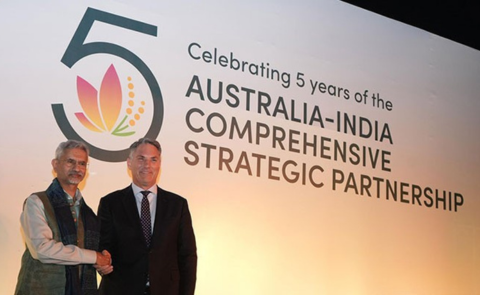
This year marks the fifth anniversary of the India-Australia Comprehensive Strategic Partnership, signed in 2020 to boost defence and security ties and enhance trade and investments. But the foundations had been laid earlier in 2009, when India and Australia elevated their relationship to a Strategic Partnership. The bilateral has evolved significantly, making Australia one of the most stable partners in a rapidly changing global order.

A community park in Nyingchi Courtesy: Nayanima Basu
4 September 2025

Talk Tibet, with candour

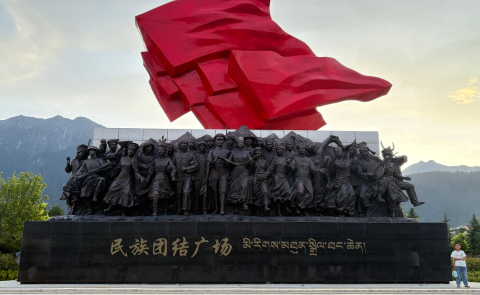
Today’s Lhasa is far from being a forbidden land where oracles are more common than human beings. It is a modern Chinese city, with swish hotels, art galleries and businesses. The transformation – and Sinicisation - of Tibet has accelerated under Chinese President Xi Jinping. The selection of the next Dalai Lama will cement the Chinese hold over that land

X  narendramodi Courtesy: X / Narendra Modi
22 August 2025

India-China risky boundary early harvest

Chinese Foreign Minister Wang Yi's two-day visit to India achieved a significant goal: to resolve the bilateral border dispute and ensure Prime Minister Narendra Modi’s presence at the Shanghai Cooperation Organisation summit. It’s not a reaction to the U.S.-India tariff tensions, but a realistic policy compulsion felt by India.

Bernama Courtesy: Bernama
9 July 2025

Malaysia’s ASEAN Chairmanship disappoints

The 46th ASEAN Summit led by Malaysia in the chair, concluded in May. Malaysia is one of the founding members of the ASEAN, and is fully cognisant of its prolonged challenges, but as chair it has not addressed the issues. It raises questions on whether the stated deliverable of “inclusivity and sustainability” is merely a diversion from the country’s weakening leadership in the region.

Website articles  (22) Courtesy: Getty Images
3 July 2025

Diversifying supply chains for critical minerals

The Quad Foreign Ministers’ Meeting in Washington on 1 July, 2025, underscored the importance of diversified and reliable global supply chains, especially for critical minerals. A Gateway House report shows how to strengthen supply chains for rare earths by creating deep financial markets similar to those that exist for bullion and oil.

Gateway House Courtesy: Gateway House
3 July 2025

China Plus One and global supply chains

A slowdown of the Chinese economy, and the shift, particularly by MNCs, from China to other more competitive locations has opened up business opportunities for latecomers to supply chains in the developing world. Evidence suggests that Southeast Asia and some South Asian countries like India, Sri Lanka, Bangladesh, could be beneficiaries of the supply chain shift, particularly in labour-intensive segments.

Myanmar article Courtesy: X /@antonioguterres
28 May 2025

Quid pro quo for Myanmar’s humanitarian corridor

A proposed humanitarian corridor from Bangladesh to Myanmar’s suffering Rakhine state is the need of the hour. But Chief Advisor Yunus has linked it with repatriation of the Rohingya refugees in Bangladesh, mixing up unrelated issues. This is a classic ploy to distract the public from his own shortcomings, and his single-minded focus to extend and legitimise his regime.