Kyodo News (1) Courtesy: Kyodo News
20 November 2025

Sanae Takaichi’s strong start

The rise of Sanae Takaichi, Japan’s first female prime minister with firm conservative credentials, carries both symbolic weight and political controversy. Her early decisions suggest clarity of intention but also highlight the structural weaknesses and diplomatic sensitivities that will shape her tenure. To keep her ratings high, she has to stabilise her minority government at home, and manage the China, U.S. and ASEAN relationships with tact.

Bernama Courtesy: Bernama
9 July 2025

Malaysia’s ASEAN Chairmanship disappoints

The 46th ASEAN Summit led by Malaysia in the chair, concluded in May. Malaysia is one of the founding members of the ASEAN, and is fully cognisant of its prolonged challenges, but as chair it has not addressed the issues. It raises questions on whether the stated deliverable of “inclusivity and sustainability” is merely a diversion from the country’s weakening leadership in the region.

Website articles  (22) Courtesy: Getty Images
3 July 2025

Diversifying supply chains for critical minerals

The Quad Foreign Ministers’ Meeting in Washington on 1 July, 2025, underscored the importance of diversified and reliable global supply chains, especially for critical minerals. A Gateway House report shows how to strengthen supply chains for rare earths by creating deep financial markets similar to those that exist for bullion and oil.

Gateway House Courtesy: Gateway House
3 July 2025

China Plus One and global supply chains

A slowdown of the Chinese economy, and the shift, particularly by MNCs, from China to other more competitive locations has opened up business opportunities for latecomers to supply chains in the developing world. Evidence suggests that Southeast Asia and some South Asian countries like India, Sri Lanka, Bangladesh, could be beneficiaries of the supply chain shift, particularly in labour-intensive segments.

Getty (1) Courtesy: Gateway House
15 May 2025

The New Geopolitics and South Asia’s Trade Architecture – What Next?

Geopolitics is increasingly intertwined with the economic destiny of South Asia. Even before the U.S. tariffs were rolled out, growing polycrises had hit the global economy, which has been struggling since the pandemic. South Asia seems a relatively bright spark of regional trade and growth. This paper analyses South Asia’s trade architecture in the backdrop of a sluggish world economy in the 2020s, and makes recommendations for closer regional economic integration.

BERNAMA Courtesy: BERNAMA
13 February 2025

High expectations of Malaysia as ASEAN chair

Malaysia’s chairmanship of ASEAN in 2025 is pivotal. It will have to steer ASEAN toward regional peace, stability, and prosperity while reinforcing its centrality. All this during a time of heightened geostrategic rivalry, economic deglobalisation, rising protectionism, and nationalist trends.

ASEAN Website Courtesy: Kuwait Times
25 July 2023

ASEAN on a trodden path

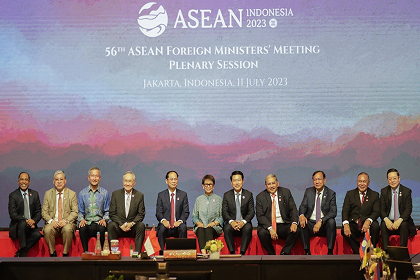
The 56th ASEAN Foreign Ministers Meeting in Jakarta reflected the grouping’s resilience amidst transformative geopolitical changes in the Indo-Pacific. Striving for unity and centrality, ASEAN tackled challenges posed by COVID-19, economic slowdown, climate change, and U.S.-China competition. However, internal differences on sensitive issues like Myanmar have tested its credibility.

Amb Gurjit Singh Courtesy: ANI
17 August 2022

75 years of development cooperation

Since 1947, India has had a proud record of development cooperation. It began even though it was newly independent and itself developing, but created a camaraderie with movements in other emerging countries. Now after 75 years, its time to move toward an FDI-led model, which will particularly help reduce the rising indebtedness in the developing world.

GIGA_map_of_Indo-Pacific_Kontur_resize Courtesy: Science Po
28 July 2022

India’s blue economy and the Indo-Pacific’s future

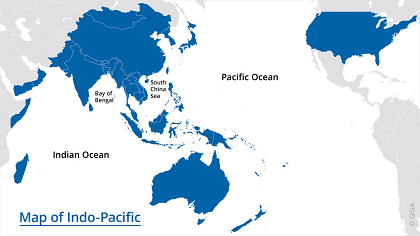
The Indo-Pacific region envisages the Indian and Pacific Oceans as a continuum and stands on two central pillars – maritime security and economic development. The public discussions, however, are focused on maritime security, strategy and geopolitics, while economic development has received less attention. This imbalance can be corrected by creating an awareness on how to harness the potential of the region's Blue Economy and its vast resources and opportunities.

7396fefe-aba2-49fe-a3e5-33b8cea9ebf1 Courtesy: WWF
30 June 2022

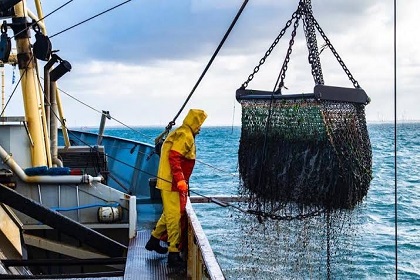
Can the WTO Agreement Stop Unsustainable Fishing?

Hailed as historic, the new global rules to curb harmful fishing subsidies is a step towards sustainable fishery practices. The negotiated deal, however, is fraught with concerns over overcapacity in fisheries, deep-sea fishing legislations, and blue finance. It may be better for developing countries to formulate their own regulations and set up mechanisms to prevent illegal fishing within their territorial waters – and hold the WTO agreement to its word.