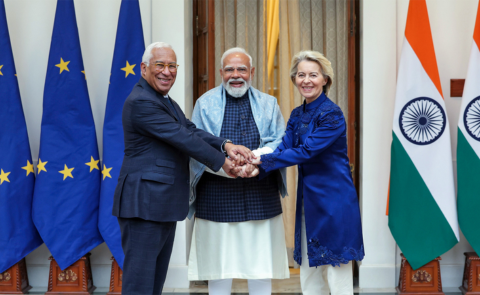
By signing the EU-India Free Trade Agreement on January 27, the ties that bind India and the European collective have been re-energised. They are now set to reach new heights, while overcoming past hesitations and divergences.
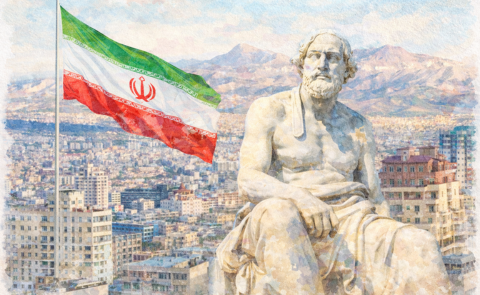
Iran has often stood at the crossroads of social and political metamorphosis and regional geopolitical recalibration, from the Islamic Revolution of 1979 to the attrition of the Iran-Iraq War. The current landscape reflects the convergence, once again, of internal pressures and sharper deterrence postures, that the social compact—from a Lockean and Rousseauian perspective—needs a new edition, and that timely diplomacy to prevent escalation is required.
U.S. action in Venezuela has resurrected the 200-year-old Monroe Doctrine which sought to prevent foreign interference in the Western Hemisphere. Originally intended to keep European colonial powers away, it has been reinterpreted over the years beyond that. Donald Trump has reasserted and updated it to the “Donroe Doctrine,” to revitalise U.S. regional hegemony – and through it, some reduction of Chinese and Russian influence.
Israel’s recognition of Somaliland as an independent state in December 2025 is not merely a diplomatic gesture toward a long-marginalised polity; it is a strategic act with implications for Somalia’s territorial integrity, regional security dynamics, great-power competition, and the evolving politics of recognition in a fractured international order.
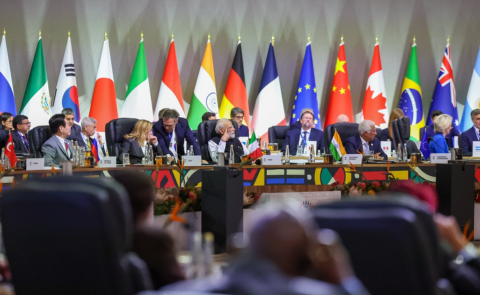
In the shifting sands of contemporary geopolitics, terms such as ‘fluid multipolarity’, ‘multiplexity’, ‘tripolarity’, and ‘bipolarity with multipolar characteristics’ are replacing the old dogmas and orders. But what is driving the world today? How does India plan to protect its vital interests in the current age of ongoing polycrisis? The road ahead is challenging, marked by risks and uncertainty.
Bangladesh’s economy, already weak at the time of the August 2024 coup, has been on a downward spiral since. Banks are insolvent and cannot lend, business confidence is low, and investors are staying out. These issues will worsen the ongoing radicalisation, extremism and violence in the country.
China’s attempt to discipline Japan over Japanese Prime Minister Takaichi’s statement on a Chinese attack on Taiwan threatening Japan’s security, may instead strengthen the very alliances Beijing hoped to fracture. By using symbolic economic instruments, invoking the UNSC, and amplifying nationalist messaging while avoiding mass public mobilisation, China signals displeasure without risking internal instability. Yet these same measures push Japan ever deeper into U.S.-aligned networks.
The rise of Sanae Takaichi, Japan’s first female prime minister with firm conservative credentials, carries both symbolic weight and political controversy. Her early decisions suggest clarity of intention but also highlight the structural weaknesses and diplomatic sensitivities that will shape her tenure. To keep her ratings high, she has to stabilise her minority government at home, and manage the China, U.S. and ASEAN relationships with tact.
The arc of revolutions has two acts: rupture - upending the status quo - and the craft of repair. Often, the second is as hard as the first. Today's Pax Fragilis in Gaza is narrow, given the continuing humanitarian crisis, regional reactiveness, limited scope of de-escalation channels, multiple actors' motivations for a permanent ceasefire, and the capabilities of Israel and Palestine to build a pathway with certainty.
Afghanistan’s Foreign Minister Amir Khan Muttaqi will visit India on October 10, marking the first high-level Taliban visit since the group took over Kabul in 2021. Nayanima Basu discusses the purpose of this visit and the importance of engagement with Afghanistan. She explains the roles of China, which seeks business; Pakistan, which pursues political interests; and the U.S., which has a renewed interest in Bagram Air Base and its return to the country it abandoned.