20260415_1714_Minimalist Iran Conflict Illustration_remix_01kp8f9nksftqrj3zntfnpktpe Courtesy: Gateway House
15 April 2026

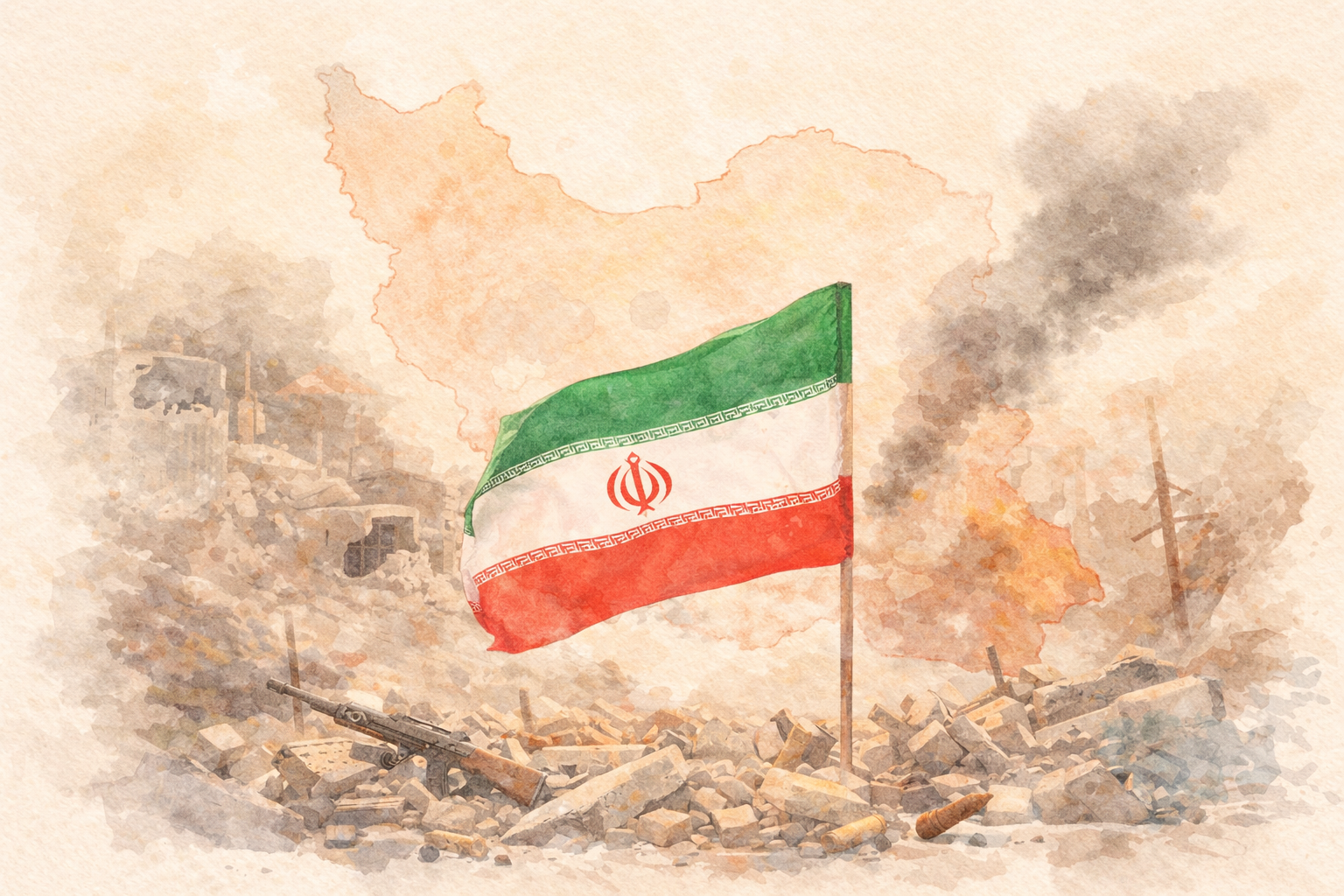
How did Iran fight this war?

The West Asian conflict is raising questions about Iran’s performance. Tehran appeared well-prepared, having expanded its low-cost drone and missile capabilities. It also widened the conflict by targeting U.S. bases in the Gulf. The key lesson is that eliminating leadership does not guarantee regime change. The conflict underscores that modern warfare depends not just on battlefield gains, but also on economic resilience, trade leverage, and technological strength.
Website articles  (52) Courtesy: AFP
9 March 2026

Iran regime change unlikely

The U.S.–Israel war against Iran will alter the geopolitical landscape of West Asia and adversely impact the global economy, including India. Vali Nasr, Majid Khadduri Professor of International Affairs and Middle East Studies at Johns Hopkins University School of Advanced International Studies, analyses the conflict and its implications in an exclusive conversation with Nayanima Basu.

Website articles  (11) Courtesy: Shutterstock
5 March 2026

West Asia conflict: who benefits?

The U.S. and Israel launched precise airstrikes on Iran, targeting nuclear facilities and senior leadership. Their aim is to weaken Iran’s nuclear programme and potentially induce regime change, while Tehran’s priority remains regime survival. The conflict’s duration will depend on whether it remains limited to missile exchanges or escalates into asymmetric warfare.

Website articles  (48) Courtesy: Bayerischer Rundfunk
25 February 2026

Munich diary: Europe at the crossroads

During the week of the Munich Security Conference, Munich transformed into a temporary capital of global diplomacy. Gateway House participated and hosted a Side Event, “Multipolarity without Multilateralism: India, Europe and the Future of Global Order” on February 14. This diary captures observations from the conference and the city, reflecting on Europe’s evolving priorities and how the continent assesses its role in an increasingly fragmented world.

Website articles  (31) Courtesy: BBC
15 January 2026

Venezuela and the Donroe Doctrine

U.S. action in Venezuela has resurrected the 200-year-old Monroe Doctrine which sought to prevent foreign interference in the Western Hemisphere. Originally intended to keep European colonial powers away, it has been reinterpreted over the years beyond that. Donald Trump has reasserted and updated it to the “Donroe Doctrine,” to revitalise U.S. regional hegemony – and through it, some reduction of Chinese and Russian influence.

edf energy Courtesy: Reuters
25 January 2024

Delhi-Paris energy engagement

India and France are both large energy importers with a shared interest in stable prices and decarbonisation. They have much to offer each other. France is a leader in nuclear power and green hydrogen, and can help India with the technology it needs. India, with its large and growing market, can help bring down the cost of these technologies and mainstream them.

EuropeProtests-01[85] copy Courtesy: Gateway House
17 November 2022

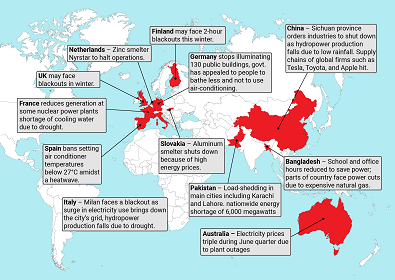
Protests across Europe

Discontent over high energy prices, spiralling living costs, and anti war sentiments have gripped Europe, resulting in protests and civil unrest across the continent. With no immediate solution in sight, public resentment is likely to intensify through the coming winter months

LNG Terminal Courtesy: Shutterstock
22 September 2022

“There is a lack of coherence between environmental policy and energy security”

The global energy market has been disrupted since the Ukraine-Russia conflict. Energy security is now a core concern for most countries and offers the chance to fix the structural problems in the energy generation sector. The interaction between energy security and environmental policies must be reassessed so policies can be consistent for the long term. Gateway House’s Saeeduddin Faridi speaks to Robin Mills, energy expert and CEO of Qamar Energy, about the state of energy markets.

Eu Gas Pipeline Courtesy: Reuters
11 August 2022

Turkey: Europe’s new gas hub?

The Ukraine crisis has sent the EU scrambling for new gas supplies, generating fresh interest in gas pipelines from Central Asia and West Asia via Turkey. Practical difficulties make most of these new projects unviable.