B508BED1-BCE9-4835-8B71-E687EAC37621 Courtesy: Twitter- Narendra Modi
7 May 2022

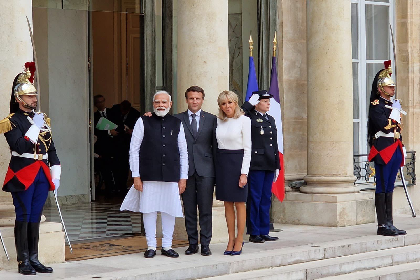
India and France are reliable partners

The strength and trust in the India-FRANCE bilateral was evident during the May 4th visit of Prime Minister Modi to Paris. Beyond the difficult discussions on multilateral issues, the partnership has been deepened in several key areas of cooperation, from defence to education, climate, energy, digitalisation and technical collaboration. Energy and digitalisation are two particularly bright spots for future collaboration.

India-France_Cover-02 Courtesy: Gateway House
5 May 2022

India-France: A Reliable Partnership

India and France have long been reliable partners, and friends in need. The fifth meeting between the leaders of the two countries highlights the focus on strengthening cooperation in 21st century issues. The India-France Track 1.5 Dialogue, hosted by Gateway House, Mumbai and Ifri, Paris, explored the potential of cooperation in digitalisation and energy transition

shringla speech image Courtesy: Gateway House
17 March 2022

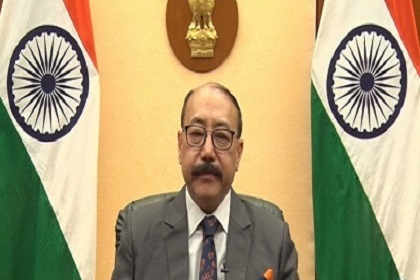
India-France, infinite possibilities

On 16 March 2022, Foreign Secretary, Harsh Vardhan Shringla, delivered the keynote address at the first roundtable of the India-France Track 1.5 Dialogue, co-hosted by Gateway House and Ifri. He traced the achievements of the bilateral, particularly in the areas of digital cooperation and energy transitions. He highlighted the "infinite possibilities" for the India-France partnership given their unique positions in the Indo-Pacific.

Cial-Golf-Course-IN-2019-1-retouche-web-1000px Courtesy: Ciel et Terre
15 March 2022

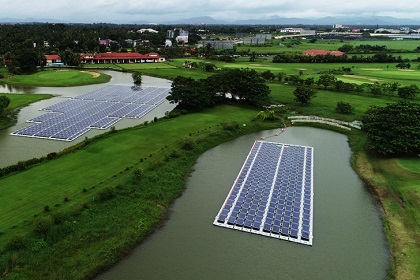
India-France’s Atal le développement durable

India and France have been actively working together to solve various sustainability issues from renewable energy generation to the blue economy and biodiversity conservation. There is so much more to do bilaterally with climate finance and urban sustainability, and multilaterally with the G20. All the ingredients are in place for a robust climate partnership.

Oil,Field,With,Pump,Jack,,Profiled,On,Blue,Sky,With Courtesy: Shutterstock
10 February 2022

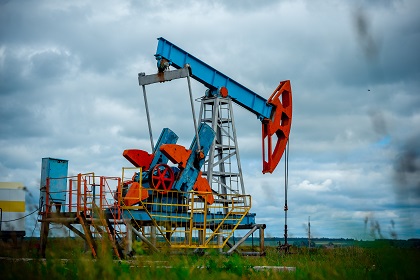
A sovereign wealth fund for oil security

Renewable energy is trendy, but still unreliable at this early stage. Countries will find it necessary to fall back on traditional energy sources like coal and oil for their needs, and this can lead to energy price spikes. To protect itself from this scenario, now is the time for energy-dependent India to set up a wealth fund that invests in listed oil companies around the world, to reduce the risk of energy insecurity.

Offshore,Windmill,Park,With,Stormy,Clouds,And,A,Blue,Sky, Courtesy: Shutterstock
27 January 2022

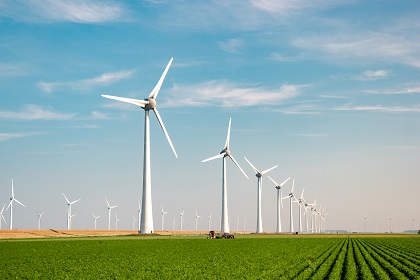
Green push too far

Since August 2021, Western Europe has faced a problem with renewable energy, causing it to turn to natural gas as an emergency alternative. This has led to a significant increase in gas prices and has serious implications for fertiliser and food prices. If this trend continues, it will be likely to cause food insecurity especially in poorer nations which do not have the monetary cushion of the West.

shutterstock_83614519 Courtesy: Shutterstock
10 October 2019

Climate engineering vs. geoengineering

The United Nations’ Paris Agreement of 2015 had nations committing to reduce emissions of greenhouse gases to slow the rise in global temperatures. But terrestrial geoengineering – or the use of “carbon capture” technologies and developing carbon sinks to remove gases already in the atmosphere – and atmospheric climate engineering are technologies which also seek to slow global warming

shutterstock_765921106 Courtesy: Shutterstock
11 July 2019

Making India a Methane Economy

India is the second largest emitter of methane in the world. But methane-cracking has enormous economic potential. It can help India become a high-technology manufacturing powerhouse by producing a steady supply of methane-derived, advanced carbon materials and hydrogen-energized transportation

SLQ Courtesy: Wikimedia Commons
19 December 2016

LNG strategies for the EU and India

India’s gas consumption is lower than the EU’s, but it too, like the EU, relies heavily on imports. With LNG likely to remain a key part of India’s gas supplies in the future, and given recent changes in the global market, what is the future potential of LNG imports for the EU and India? What are the best energy policies for the two regions?