indo pacific  (7) Courtesy: Daily News Egypt
31 July 2025

Egypt positions its foreign policy

Egypt sits at the intersection of three continents and two seas, and its foreign policy is a geographic, historic and strategic consequence. From Tripoli to Kortum, Addis Ababa to Brussels, New Delhi to Moscow, Beijing to Washington, Cairo employs diplomacy as a key national security tool, positioning itself as a cornerstone of geopolitical stability within an increasingly multipolar world.

ADEM ALTANAFP via Getty Images Courtesy: Adem Altan/AFP via Getty Images
3 July 2025

Iran’s second chance to transition

Iranian foreign policy must move toward strategic autonomy and internal concord. As witnessed after the 1988 ceasefire with Iraq, such moments can mark an inflexion point - one that prioritises national reconstruction, resilience, and welfare; strategic recalibration, strengthening of confidence, and finding a geopolitical identity. Iran has been there before, and can apply those experiences again.

Website articles  (18) Courtesy: Reuters photo
28 May 2025

Strategy meets statecraft: Trump in Riyadh

Presidential visits abroad are high-level instruments of statecraft and, more often than not, signals of geopolitical priorities. The recent visit of U.S. President Donald Trump to the United Arab Emirates, Saudi Arabia, and Qatar, exemplified this, indicating the administration's policy orientation.

Eu Gas Pipeline Courtesy: Reuters
11 August 2022

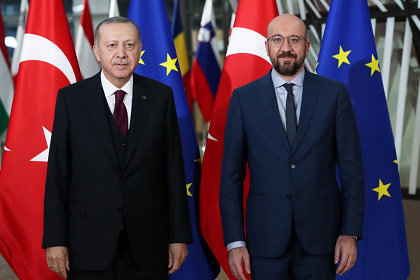
Turkey: Europe’s new gas hub?

The Ukraine crisis has sent the EU scrambling for new gas supplies, generating fresh interest in gas pipelines from Central Asia and West Asia via Turkey. Practical difficulties make most of these new projects unviable.

amit paper cover Courtesy: Gateway House
21 December 2020

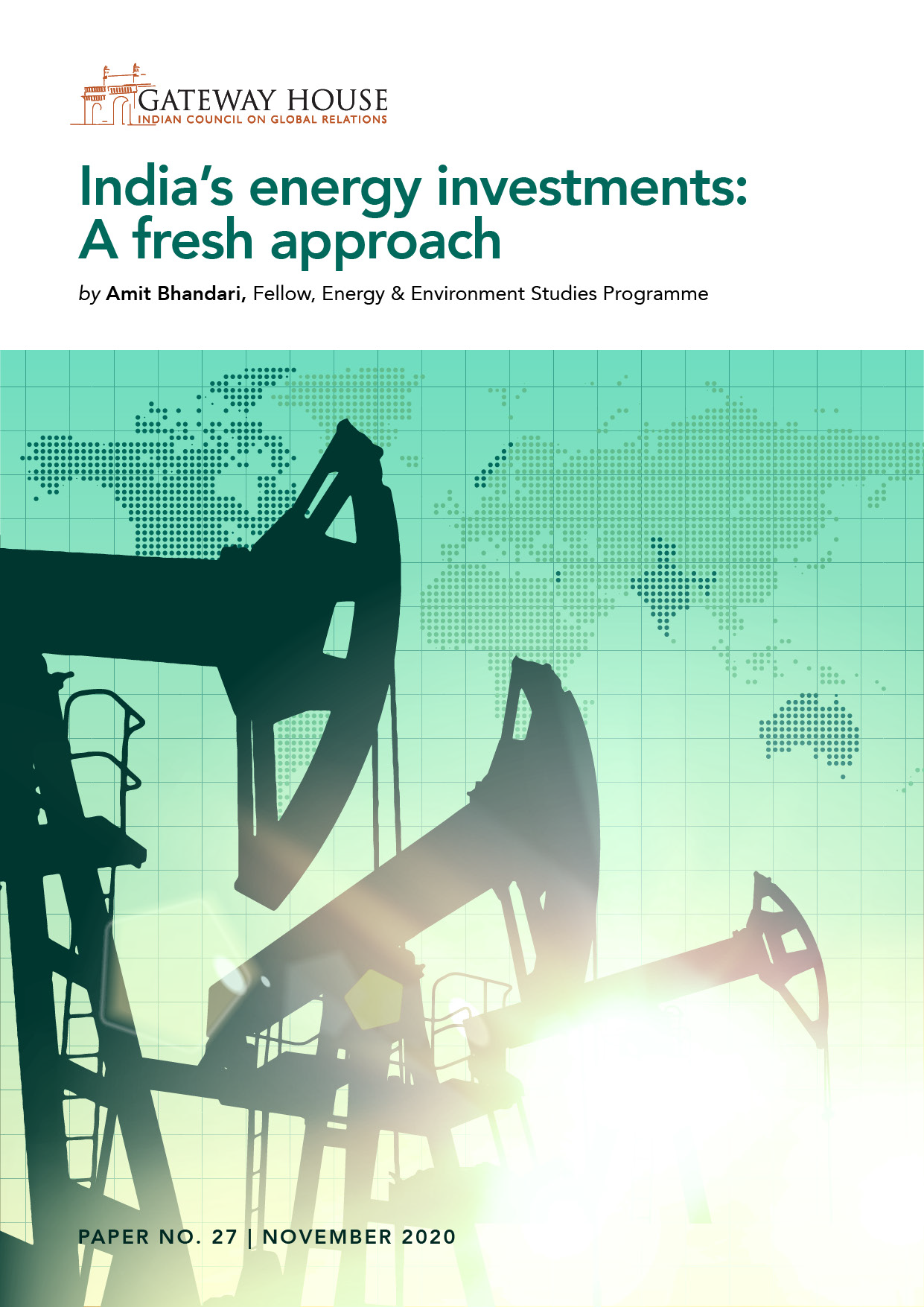
India’s energy investments: A fresh approach

India’s investments in energy thus far have concentrated on buying stakes in oilfields in developing countries often at the risk of political unpredictability. With oil prices, and therefore oil company values, falling – India should revise this strategy and aim for better value and lower risk by making investments in companies in the developed world. This paper recommends investing in oil and gas assets in energy-rich developed countries like the U.S., Canada and Australia, to reduce India's vulnerability to future increases in energy prices. These should be made via a sovereign wealth fund (SWF), not the national oil companies. The SWF will be best served by acting as a financial investor, acquiring, only minority stakes, rather than aiming for management control.

shutterstock_294753152 Courtesy: Shutterstock
9 January 2020

Conflict with Iran primes U.S. economy

Oil prices, arms exports and conflict are inter related especially when it comes to the U.S. Its arms industry grows when high prices and conflicts coincide. This has kept West Asia on a perennial geopolitical boil. This infographic charts the highs and lows of U.S. arms sales, especially in the light of conflicts centred around West Asia

Israel-Saudi Courtesy: Wikipedia
13 July 2015

Reassessing our Israel, Arab engagement

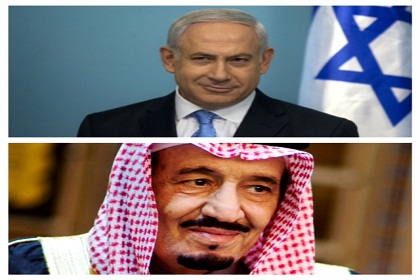
The announcement in June of a Saudi-Israeli alliance against Iran has to be seen in the context of the strategic dimensions of India’s relations with Saudi Arabia, Israel, Iran, and the U.S. And it has far-reaching implications for India’s policy towards West Asia

Arab Republics Courtesy: Synthesio.com
14 August 2014

Federalism for the Arab Republics?

Many Arab Republics are mired in political discord after the departure of the old tyrannical regimes opened up spaces for new struggles. In Iraq, Yemen, Libya, and Sudan, attempts to address the turmoil through constitutional reform are facing challenges. Will a democratic federalism be attained when the battles are done?

west asia Courtesy: Wikipedia.org
27 June 2014

Will ISIS redraw the West Asia map?

The rise of the militant ISIS will alter the stability and future of all West Asian countries, and can impact India in multiple ways. India must re-evaluate its West Asia policy, and address the safety of its nationals in Iraq, the security of its oil supplies, and the fallout on South Asia of this resurgence of strife