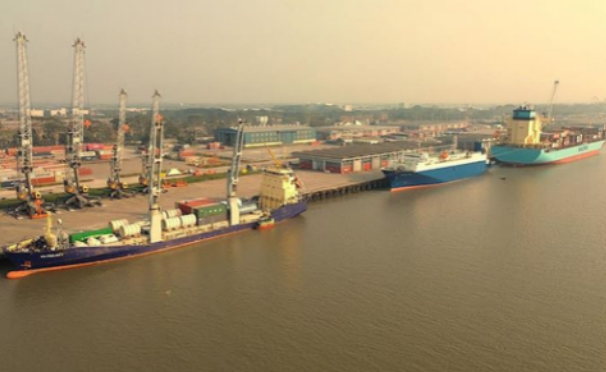
Mongla port Courtesy: BSS News
15 October 2026

The three ports of Bangladesh

Beijing has agreed to fund a port in Bangladesh, the third port funded by foreign governments. This shouldn’t be a concern for India, because unlike Pakistan and Sri Lanka, it has a diversified lender base. Japan and Russia are the large infrastructure funders, with China in the third place, while the U.S. and the EU are key export markets. India lags as an investor.
Screenshot 2026-10-01 at 12.48.23 PM Courtesy: Gateway House
1 October 2026

New life for IMEC

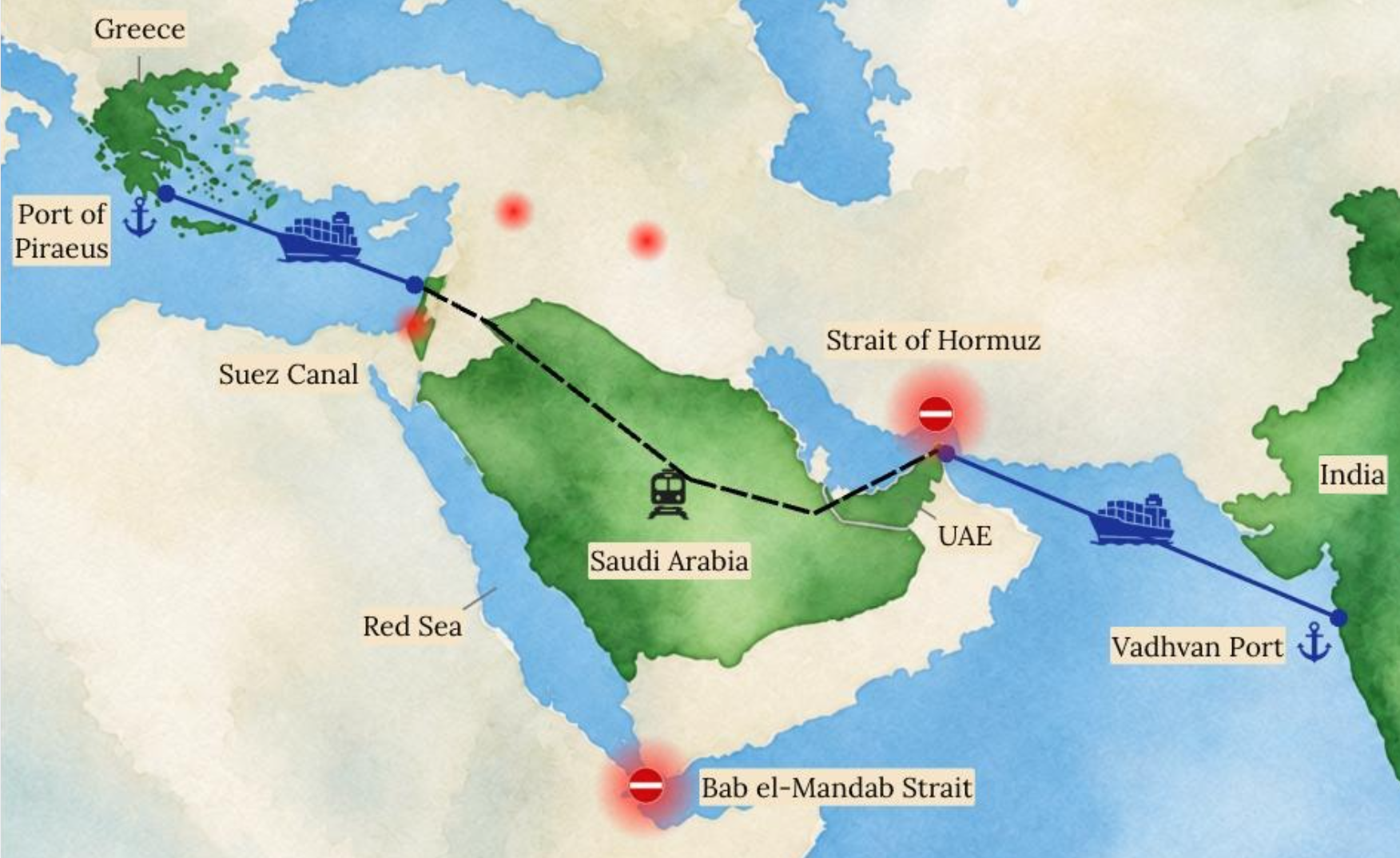
The India-Middle East-Europe Economic Corridor, currently stalled due to conflicts in the Gulf, may be an answer to the disrupted energy flows from the Persian Gulf. The proposed route, which connects the interior of Saudi Arabia to the Arabian Sea on one side and the Mediterranean Sea on the other, has immense value as a conduit for West Asian oil, as well as global data flows.

20260415_1714_Minimalist Iran Conflict Illustration_remix_01kp8f9nksftqrj3zntfnpktpe Courtesy: Gateway House
15 April 2026

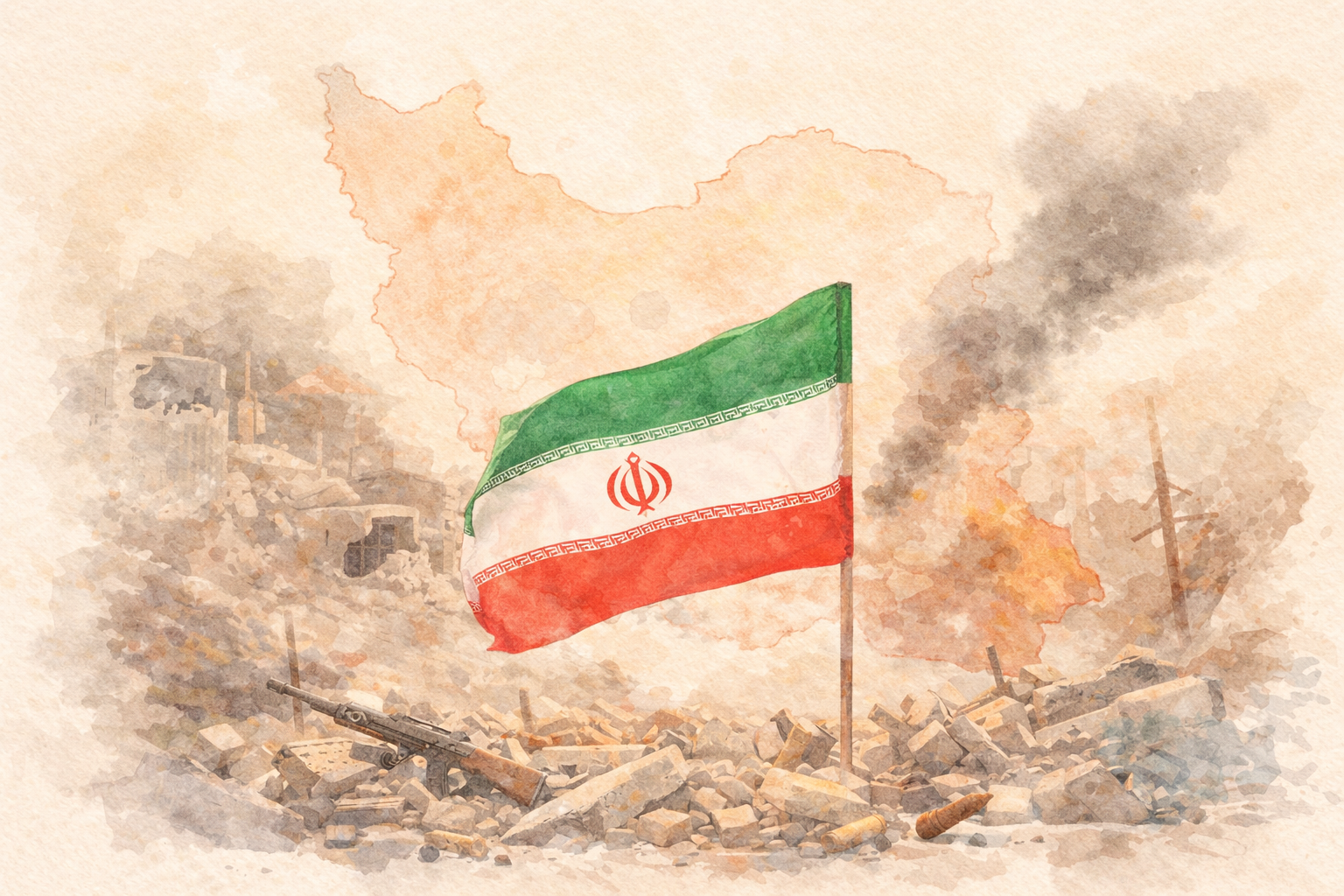
How did Iran fight this war?

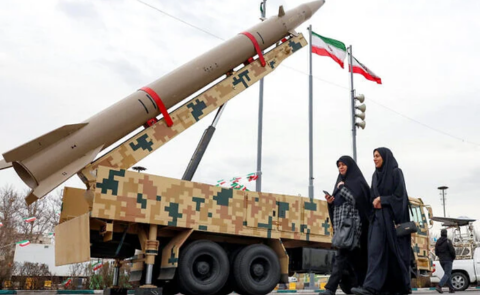
The West Asian conflict is raising questions about Iran’s performance. Tehran appeared well-prepared, having expanded its low-cost drone and missile capabilities. It also widened the conflict by targeting U.S. bases in the Gulf. The key lesson is that eliminating leadership does not guarantee regime change. The conflict underscores that modern warfare depends not just on battlefield gains, but also on economic resilience, trade leverage, and technological strength.

rk (3) Courtesy: Gateway House
9 April 2026

Unfolding Geopolitics Episode 30 | The future of Persian Gulf oil flows

Following the U.S.–Iran ceasefire and partial reopening of the Strait of Hormuz, energy flows may resume, but uncertainty persists. Robin Mills, CEO of Qamar Energy, and Amit Bhandari, Senior Fellow on Energy, Investments and Connectivity, Gateway House, note that Iran will retain leverage and will continue influencing prices and supply chains. Natural gas shortages will further disrupt fertiliser production and fuel inflation world-wide.

Website articles  (52) Courtesy: AFP
9 March 2026

Iran regime change unlikely

The U.S.–Israel war against Iran will alter the geopolitical landscape of West Asia and adversely impact the global economy, including India. Vali Nasr, Majid Khadduri Professor of International Affairs and Middle East Studies at Johns Hopkins University School of Advanced International Studies, analyses the conflict and its implications in an exclusive conversation with Nayanima Basu.

Website articles  (11) Courtesy: Shutterstock
5 March 2026

West Asia conflict: who benefits?

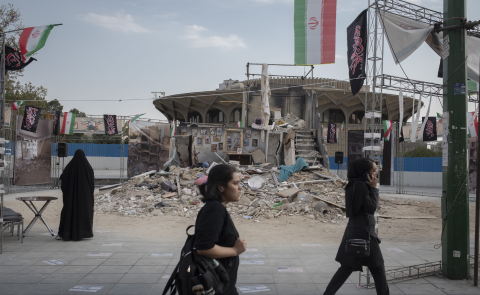
The U.S. and Israel launched precise airstrikes on Iran, targeting nuclear facilities and senior leadership. Their aim is to weaken Iran’s nuclear programme and potentially induce regime change, while Tehran’s priority remains regime survival. The conflict’s duration will depend on whether it remains limited to missile exchanges or escalates into asymmetric warfare.

Website articles  (29) Courtesy: Somaliland Presidential Office
15 January 2026

Somaliland recognition strengthens alternative diplomacy ecosystem

Israel’s recognition of Somaliland as an independent state in December 2025 is not merely a diplomatic gesture toward a long-marginalised polity; it is a strategic act with implications for Somalia’s territorial integrity, regional security dynamics, great-power competition, and the evolving politics of recognition in a fractured international order.

7396fefe-aba2-49fe-a3e5-33b8cea9ebf1 Courtesy: WWF
30 June 2022

Can the WTO Agreement Stop Unsustainable Fishing?

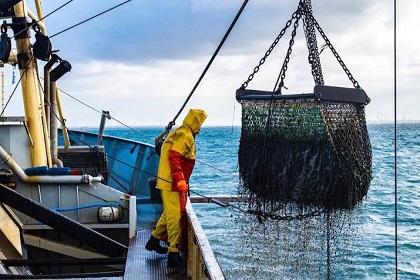
Hailed as historic, the new global rules to curb harmful fishing subsidies is a step towards sustainable fishery practices. The negotiated deal, however, is fraught with concerns over overcapacity in fisheries, deep-sea fishing legislations, and blue finance. It may be better for developing countries to formulate their own regulations and set up mechanisms to prevent illegal fishing within their territorial waters – and hold the WTO agreement to its word.

2019-06-14T000000Z_1951021920_RC-2 Courtesy: SCO, Russia (2020)
22 July 2021

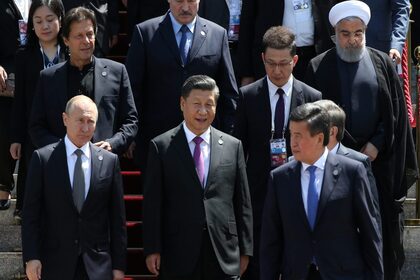
China’s quad?

A potential anti-Quad formation of China, Russia, Iran and Pakistan is in the making, and can pose risks to the Quadrilateral Security Dialogue. However, a close analysis of China's bilateral relationship with each country shows that this is a flawed grouping, formed on limited common interests and rivalries.