DD India Courtesy: DD India
4 June 2026

BRICS at a Pivotal Moment

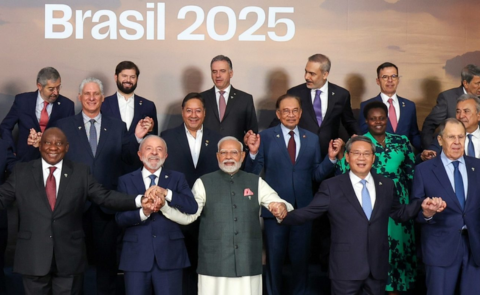
BRICS is too significant to ignore but too fragmented to drive meaningful change for the developing world. The West Asia conflict, U.S. tariff threats over de-dollarisation, UNSC reform divisions, and the presence of regional rivals has exposed its internal strains. Will India’s ongoing 2026 chairship rise above the contradictions, and manage to turn BRICS from a reactive forum into a more assertive and credible global force?
Website articles  - 2026-05-28T124708.235 Courtesy: Global Times
28 May 2026

The Quad, reset

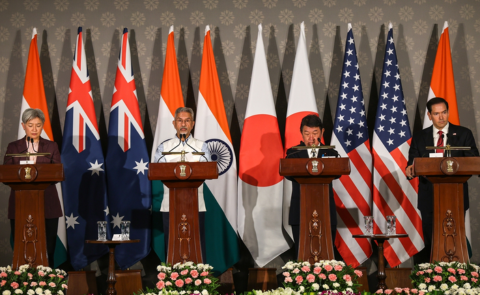
The Quad Foreign Ministers’ Meeting, held in New Delhi on May 26, highlighted both the progress and uncertainties surrounding the grouping. Significantly, it reaffirmed U.S. engagement. While the Quad has expanded its agenda and provided some concrete outcomes, the all-important Leaders’ Summit is still not visible – a worry for India’s prolonged chairship since 2024.

rk (3) Courtesy: Gateway House
9 April 2026

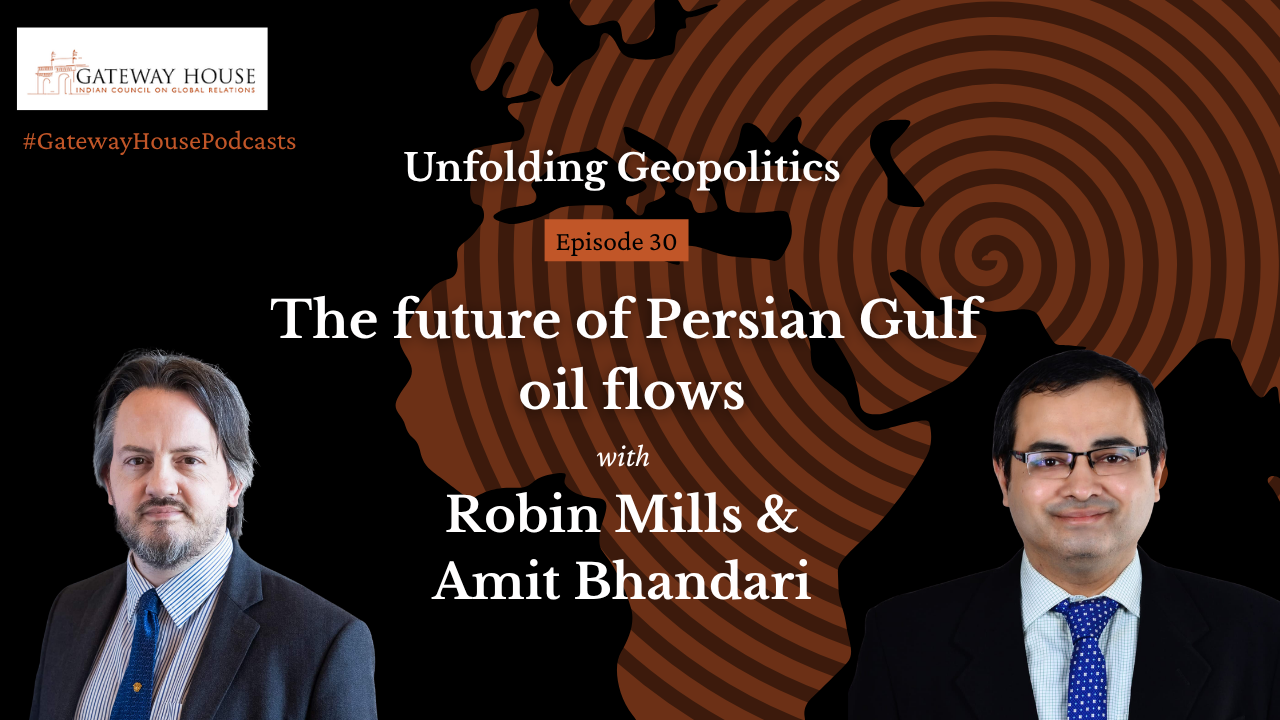
Unfolding Geopolitics Episode 30 | The future of Persian Gulf oil flows

Following the U.S.–Iran ceasefire and partial reopening of the Strait of Hormuz, energy flows may resume, but uncertainty persists. Robin Mills, CEO of Qamar Energy, and Amit Bhandari, Senior Fellow on Energy, Investments and Connectivity, Gateway House, note that Iran will retain leverage and will continue influencing prices and supply chains. Natural gas shortages will further disrupt fertiliser production and fuel inflation world-wide.

X  @DrSJaishankar Courtesy: X / @DrSJaishankar
25 September 2025

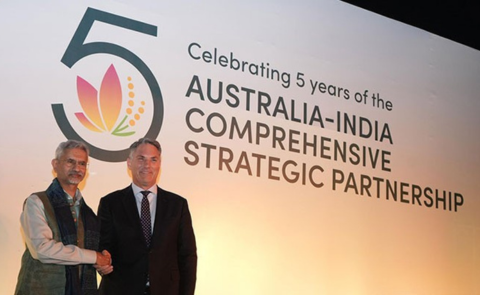
Five years of India-Australia’s Comprehensive Partnership

This year marks the fifth anniversary of the India-Australia Comprehensive Strategic Partnership, signed in 2020 to boost defence and security ties and enhance trade and investments. But the foundations had been laid earlier in 2009, when India and Australia elevated their relationship to a Strategic Partnership. The bilateral has evolved significantly, making Australia one of the most stable partners in a rapidly changing global order.

Website articles  (4) Courtesy: Gateway House
18 September 2025

White Paper on China’s national Security

In China’s White Paper on national security, the country congratulates itself for maintaining peace and development and bringing “stability in a tempestuous world.” It also pats itself on the back for “creating unity and self-reliance in the Global South” thus leading to an adjustment of the international balance of power. Worth studying are its global initiatives – a new governance order.

IMEC map with source Courtesy: Gateway House
11 June 2025

IMEC: more than just a corridor

The proposed IMEC corridor connecting India to Europe through the Gulf can be transformative, helping to reduce risks to the global movement of goods and data. It’s early days yet, and there are gaps to be filled in terms of missing infrastructure and overcoming a diplomatic rift.

download Courtesy:
17 October 2024

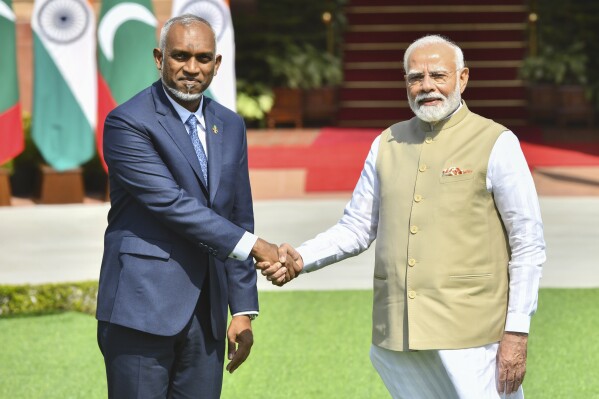
Maldives turns to India

Maldivian President Muizzu's state visit to India last week was marked by discussions on a Free Trade Agreement, a vision document on maritime security cooperation, and five MOUs. India committed to supporting the Maldives’ development goals, while the Maldives pledged to respect India's security concerns in the Indian Ocean. Hopefully, this mutuality of interests will be the principal driver in the bilateral as it implements joint visions of economic and strategic cooperation.

160067 Courtesy: Al Majalla
17 January 2024

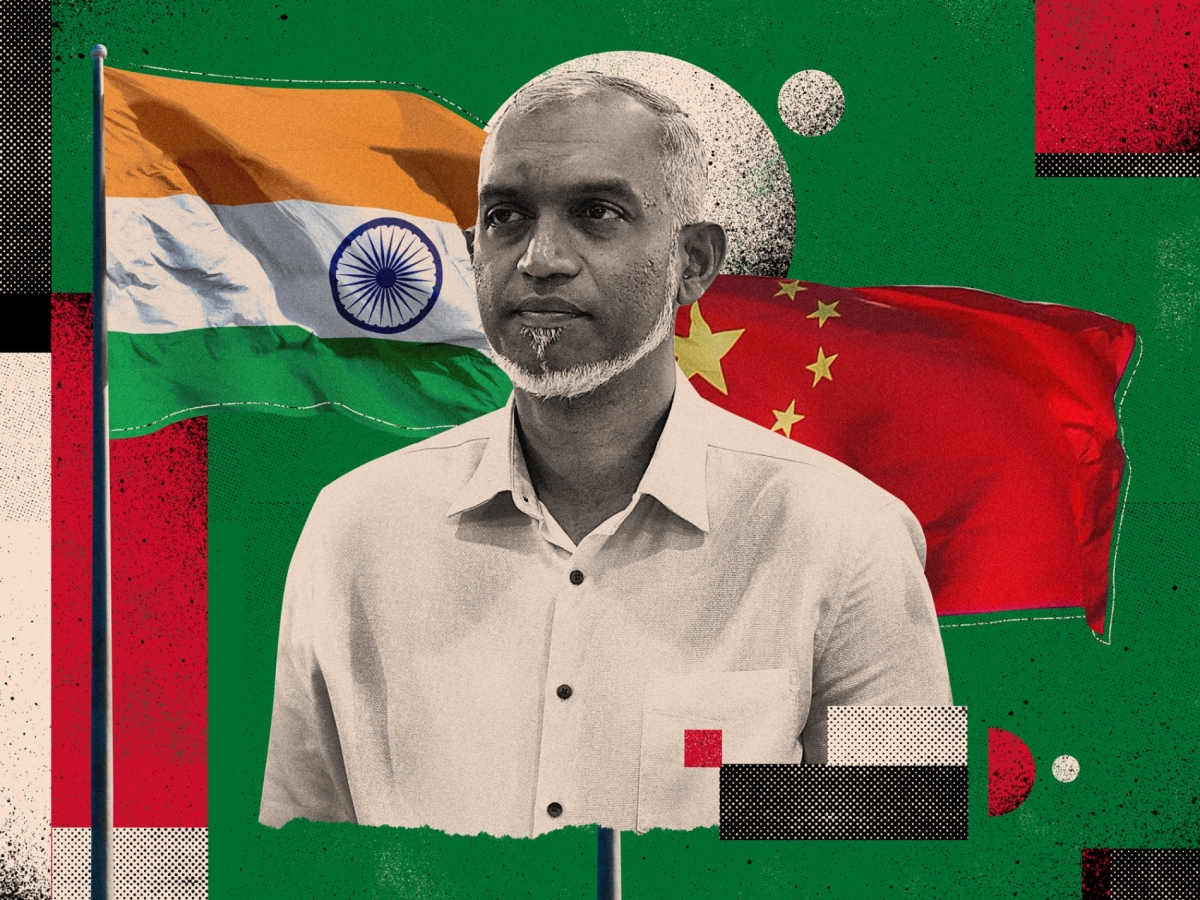
Unfolding Geopolitics | Episode 3, Understanding the Maldivian position

Maldives’ President Mohammed Muizzu’s desire to have an independent foreign policy has steered it away from India and closer to China. It has added a new dimension to the strategic contestation in the Indian Ocean. Rajiv Bhatia, Distinguished Fellow, Foreign Policy Studies, shares his insights on the Maldives’ strategic importance in the region, the ‘India Out’ campaign, and the way forward for Indian diplomacy in South Asia.

GIGA_map_of_Indo-Pacific_Kontur_resize Courtesy: Science Po
28 July 2022

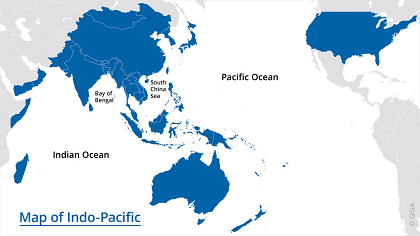
India’s blue economy and the Indo-Pacific’s future

The Indo-Pacific region envisages the Indian and Pacific Oceans as a continuum and stands on two central pillars – maritime security and economic development. The public discussions, however, are focused on maritime security, strategy and geopolitics, while economic development has received less attention. This imbalance can be corrected by creating an awareness on how to harness the potential of the region's Blue Economy and its vast resources and opportunities.

indian-navy-1-620x400-1 Courtesy: Financial Express
22 June 2022

Extending India’s Maritime Security Strategy

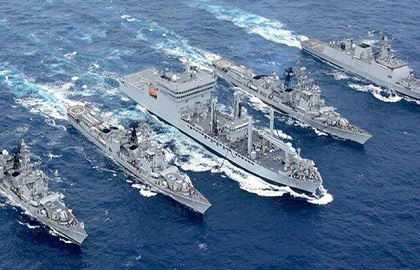
Great power competition in the Indo-Pacific is a concern for regional powers. India’s maritime security strategy has adapted to this geo-political change, and is moving from acting as a balancing power, to a leading force in the region. India is a near, yet non-resident power, and has a strategy for providing stability, prosperity, and security in the Indo-Pacific and Indian Ocean regions.