20260415_1714_Minimalist Iran Conflict Illustration_remix_01kp8f9nksftqrj3zntfnpktpe Courtesy: Gateway House
15 April 2026

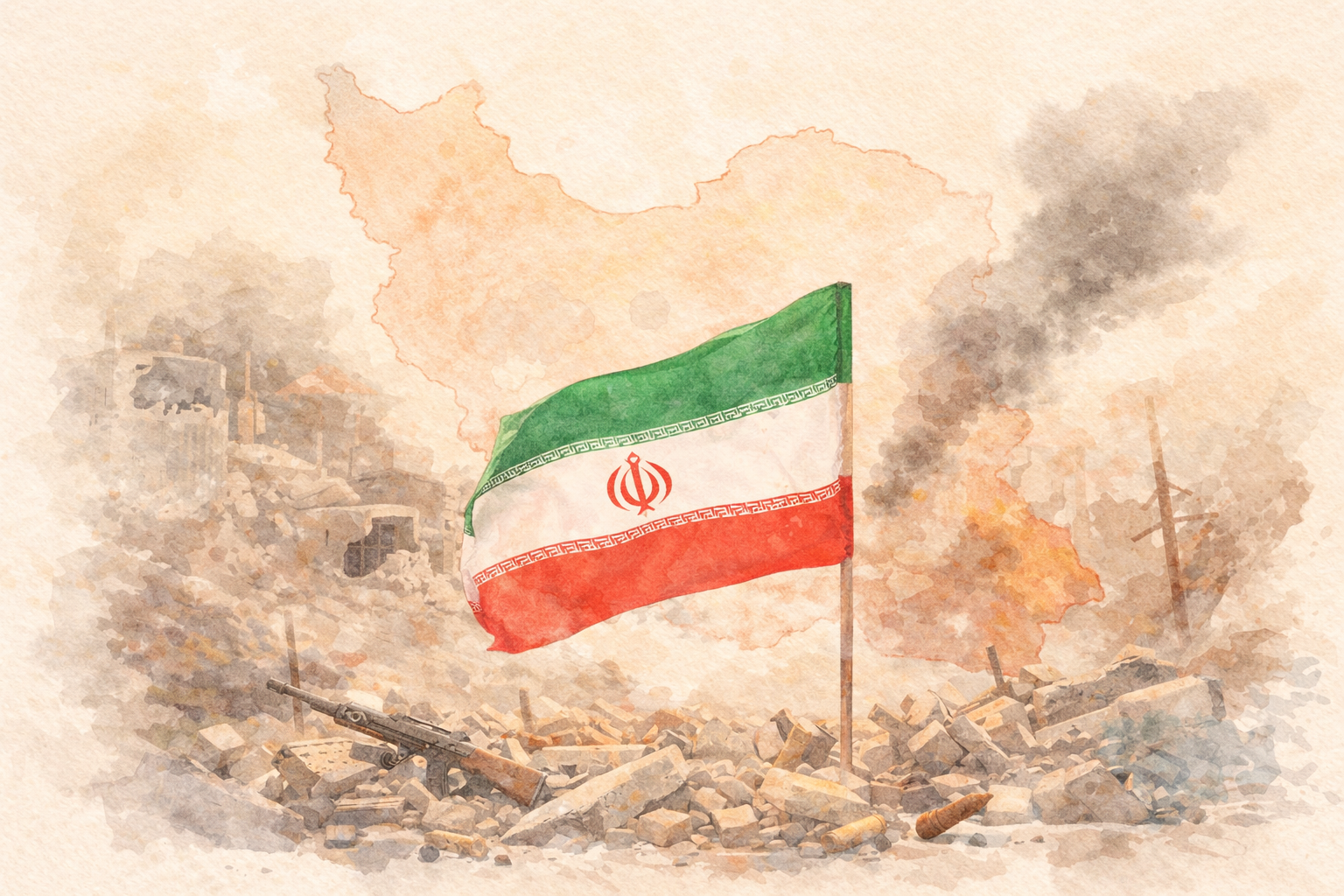
How did Iran fight this war?

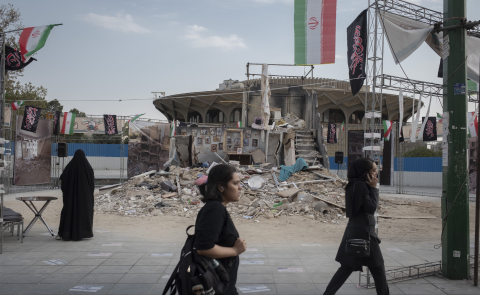
The West Asian conflict is raising questions about Iran’s performance. Tehran appeared well-prepared, having expanded its low-cost drone and missile capabilities. It also widened the conflict by targeting U.S. bases in the Gulf. The key lesson is that eliminating leadership does not guarantee regime change. The conflict underscores that modern warfare depends not just on battlefield gains, but also on economic resilience, trade leverage, and technological strength.
Website articles  (52) Courtesy: AFP
9 March 2026

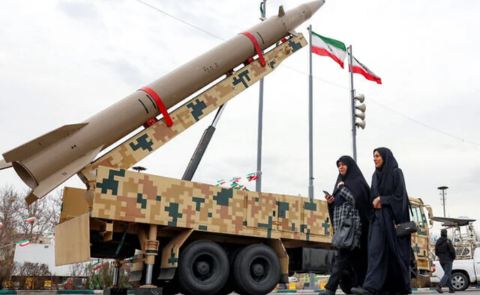
Iran regime change unlikely

The U.S.–Israel war against Iran will alter the geopolitical landscape of West Asia and adversely impact the global economy, including India. Vali Nasr, Majid Khadduri Professor of International Affairs and Middle East Studies at Johns Hopkins University School of Advanced International Studies, analyses the conflict and its implications in an exclusive conversation with Nayanima Basu.

Website articles  (11) Courtesy: Shutterstock
5 March 2026

West Asia conflict: who benefits?

The U.S. and Israel launched precise airstrikes on Iran, targeting nuclear facilities and senior leadership. Their aim is to weaken Iran’s nuclear programme and potentially induce regime change, while Tehran’s priority remains regime survival. The conflict’s duration will depend on whether it remains limited to missile exchanges or escalates into asymmetric warfare.

IMEC map with source Courtesy: Gateway House
11 June 2025

IMEC: more than just a corridor

The proposed IMEC corridor connecting India to Europe through the Gulf can be transformative, helping to reduce risks to the global movement of goods and data. It’s early days yet, and there are gaps to be filled in terms of missing infrastructure and overcoming a diplomatic rift.

India-France_Cover-02 Courtesy: Gateway House
5 May 2022

India-France: A Reliable Partnership

India and France have long been reliable partners, and friends in need. The fifth meeting between the leaders of the two countries highlights the focus on strengthening cooperation in 21st century issues. The India-France Track 1.5 Dialogue, hosted by Gateway House, Mumbai and Ifri, Paris, explored the potential of cooperation in digitalisation and energy transition

blue_economy Courtesy: Hossain Tareque-wikimedia commons
5 May 2022

A blue economy requires blue diplomacy

India has done considerable groundwork to turn into a blue economy nation through its maritime policies and active support of the Indian Ocean Rim Association. The time is right for the country to now focus on blue diplomacy, with an emphasis on maritime security and sustainable, equitable harnessing of maritime resources.

FM France and India Courtesy: S. Jaishankar/Twitter
14 March 2022

India-France partnership, galvanised by geopolitics

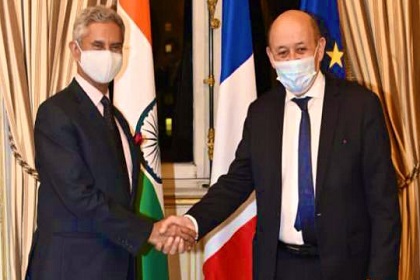
India and France have common interests bilaterally and multilaterally, and these are increasingly forging together. India must now step up its commitments to trade, technology and defence, all areas where France has an expertise and can make a greater contribution as India’s old allies like Russia become vulnerable.

Untitled design (6) Courtesy: Gateway House
10 February 2022

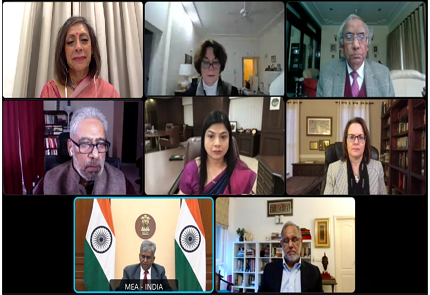
Panel Discussion on India in the Indo-Pacific

On 1 February 2022, Gateway House and the U.S. Embassy, New Delhi, co-hosted a panel discussion on India in the Indo-Pacific: Pursuing Prosperity and Security. The panelists explored the comprehensive role that India can play in the Indo-Pacific from the perspective of business, think tanks, academia and diplomacy.

Indian,Ocean,Military,Boat,Reunion,Island Courtesy: Shutterstock
20 January 2022

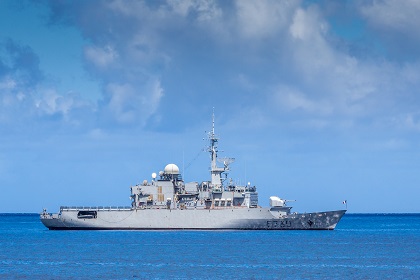
The Indo-Pacific opportunity in 2022

Nine great powers and a number of important multilaterals have vested interests in the Indo-Pacific. Given the U.S.-China standoff in the region, the role of new groupings like the Quad and AUKUS is significant. The time is ripe for India to use its position in the region, and convert its humanitarian duties into economic and strategic opportunities in 2022.