20260415_1714_Minimalist Iran Conflict Illustration_remix_01kp8f9nksftqrj3zntfnpktpe Courtesy: Gateway House
15 April 2026

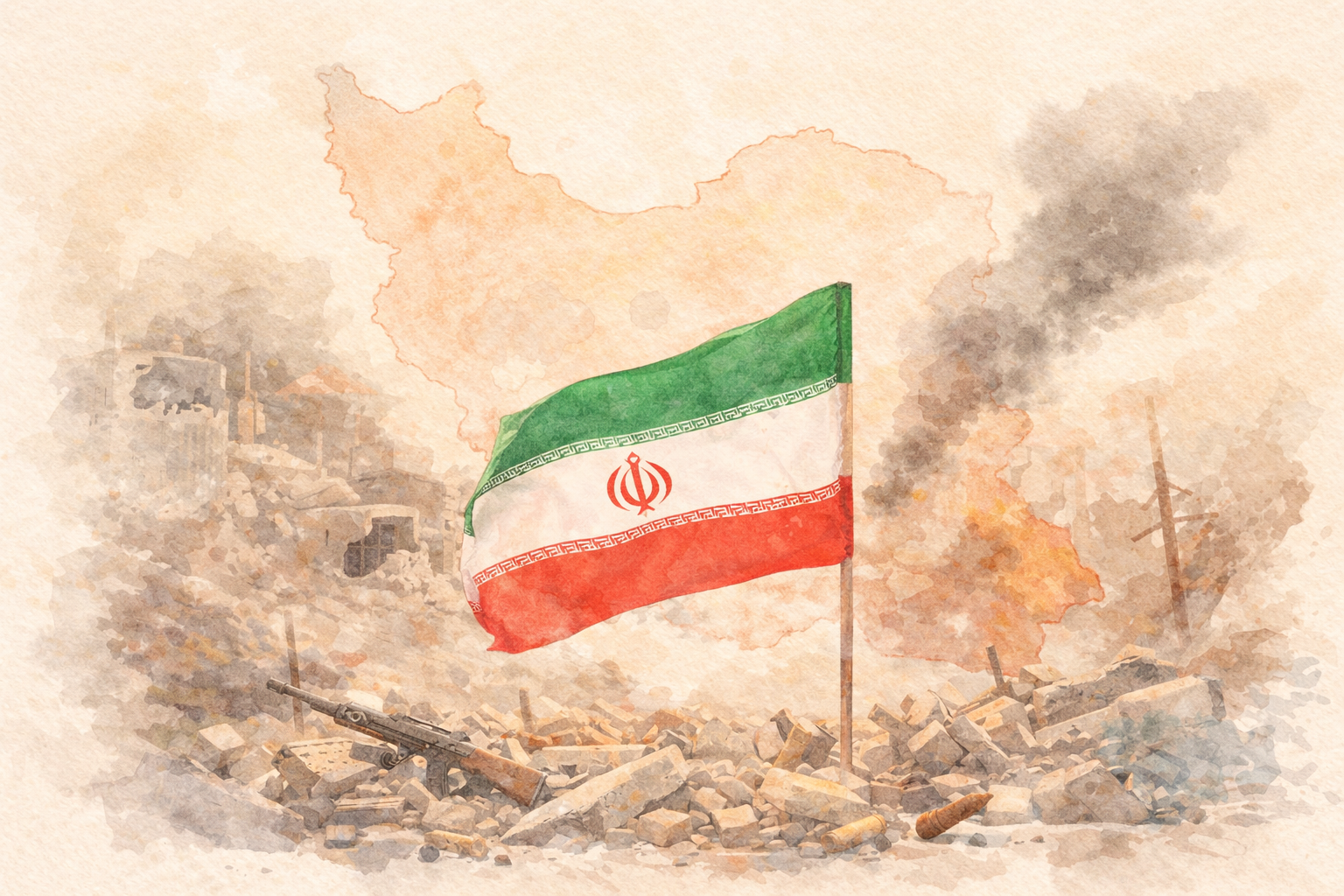
How did Iran fight this war?

The West Asian conflict is raising questions about Iran’s performance. Tehran appeared well-prepared, having expanded its low-cost drone and missile capabilities. It also widened the conflict by targeting U.S. bases in the Gulf. The key lesson is that eliminating leadership does not guarantee regime change. The conflict underscores that modern warfare depends not just on battlefield gains, but also on economic resilience, trade leverage, and technological strength.
Website articles  (52) Courtesy: AFP
9 March 2026

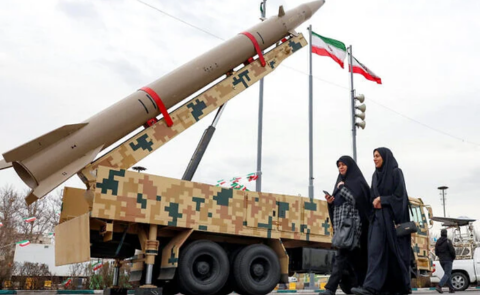
Iran regime change unlikely

The U.S.–Israel war against Iran will alter the geopolitical landscape of West Asia and adversely impact the global economy, including India. Vali Nasr, Majid Khadduri Professor of International Affairs and Middle East Studies at Johns Hopkins University School of Advanced International Studies, analyses the conflict and its implications in an exclusive conversation with Nayanima Basu.

Website articles  (11) Courtesy: Shutterstock
5 March 2026

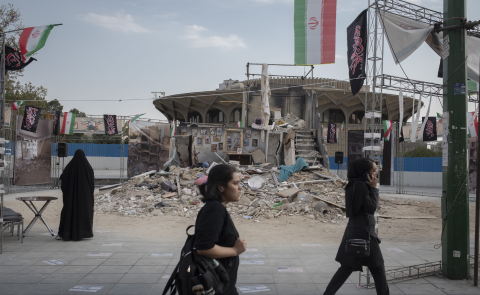
West Asia conflict: who benefits?

The U.S. and Israel launched precise airstrikes on Iran, targeting nuclear facilities and senior leadership. Their aim is to weaken Iran’s nuclear programme and potentially induce regime change, while Tehran’s priority remains regime survival. The conflict’s duration will depend on whether it remains limited to missile exchanges or escalates into asymmetric warfare.

Website articles  (29) Courtesy: Somaliland Presidential Office
15 January 2026

Somaliland recognition strengthens alternative diplomacy ecosystem

Israel’s recognition of Somaliland as an independent state in December 2025 is not merely a diplomatic gesture toward a long-marginalised polity; it is a strategic act with implications for Somalia’s territorial integrity, regional security dynamics, great-power competition, and the evolving politics of recognition in a fractured international order.

CRN_Services_Portfolio_Technology_696 Courtesy: CRN India
1 June 2022

Emerging and Critical Technologies in the Indo-Pacific: Opportunities and Challenges

On 31 May 2022, Amb. Rajiv Bhatia delivered keynote address at the panel discussion on Emerging and Critical Technologies in the Indo-Pacific: Opportunities and Challenges, organised by the Kalinga Institute of Indo-Pacific Studies. Amb. Bhatia elucidates on usage of technology in modern warfare, especially the Ukrainian war, while also stressing those critical technologies in the Indo-Pacific can provide a fillip to sustainable development in the region.

china-solomon Courtesy: Financial Times
21 April 2022

Economic and human security in the Indo-Pacific

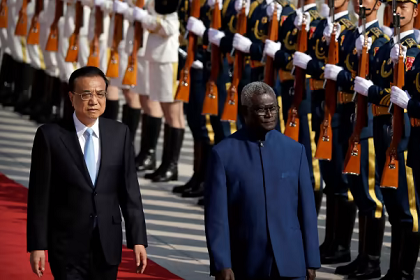
China has established a dominant presence in the Indo-Pacific through exploitative economic engagements. This has destabilised smaller nations in the region and made them dependent on Chinese support. For a free and open Indo-Pacific, India must press its advantage in human and economic capacity building.

Indian,Ocean,Military,Boat,Reunion,Island Courtesy: Shutterstock
20 January 2022

The Indo-Pacific opportunity in 2022

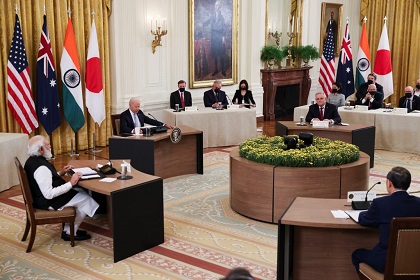
Nine great powers and a number of important multilaterals have vested interests in the Indo-Pacific. Given the U.S.-China standoff in the region, the role of new groupings like the Quad and AUKUS is significant. The time is ripe for India to use its position in the region, and convert its humanitarian duties into economic and strategic opportunities in 2022.

AUKUS spurs EU's Indo-Pacific ambitions Courtesy: EuroNews
25 November 2021

AUKUS spurs EU’s Indo-Pacific ambitions

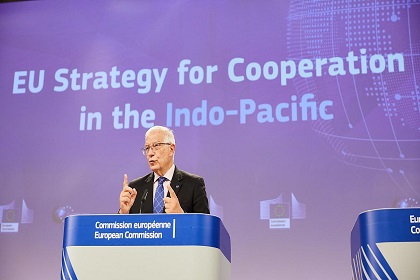
The news of the EU's much-awaited Indo-Pacific strategy was overshadowed by the Australia-UK-U.S. military alliance, AUKUS. Eight weeks later, tempers are cooling off as the U.S and EU signed agreements at COP26. So, are transatlantic good times back on track? Has AUKUS put a permanent spanner in the wheel of the EU’s Indo-Pacific outreach?

Europe - IP Courtesy: Club of Three
18 November 2021

Indo-Pacific through the European prism

The EU's Indo-Pacific strategy, released in September, set the tone for a renewed focus on the region. Europe's Asia connect is rich, strong and multi-layered, laying the foundation for an advantageous position for the EU in the Indo-Pacific. This can be achieved if the EU is more candid with itself, more assertive with China, and more cooperative with India.