Gateway House (2) Courtesy: Gateway House
24 December 2025

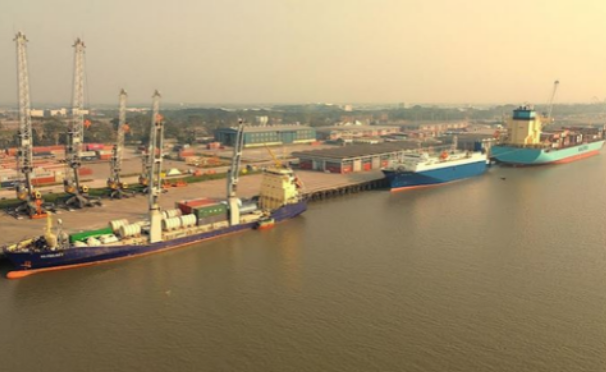
Bangladesh economy spirals downwards

Bangladesh’s economy, already weak at the time of the August 2024 coup, has been on a downward spiral since. Banks are insolvent and cannot lend, business confidence is low, and investors are staying out. These issues will worsen the ongoing radicalisation, extremism and violence in the country. 

@narendramodiX Courtesy: @narendramodi/X
18 December 2025

Ethiopia is a key ally in Africa

Ethiopia's importance as an African country that has played a vital role in advancing the vision of African unity and integration, and as a nation that killed its own demons of dictatorship to emerge as a successful democracy, is remarkable. In this upgraded frame, Prime Minister Modi’s visit to Addis Ababa is significant, with India as a partner offering economic and technological engagement.

US Embassy and Consulates in Italy Courtesy: US Embassy & Consulates in Italy
18 December 2025

U.S.’ National Security Strategy 2025

It is customary for every U.S. president to release a National Security Strategy (NSS) early in their tenure. President Trump published the NSS for his second term in November 2025. It’s a contrast from his 2017 NSS, which addressed broad threats. The 2025 version is narrower, emphasising trade over security, with the Western Hemisphere being the primary area of focus. Is the U.S.’s global role shrinking?

Website articles  (14) Courtesy: Wikiwand
11 December 2025

The Scottish espirit in Bombay

For a week in December, the Feast of St. Andrew is observed in Mumbai’s two Scottish Presbyterian churches – St. Andrew’s Cathedral and the Church of St. Columba. In the absence of Scots, these Churches and multiple educational institutions and trading houses remind us that colonial Bombay was primarily built by these hardy Highlanders, often mistaken by locals for Englishmen. The Scots were also Britain’s most enthusiastic Empire-builders.

9feb9c42-5bb4-16f6-4358-f21cbb0992ff Courtesy: Gateway House
11 December 2025

Ambedkar the forgotten internationalist

As global conflicts intensify and global leadership falters, it is time to look back 75 years to Bhimrao Ramji Ambedkar - not only the father of India’s Constitution but also an internationalist whose foreign policy vision remains overlooked. He warned against aligning with China, upheld Tibet’s sovereignty, advocated U.S. ties, rejected non-alignment, and championed India’s UNSC seat. How different would the scenario have been if Ambedkar had led India’s foreign policy?

Getty (2) Courtesy: All India Radio News
9 December 2025

Putin’s visit sends a signal

India and Russia have a time-tested relationship, which was evident during President Putin's state visit to New Delhi last week. Its success lay in the warmth the leaders of the two countries share and in its timing: geopolitically, just after discussions of the U.S. and China as the G2, and commercially and strategically, at a time when India’s needs match Russia's capabilities.

Reuters (1) Courtesy: Reuters
3 December 2025

Russia and India update their relationship

The visit of Russian President Vladimir Putin to India on December 4-5, is an event with many dimensions. It will address the political and economic strength and future of the bilateral, discuss the global scenario, and lay out a path for future cooperation that will continue to define the relationship as 'special and privileged.'

Themba HadebeAP Courtesy: Themba Hadebe/AP
27 November 2025

Johannesburg G20 summit: advancing amidst anxiety

The G20 Summit in Johannesburg ended on a widely-shared sense of satisfaction and achievement, with the Global South’s perspective well-articulated, but divergent from some in the Global North. Now the G20's challenge is to restore its unity and credibility by working toward reconciliation with its next president, the U.S. Can India enhance its credibility and influence as a North-South bridge-builder?

Reuters Courtesy: Reuters
27 November 2025

Japan and China row over Taiwan

China’s attempt to discipline Japan over Japanese Prime Minister Takaichi’s statement on a Chinese attack on Taiwan threatening Japan’s security, may instead strengthen the very alliances Beijing hoped to fracture. By using symbolic economic instruments, invoking the UNSC, and amplifying nationalist messaging while avoiding mass public mobilisation, China signals displeasure without risking internal instability. Yet these same measures push Japan ever deeper into U.S.-aligned networks.