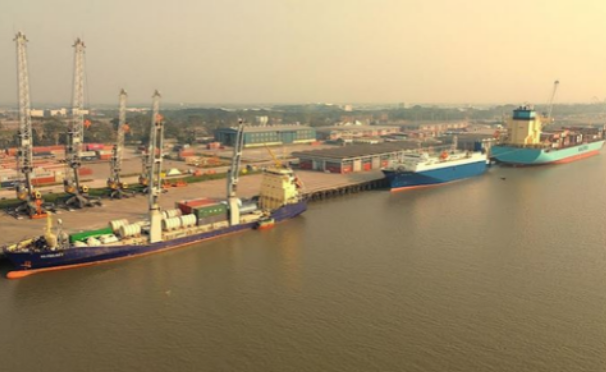
Bangladesh’s economy, already weak at the time of the August 2024 coup, has been on a downward spiral since. Banks are insolvent and cannot lend, business confidence is low, and investors are staying out. These issues will worsen the ongoing radicalisation, extremism and violence in the country.
Ethiopia's importance as an African country that has played a vital role in advancing the vision of African unity and integration, and as a nation that killed its own demons of dictatorship to emerge as a successful democracy, is remarkable. In this upgraded frame, Prime Minister Modi’s visit to Addis Ababa is significant, with India as a partner offering economic and technological engagement.
Renewable energy adoption will be much slower than what was being projected earlier, and China’s curbs on rare-earth magnets will slow down the adoption of electric vehicles. Oil will continue to fuel India’s economy in 2026 and beyond.
It is customary for every U.S. president to release a National Security Strategy (NSS) early in their tenure. President Trump published the NSS for his second term in November 2025. It’s a contrast from his 2017 NSS, which addressed broad threats. The 2025 version is narrower, emphasising trade over security, with the Western Hemisphere being the primary area of focus. Is the U.S.’s global role shrinking?
India and Russia have a time-tested relationship, which was evident during President Putin's state visit to New Delhi last week. Its success lay in the warmth the leaders of the two countries share and in its timing: geopolitically, just after discussions of the U.S. and China as the G2, and commercially and strategically, at a time when India’s needs match Russia's capabilities.
India and the U.S. share a comprehensive global strategic partnership across trade, technology, defence, and education, yet high school exchanges remain overlooked. The ecosystem depends on two U.S. government-backed programmes, which have recently faced budget cuts of 90% and have both been paused, putting their future at risk. Nina Robinson, CFR International Affairs Fellow, explains why these exchanges matter and how their loss would limit opportunities for young students.
Rajiv Bhatia explains how this book brings together perspectives on the geostrategy, geopolitics, and geoeconomics of the Indian and Pacific Oceans. Edited by Chintamani Mohapatra, it features 16 essays by experienced yet young academics. It highlights how the world changed after 2020, the ‘Age of Polycrisis’, COVID-19, conflicts in West Asia and Europe, and other global flashpoints. The book offers analysis that seeks to reposition the Indo-Pacific as vital to India’s strategic interests.
The G20 Summit in Johannesburg ended on a widely-shared sense of satisfaction and achievement, with the Global South’s perspective well-articulated, but divergent from some in the Global North. Now the G20's challenge is to restore its unity and credibility by working toward reconciliation with its next president, the U.S. Can India enhance its credibility and influence as a North-South bridge-builder?
Several Australian families and companies have had a deep impact on India, since the early days of its economic reformation – from telecom to entertainment. Now, with the two countries enjoined by a comprehensive bilateral trade agreement, it’s time to step it up and deepen common agendas on hard issues, from regulation on big tech to entertainment ecosystems to sports and stadium management.
A former diplomat and a journalist came together in 2009 to build what would become Mumbai’s first foreign policy think tank – Gateway House. It is India’s first women-founded think tank, and among the few globally established by two women. In this conversation with Akshobh Giridharadas of USISPF, co-founders Manjeet Kripalani and Neelam Deo reflect on Gateway House’s origins and the epiphany that India needed to shape global conversations with its own perspective, one that extended beyond New Delhi.