RJFV Courtesy: Gateway House
23 April 2026

India and Scotland: a shared past

The Scottish imprint on India, starting in the British era, is visible even today. Roger Jeffery and Friederike Voigt explore historical ties between Scotland and India, drawing on their recent visit to Mumbai, its Scottish heritage, and their new book, Perceptions of Empire: Edinburgh’s Engagement with India. They dwell on how shared histories in education, trade, missionary activities, and institution building can inform a deeper engagement between Indians and Scots.

Website articles  (84) Courtesy: Reuters
23 April 2026

India’s Neighbourhood First policy needs a reboot

Outcomes of the Neighbourhood First policy (NFP) are often mixed, shaped by actions on both sides. Recent engagements with Bangladesh, Myanmar, Sri Lanka, and Nepal suggest an opportune moment to recalibrate NFP, enhance its effectiveness, and bridge perceptions of India as an “elder brother” rather than a “big brother.”

Website articles  (66) Courtesy: Reuters
16 April 2026

Myanmar’s second shot at limited democracy

A new government will be sworn into office in Myanmar in April to run a ‘hybrid democracy’ in which military and civilian representatives will share power. It is Myanmar’s second experiment with this system. The West is rethinking its positioning on Myanmar and now seeking ‘calibrated engagement.’ India, too, should reassess its two-track diplomacy and develop a nuanced policy and an early outreach to the new leaders.

Website articles  (76) Courtesy: X/ @bdbnp78
15 April 2026

Bangladesh’s bumpy road ahead

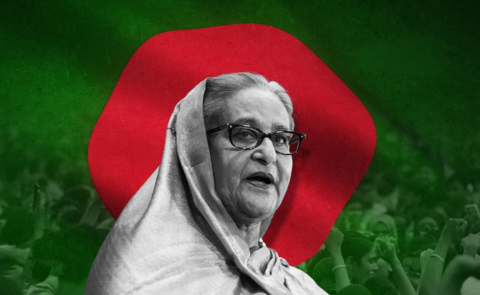
Bangladesh’s new government has been in power for two months now, and the challenges are immense. Yet Prime Minister Tarique Rahman is trying to balance a plethora of issues: energy shortages, an under-performing economy, a major constitutional reform, addressing corruption and introducing transparency and accountability – all the while putting “Bangladesh First.”

Website articles  (75) Courtesy: PTI
10 April 2026

Delhi-Dhaka make progress

The visit of Bangladesh's foreign minister Khalilur Rahman to Delhi was an intermediate stage in the journey towards a full India-Bangladesh reset. The two countries have much to gain through deeper cooperation and more to lose if they drift. It’s time to focus on a common future by initiating bold trade and economic policies and linkages to counter vested interests that work to keep them apart.

rk (3) Courtesy: Gateway House
9 April 2026

Unfolding Geopolitics Episode 30 | The future of Persian Gulf oil flows

Following the U.S.–Iran ceasefire and partial reopening of the Strait of Hormuz, energy flows may resume, but uncertainty persists. Robin Mills, CEO of Qamar Energy, and Amit Bhandari, Senior Fellow on Energy, Investments and Connectivity, Gateway House, note that Iran will retain leverage and will continue influencing prices and supply chains. Natural gas shortages will further disrupt fertiliser production and fuel inflation world-wide.

Website articles  (73) Courtesy: AFR
2 April 2026

India’s options after the Persian Gulf war

The Persian Gulf conflict has already impacted India’s oil imports and financial security. However, India has not created meaningful options to protect itself from oil shocks over the last decade – and such shocks will continue. Now is the time for India to make equity investments in oil and gas companies in stable economies like the U.S., Canada and Australia, to protect itself from future energy crises.

Website articles  (71) Courtesy: Iran Front Page
2 April 2026

The siege of Iranian higher education

The transformation of higher education and research in Iran over the last twenty years is a cautionary tale in cultural sociology and political economy. Iran has transitioned from a global colleague with high rates of international collaboration to an isolated, ideologically purged state that has pivoted its innovation engine toward survival. The outward migration of talented Iranians is a terminal threat to the nation’s long-term prosperity.

Website articles  (68) Courtesy: AFP
2 April 2026

Modi’s Israel visit brings defence and tech

It is important to take an objective review of PM Modi’s visit to Jerusalem and its implications for India’s security. New Delhi will have to demonstrate its strategic autonomy by managing heterogeneous and often contrapuntal relationships and strike a balance in its ties with the U.S. and Israel on the one hand and Iran and the Arab world on the other hand.

Website articles  (60) Courtesy: MSN
19 March 2026

Gulf War pinches South Asia

The war in the Persian Gulf has already caused significant disruption in India’s South Asian neighbours. A prolonged conflict is likely to push the region back into economic and political crises from which it had been hopeful of emerging this year.