PIB Courtesy: PIB
4 September 2025

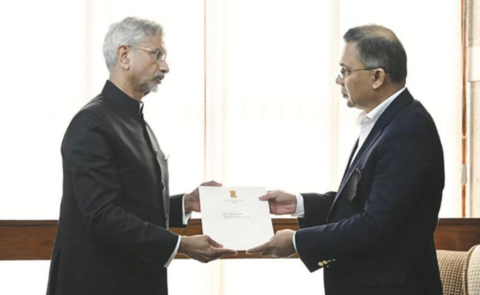
What the China-India readouts mean

Chinese Foreign Minister Wang Yi’s visit to India comes after three years, and the outcomes from it throw up interesting issues. Three read-outs issued from this visit. One from the Chinese side and two from the Indian side. The diverse nature of the India and Chinese read-outs is striking. Certainly the visit yielded benefits; the test lies in the deliverables.

A community park in Nyingchi Courtesy: Nayanima Basu
4 September 2025

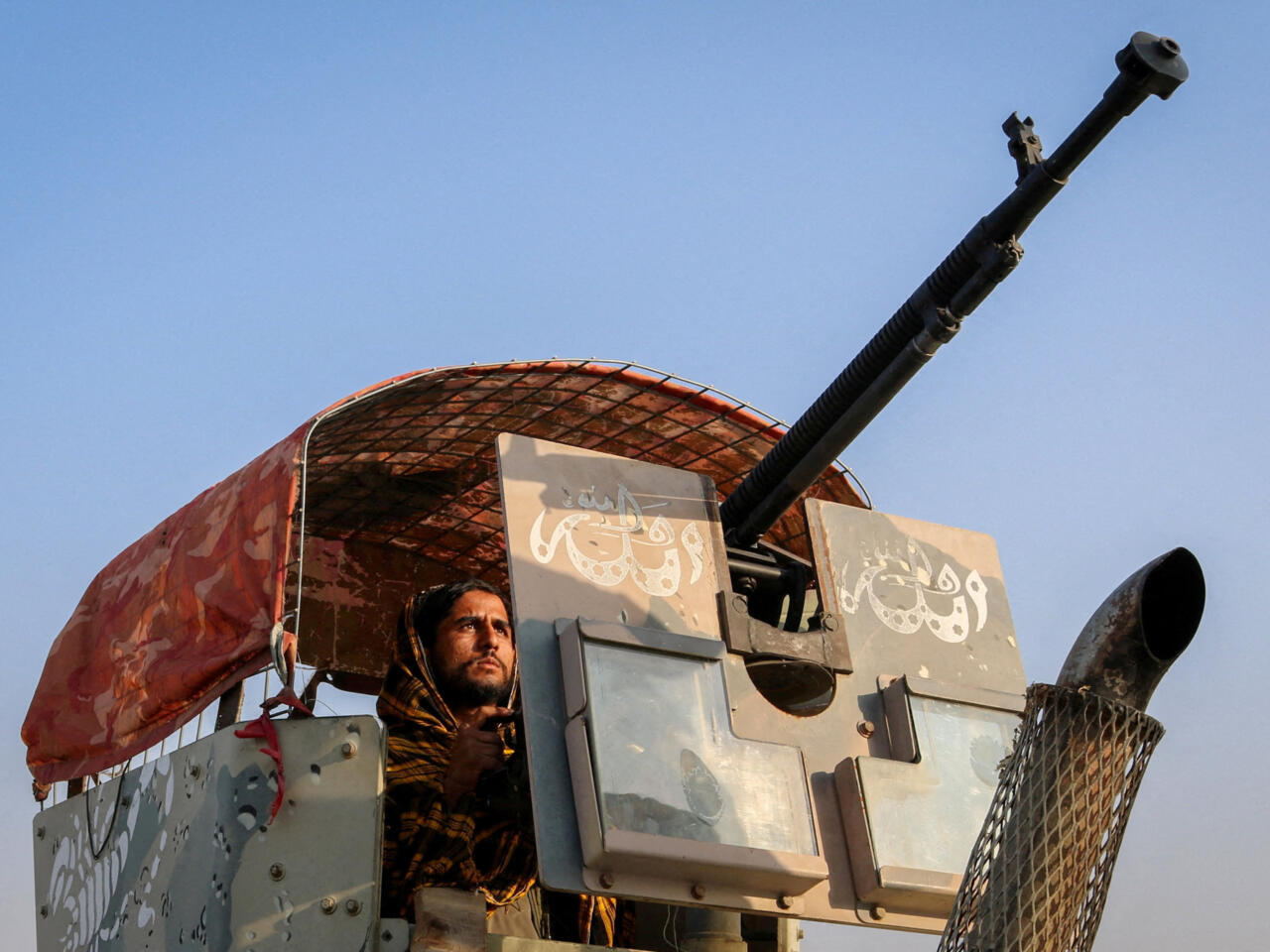
Talk Tibet, with candour

Today’s Lhasa is far from being a forbidden land where oracles are more common than human beings. It is a modern Chinese city, with swish hotels, art galleries and businesses. The transformation – and Sinicisation - of Tibet has accelerated under Chinese President Xi Jinping. The selection of the next Dalai Lama will cement the Chinese hold over that land

X  @Narendra Modi Courtesy: X / @narendramodi
4 September 2025

Modi in Japan: a larger Asia mission

Prime Minister Narendra Modi’s visit to Japan is significant for India domestically and its extended Asian influence. His visit, just prior to the SCO Summit in China, represents a shrewd endeavour at balancing the several priorities of Indian foreign policy

G20.Org Courtesy: G20.org
28 August 2025

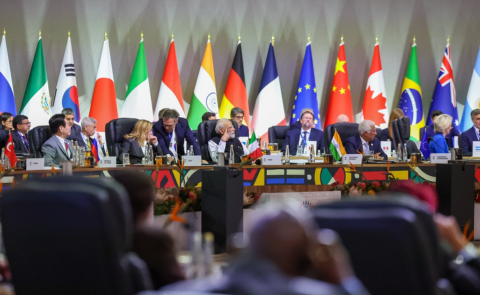
Appraising Brazil’s G20 Presidency

The G20’s current cycle is unique, with four Global South nations presiding consecutively: Indonesia, India, Brazil, and now South Africa. Brazil’s 2023-24 presidency exhibited both achievements and struggles, prioritising social inclusion, hunger, energy transition, and governance reform. The handover to South Africa marks a significant milestone in G20 history. Will the momentum be followed by the U.S., the next G20 president but also a G20 sceptic?

X  narendramodi Courtesy: X / Narendra Modi
22 August 2025

India-China risky boundary early harvest

Chinese Foreign Minister Wang Yi's two-day visit to India achieved a significant goal: to resolve the bilateral border dispute and ensure Prime Minister Narendra Modi’s presence at the Shanghai Cooperation Organisation summit. It’s not a reaction to the U.S.-India tariff tensions, but a realistic policy compulsion felt by India.

Damon Coulter  SOPA Images  Alamy Courtesy: Damon Coulter / Alamy
21 August 2025

Rise of the Japanese Right

The recent election for Japan’s Upper House of Councillors is a pivotal moment for Japanese politics, revealing fractures within the ruling coalition and a simultaneous rise of the political right. Economic discontent, cultural anxieties, and effective digital mobilisation are converging. Is this a fleeting moment for Japan, or the start of a deeper, more profound change in its political landscape?

Website articles  (5) Courtesy: Gateway House
21 August 2025

Unfolding Geopolitics Episode 22 | Analysing Alaska: The Russian View

On August 15, President Donald Trump and President Vladimir Putin met in Alaska to discuss the Russia-Ukraine peace deal. Ivan Timofeev analyses the stakes for Russia, the U.S., Europe, and Ukraine, noting that Washington and Moscow remain decisive players while Europe and Ukraine play secondary roles. Could this meeting pave the way for peace? For India, the talks matter, as it faces an additional 25% tariff for buying Russian oil.

ANI Courtesy: ANI
14 August 2025

Is Russia a Red Line for India?

U.S. President Trump will meet Russian President Putin on August 15. A positive outcome may mean removal of punitive U.S. tariffs on India for buying Russian oil and resolving its dilemma of placating a partner country with growing commercial, geopolitical and defence ties, or pursuing strategic autonomy, keeping its old friends and take an economic hit? Is Russia the red line for India?

AFP Courtesy: AFP
14 August 2025

India-U.S. trade: geopolitics or geoeconomics?

India-U.S. trade negotiations have faltered. India stepped outside its comfort zone to offer zero tariffs on industrial goods that form 40% of U.S. exports to India, but the additional 25% tariffs have rendered most Indian exports noncompetitive. Only a carefully balanced, incremental negotiating framework blending economic pragmatism with protection of core domestic interests backed by political will, stands a realistic chance of bridging the current impasse.

Website articles Courtesy: Gateway House
4 August 2025

Unfolding Geopolitics Episode 21 | Analysing the Thai-Cambodia border conflict

A decades-old dispute has escalated into a conflict along the Thai-Cambodia border. It centres around the archaeological sites of Hindu temples, and are emblematic of a deeper and layered contestation rooted in three key issues: French colonial cartography, political use of history and heritage, and interests of Thai and Cambodian military and political elite. Dr. Thanachate Wisaijorn, Head of Government, Faculty of Political Science at Ubon Ratchathani University in Thailand is an expert on the borderlands of the Thai region, with Cambodia, Thailand and Laos. He has been closely watching the unfolding issues on the Thai-Cambodia border. He speaks to Manjeet Kripalani of Gateway House, about the history of the conflict, its current status and its potential resolution.