VOA Courtesy: Gateway House
3 October 2025

No tears over H-1B visas

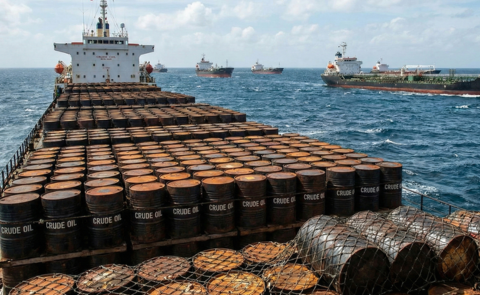
The September announcement from the White House that H-1B petitions would carry a fee of $100,000 per employee, hit India hard. India’s IT services companies are heavy users, capturing 71% of the 65,000 H1B visas issued annually. This shock move is a chance for Indian IT services companies to update their outsourcing model and invest at home, where their R&D-to-sales ratio remains abysmal.

President of Russia Courtesy: President of Russia
2 October 2025

Valdai frames Russia’s global doctrine

Each autumn, Russia convenes its flagship Annual Summit — a gathering of global leaders, business elites and intellectuals. Often compared in scale to Davos or Shangri-La, what sets Valdai apart is President Vladimir Putin’s extended, unscripted dialogue with the audience. Over the years, India has moved to the centre of this dialogue, reflecting its strategic weight and offering rare insight into Moscow’s evolving worldview.

VOA Courtesy: VOA
2 October 2025

Time to re-burnish Global South credentials

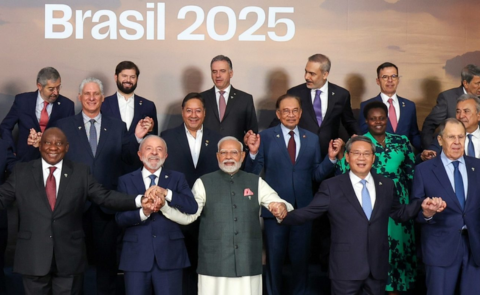
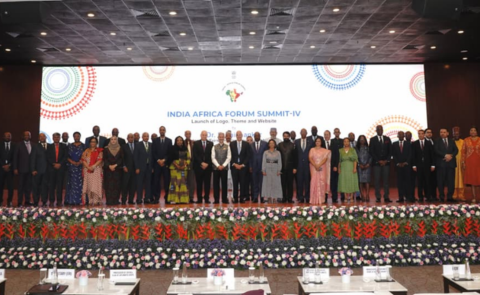
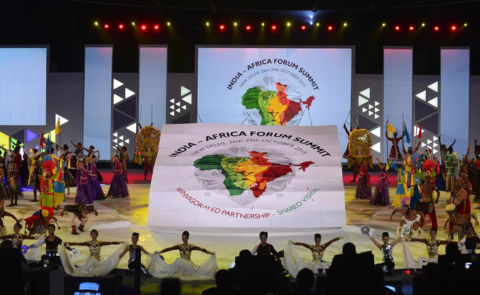
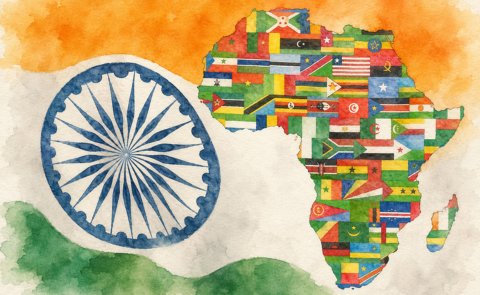
The year 2025 is often compared to the Bandung moment of 1955, and for good reason. With the U.S. reordering traditional relationships, the opportunity for greater emphasis on the Global South is now. It is therefore time for India, Africa and ASEAN among others to re-burnish their Global South credentials and use that identity as a platform to engage each other more deeply.

Most popular Indian actors worldwide Courtesy: Gateway House
1 October 2025

Indian Cinema as Economic Catalyst

As India seeks leadership in a multipolar world, cultural credibility is as vital as economic clout. Cinema gives India an edge with vivid storytelling, music, and empowering narratives, fostering understanding in a polarised world. Its popularity correlates with trade, as seen in the U.S., Russia, and Middle East. The more popular the cinema, the bigger the boost to trade.

U.S. Tariffs on Brics+ countries Courtesy: Gateway House
25 September 2025

U.S. Reciprocal Tariffs on BRICS+ countries

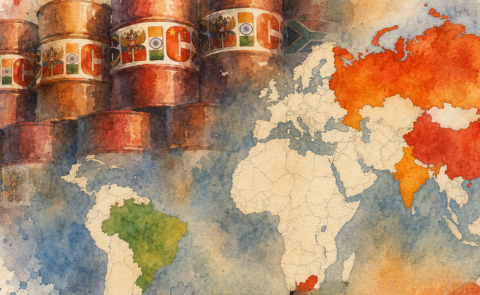
Under U.S. President Donald Trump’s reciprocal trade policy, the original five BRICS member countries account for the highest U.S. tariffs globally. India and Brazil are facing the highest tariffs of 50%, while China follows with a tariff of 34%, down from 145% earlier in the year. This infographic details the U.S. reciprocal tariff rates for each BRICS+ member and the sectors that are impacted.

X  @DrSJaishankar Courtesy: X / @DrSJaishankar
25 September 2025

Five years of India-Australia’s Comprehensive Partnership

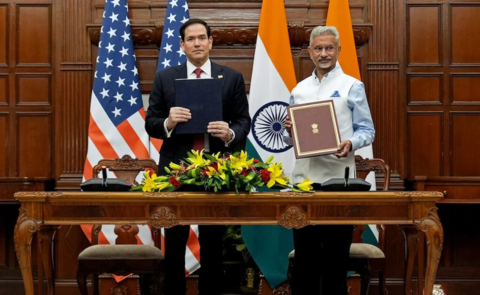
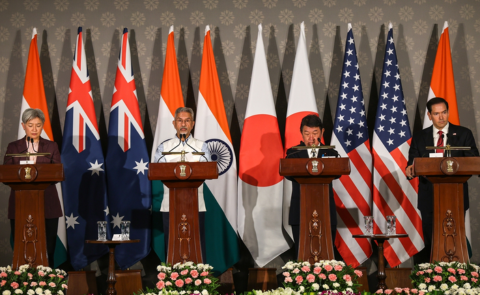
This year marks the fifth anniversary of the India-Australia Comprehensive Strategic Partnership, signed in 2020 to boost defence and security ties and enhance trade and investments. But the foundations had been laid earlier in 2009, when India and Australia elevated their relationship to a Strategic Partnership. The bilateral has evolved significantly, making Australia one of the most stable partners in a rapidly changing global order.

Gateway House (4) Courtesy: Gateway House
18 September 2025

A new momentum for middle powers

The world is undergoing a profound transformation - not driven by the U.S., China, or Russia, but by small and medium states carving out their rightful space in the emerging order. With UN reform stalled, middle-power cooperation must organise effectively to push for a responsive multilateral system that works for all, ensuring institutions are reformed and made fit for today’s world.

Website articles  (4) Courtesy: Gateway House
18 September 2025

White Paper on China’s national Security

In China’s White Paper on national security, the country congratulates itself for maintaining peace and development and bringing “stability in a tempestuous world.” It also pats itself on the back for “creating unity and self-reliance in the Global South” thus leading to an adjustment of the international balance of power. Worth studying are its global initiatives – a new governance order.

ANI Courtesy: ANI
11 September 2025

India and Indonesia reconnect 

India and Indonesia are two Asian leaders and democracies which are reconnecting after decades, even centuries – in a world rife with new volatility and uncertainty. Both countries can collaborate and learn: Indonesia is an adept trading nation and India is a powerful tech player. The two governments are on a mission to deepen and diversify their relationship, stepping out of their past, and bringing fresh thinking.

PIB Courtesy: PIB
4 September 2025

What the China-India readouts mean

Chinese Foreign Minister Wang Yi’s visit to India comes after three years, and the outcomes from it throw up interesting issues. Three read-outs issued from this visit. One from the Chinese side and two from the Indian side. The diverse nature of the India and Chinese read-outs is striking. Certainly the visit yielded benefits; the test lies in the deliverables.