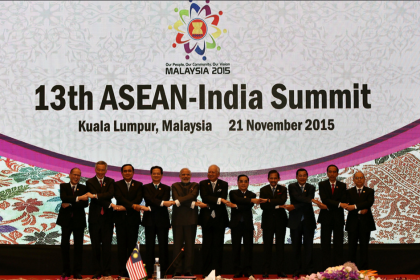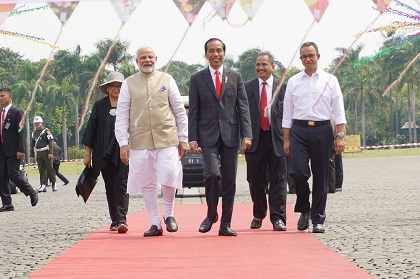
Modi Asean Courtesy:
12 May 2016

India’s Act East Policy so far and beyond

In two years, the Modi government’s Act East Policy has gone well beyond the focus on economic ties of its predecessor, the Look East Policy. It has made progress on many wider fronts, including connectivity and defence collaboration. India must now build on this success and further consolidate relations and trade links with ASEAN and beyond

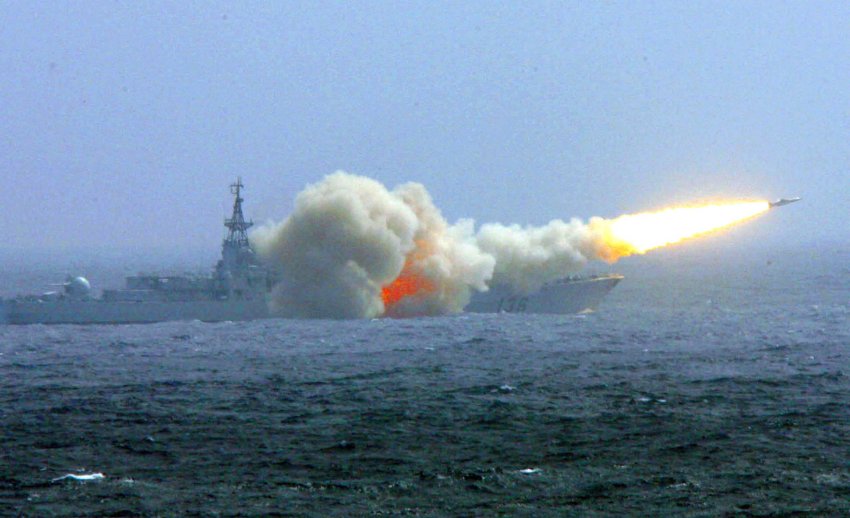
In this photo released by China's Xinhua news agency, a destroyer of the South China Sea Fleet of the Chinese Navy fire a missile during a traning in South China Sea on Saturday, Nov. 17, 2007. Dozen of warships of the South China Sea Fleet were deployed in the competitive training to improve combat capability of the fleet, Xinhua said.  (AP Photo/Xinhua, Zha Chunming) Courtesy: India Strategic
16 July 2015

Military strategies collide in the Asia-Pacific

The recent re-evaluation by the US, China, Japan, and Russia of their military strategies reflects new geopolitical equations in which the Asia Pacific is a major strategic intersection. Turmoil in this region can impact India’s trade and security interests, and to avoid this India must craft a balance between its relations with all the countries involved

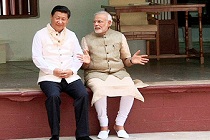
Xi_Modi Courtesy: Narendra Modi (wikimedia.org)
27 November 2014

China’s connectivity tips for India

A major theme at the multilateral summits this month was connectivity, with China at the forefront. India is trailing behind due to a shortfall in investment and political will, among other factors. Prime Minister Modi must follow up on his meetings at the SAARC Summit by robustly taking forward India’s connectivity agenda

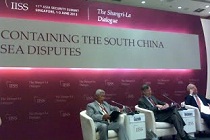
Shangri La Dialogue Courtesy: Department of National Defence, Republic of Philippines
5 June 2014

Rethinking India’s role in Asia

The recently held Shangri-La Dialogue, an annual security forum of Asia’s defence establishments, highlighted the growing anxieties over China’s belligerent pursuit of territories under dispute in the South China Sea. The U.S. and Japan have made it clear that they will strongly challenge China’s claims. It’s a tussle that will throw up new security dilemmas for India in the future

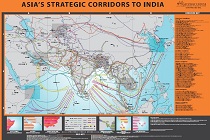
corridorsmap2 Courtesy: Gateway House
11 July 2013

Asia’s Strategic Corridors to India

The map – Asia’s Strategic Corridors to India – has emerged from Gateway House’s study of India’s strategic links with other parts of Asia. It highlights the progress India has made in forging multiple links with six strategic regions – Central Asia, West Asia, East Africa, South-East Asia, East Asia, and our immediate neighbourhood

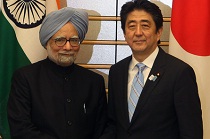
Manmohan - Abe MEA Courtesy: Ministry of External Affairs, India
30 May 2013

A new configuration to the East

During his visit to Japan, Prime Minister Manmohan Singh spoke of the need to increase bilateral consultations on strategic issues. This, and other moves, indicate new developments in India’s Look East Policy, with alternative security and economic scenarios for regional actors in the context of the rise of China

obama Courtesy: Pete Souza/The White House
22 February 2013

The pacific pivot: A decade late and five years too soon

The announcement of the Pacific pivot by the U.S. in 2001 has led to several nations making bold political moves. However, the U.S. isn’t yet ready to be a regional protector against China. What does Washington have to do to prepare itself for the Pivot?

Global Stability Map Courtesy: Gateway House
1 August 2012

Global Stability Map 2012

Gateway House prepared a Global Stability Map, using 20 differing indicators, to analyze the stability of 60 countries around the world. Using criteria that are important to the emerging economies of the world, the map provides an Indian perspective of the world today.

Trans Pacific Partnership (TPP)
13 December 2011

Trans Pacific Partnership (TPP)

Amidst myriad country groupings that already exist – BRICS, IBSA, APEC, SCO and many others – a new initiative in the Pacific is looking to integrate more powerful countries to form a multilateral free trade agreement – the Trans Pacific Partnership. How important is this towards the reshaping of trade and power?