indo pacific  (7) Courtesy: Daily News Egypt
31 July 2025

Egypt positions its foreign policy

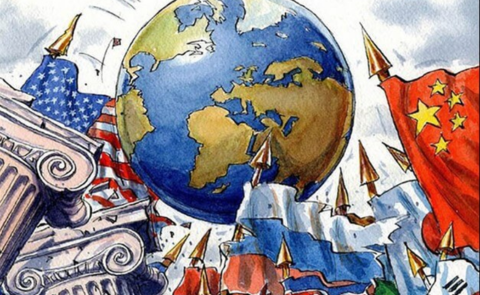
Egypt sits at the intersection of three continents and two seas, and its foreign policy is a geographic, historic and strategic consequence. From Tripoli to Kortum, Addis Ababa to Brussels, New Delhi to Moscow, Beijing to Washington, Cairo employs diplomacy as a key national security tool, positioning itself as a cornerstone of geopolitical stability within an increasingly multipolar world.

trump - japan Courtesy: Kent Nishimura/Reuters
24 July 2025

The Trump effect in Japan

The political setback by the ruling coalition in Japan in the July 20 Upper House elections reflects growing frustration with the mainstream political parties. Young people frustrated with high costs have resulted in a fragmentation of Japan’s political landscape, and the rise of the right. The “Trump effect” has found fertile ground in Japan’s political soil.

Website articles  (22) Courtesy: Getty Images
3 July 2025

Diversifying supply chains for critical minerals

The Quad Foreign Ministers’ Meeting in Washington on 1 July, 2025, underscored the importance of diversified and reliable global supply chains, especially for critical minerals. A Gateway House report shows how to strengthen supply chains for rare earths by creating deep financial markets similar to those that exist for bullion and oil.

Gateway House Courtesy: Gateway House
3 July 2025

China Plus One and global supply chains

A slowdown of the Chinese economy, and the shift, particularly by MNCs, from China to other more competitive locations has opened up business opportunities for latecomers to supply chains in the developing world. Evidence suggests that Southeast Asia and some South Asian countries like India, Sri Lanka, Bangladesh, could be beneficiaries of the supply chain shift, particularly in labour-intensive segments.

ADEM ALTANAFP via Getty Images Courtesy: Adem Altan/AFP via Getty Images
3 July 2025

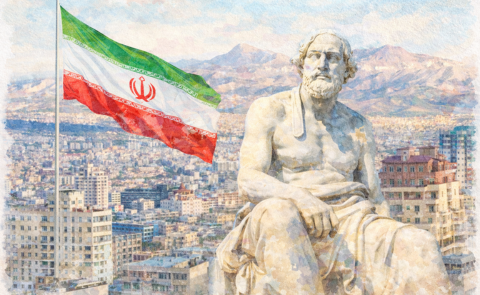
Iran’s second chance to transition

Iranian foreign policy must move toward strategic autonomy and internal concord. As witnessed after the 1988 ceasefire with Iraq, such moments can mark an inflexion point - one that prioritises national reconstruction, resilience, and welfare; strategic recalibration, strengthening of confidence, and finding a geopolitical identity. Iran has been there before, and can apply those experiences again.

Inc42 Courtesy: Defense News
26 June 2025

Drones are the game-changer

Warfare is changing its character, and drones are playing a big role in it. Technology that was first extensively used in the Vietnam war is a current conflict staple. With the increasing use of artificial intelligence, drones are becoming more powerful and useful.

Joint Statement from the Quad Foreign Ministers’ Meeting in Washington Courtesy: U.S. Embassy & Consulates in India
19 June 2025

Reappraising QUAD post Pahalgam

The July 2 meeting of the QUAD foreign ministers in Washington, D.C., restated all the commitments of the grouping, including a condemnation of the April 22 terrorist attacks on Pahalgam. Yet, none of the QUAD countries actually came to the aid of India, despite China being a present player in the fight, in full support of its partner Pakistan.

Website articles  (18) Courtesy: Reuters photo
28 May 2025

Strategy meets statecraft: Trump in Riyadh

Presidential visits abroad are high-level instruments of statecraft and, more often than not, signals of geopolitical priorities. The recent visit of U.S. President Donald Trump to the United Arab Emirates, Saudi Arabia, and Qatar, exemplified this, indicating the administration's policy orientation.

Bandung conference  (3) Courtesy: PTI
24 April 2025

Bandung Principles and the path ahead

Amid polycrises, from pandemics to wars and trade wars, the global order is in flux, with the contours of the new order still unclear. As the world marks the 70th anniversary of the historic Bandung Conference, this article analyses how its Ten Principles still resonate in today's fractured geopolitical landscape and offer a roadmap for equity, inclusivity, and balance.

World Leaders Courtesy: East Asia Forum
17 April 2025

Multipolarity is gaining ground

The traditional power structures of ‘unipolarity’ or ‘bipolarity’ prevalent over the past 80 years are no longer appropriate to describe the current global order, with more countries increasingly supporting the evolving multipolar world. With the old ‘rules-based’ order becoming less relevant, emerging powers like India have an opportunity to draft more equitable rules to match their multipolar intentions.